
Wire mesh fencing · 9 products in the family
Anti-Climb Y-Post Fence
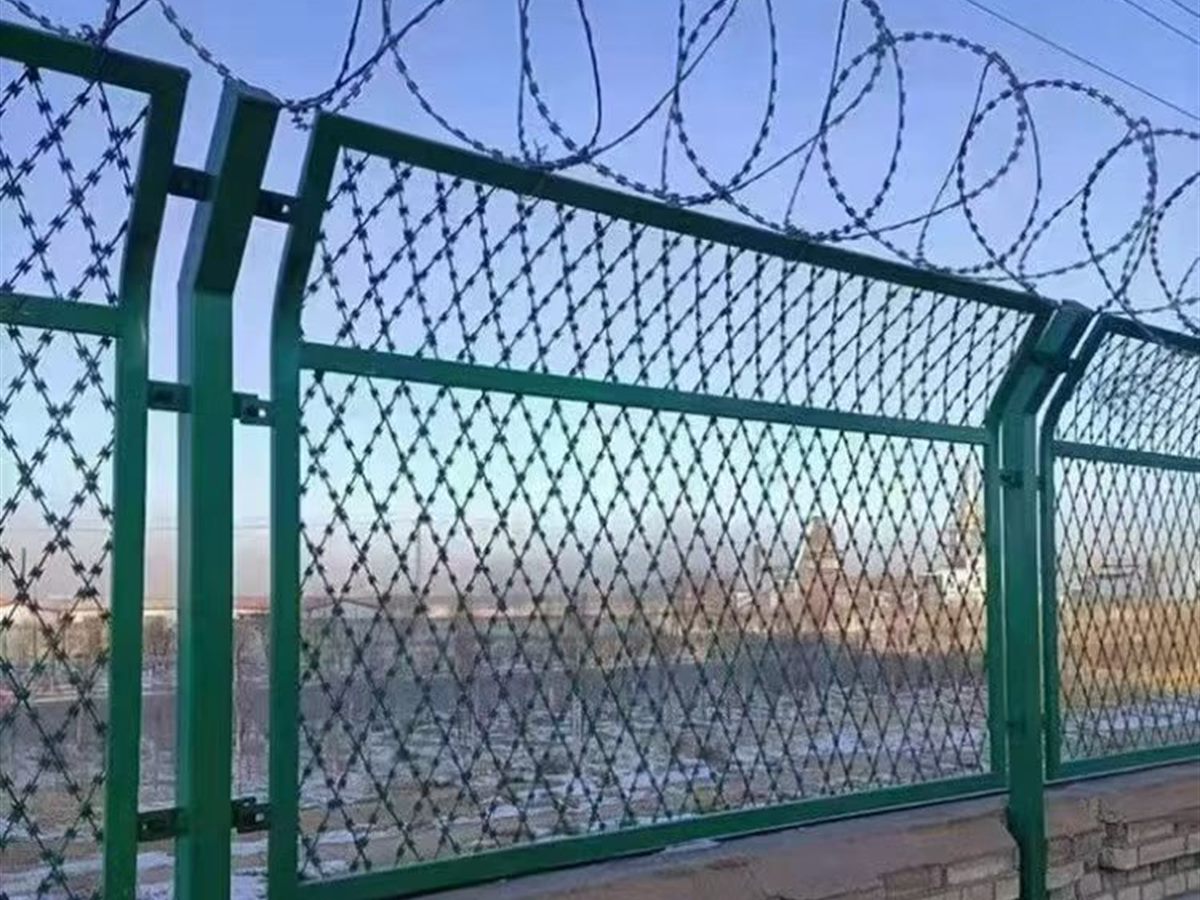
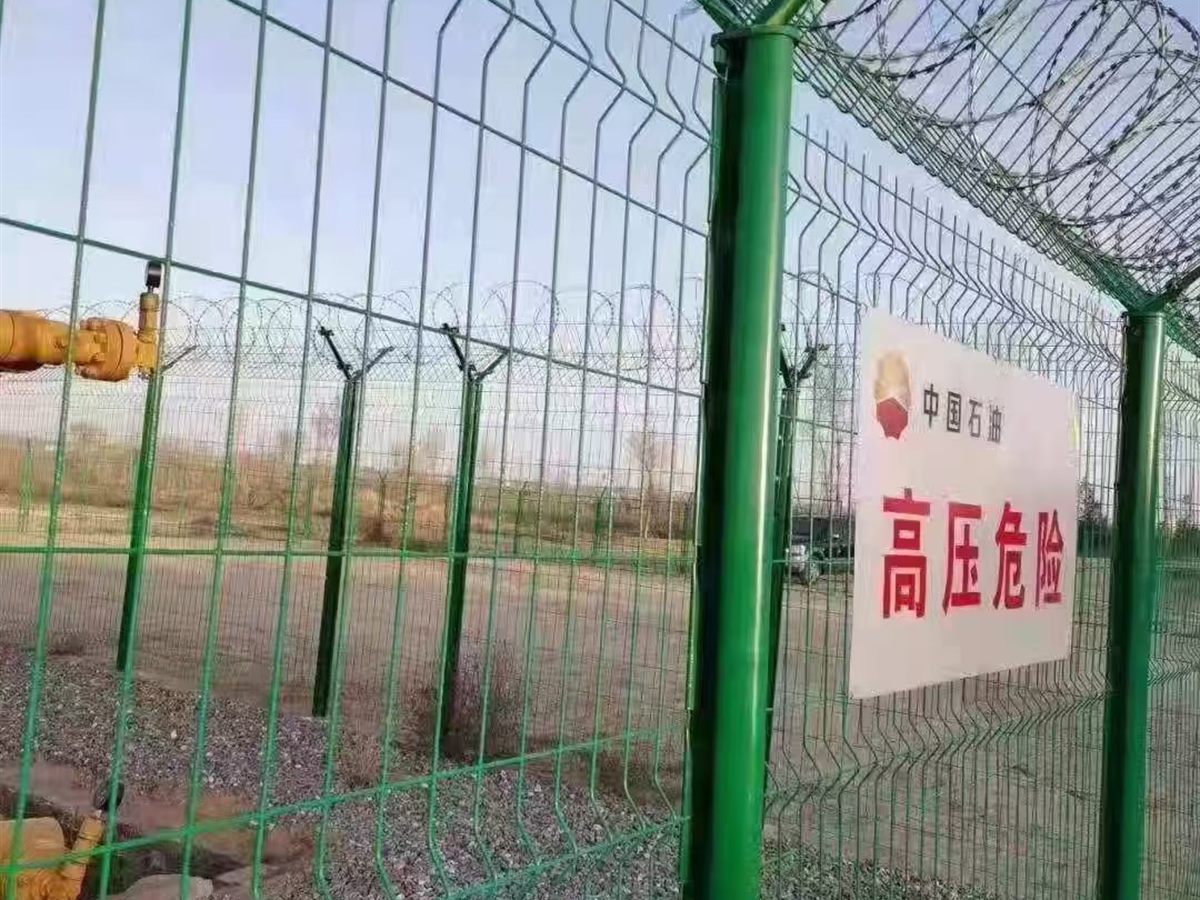
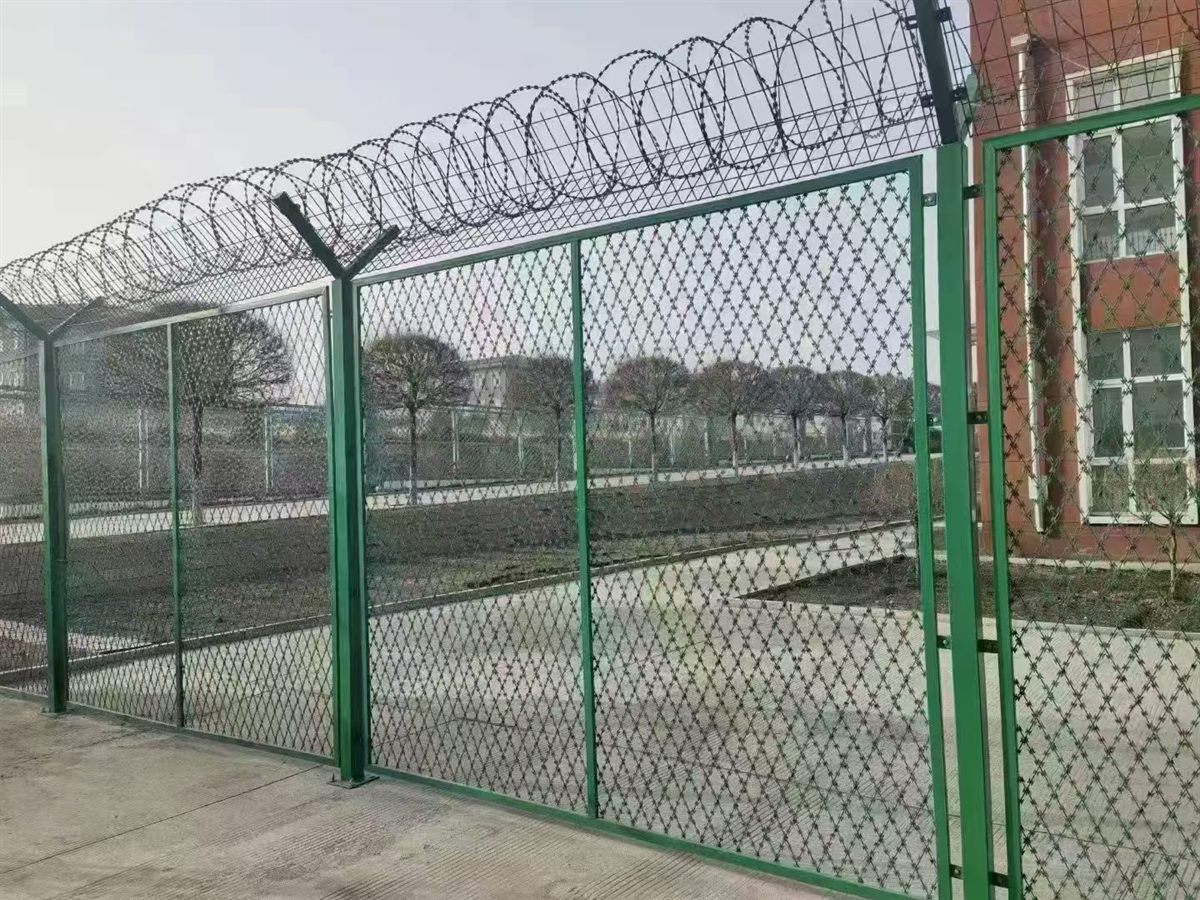
Most fences fail at the top. A mesh panel under a continuous top rail gives a hand something to close on, and a flat post cap gives a foot something to push from. This product removes both: the panel sits inside the fork of a post whose head is bent and angled out, so there is no rail along the line and no ledge at the head. The same fork can carry razor or barbed wire for a perimeter that has to be harder still.
On this page: how the angled head works (01), the published structure and the rows the drawing fills in (02), what the build and the topping options give you (03), what is confirmed against the drawing (04), packing, price and delivery (05), and four questions answered from this page (06).
The head of the post does the work
The post is bent into a Y or peach shape, and the welded panel is fixed inside that fork. Two consequences follow immediately. The fence line has no continuous top rail running along it, so there is nothing horizontal to grip at height. And because the head leans out over the line instead of sitting square on top of it, the top of the panel has no straight, reachable edge — the profile turns away from the climber rather than presenting a lip.
Where that is not enough, the fork is also a mount. Concertina razor wire, flat-wrap razor wire or barbed wire is fixed in the angled head above the mesh, so the wire overhangs the panel instead of resting on top of it. The post and panel build is the same with or without the topping, which lets a perimeter be specified in two stages if the project is built in phases.
The applications are the ones where climbing, cutting or pulling apart by hand is the thing to be made difficult: airports and airfields, prisons and detention facilities, substations and switchyards, fuel depots, warehouses and logistics yards, water treatment sites and industrial plants. A lighter boundary of the same family, the framed mesh fence, is the alternative where the line only has to look finished; the razor wire page carries the topping on its own.
Anti-climb Y-post fence — structure and open rows
What is published here is the structure and the topping arrangement; the dimensions belong to the drawing. Note the last row before Packing: no security rating and no certification is claimed for this fence, and that is stated deliberately rather than left unsaid.
| Product / model reference | Anti-climb Y-post fence (防攀爬护栏网 / Y 型护栏网) — welded mesh panel on a Y-shaped or peach-shaped post with an angled head. |
|---|---|
| Structure | Welded mesh panel carried in the fork of the Y-shaped post; no top rail along the fence line and no flat post cap to take hold of. |
| Anti-climb detail | The post head is bent and angled out over the fence line so a climber has no straight, reachable edge at the top of the panel. |
| Mesh aperture | Made to the project specification — send us the drawing or the standard you follow. |
| Wire diameter | Made to the project specification — send us the drawing or the standard you follow. |
| Panel height and width | Made to the project specification — send us the drawing or the standard you follow. |
| Post section | Made to the project specification — send us the drawing or the standard you follow. |
| Post spacing | Made to the project specification — send us the drawing or the standard you follow. |
| Post fixing to the ground | Made to the project specification — send us the drawing or the standard you follow and the footing or base detail is confirmed on the shop drawing. |
| Topping | Optional concertina razor wire, flat-wrap razor wire or barbed wire fixed in the angled post head above the mesh; blade dimensions and coil diameter are confirmed per order. |
| Surface finish | Made to the project specification — send us the drawing or the standard you follow. |
| Gates and accessories | Matching gates, corner and end posts, brackets and security bolts quoted with the fence; the exact set is confirmed per specification. |
| Applications | Airports and airfields, prisons and detention facilities, substations and switchyards, fuel depots, warehouses and logistics yards, water treatment sites, industrial plants and other high-security perimeters. |
| Security rating / certification | None claimed. This page states structure and application only; no security rating and no certification is claimed for this fence. The standard the project is designed to, and the buyer's acceptance of it, govern the perimeter. |
| Packing | Mesh panels, posts and topping coils are bundled and palletised for container loading; the exact packing method is confirmed per specification with the loading plan. |
What the fork and the panel give you
- No top rail. The panel sits in the fork, so there is no continuous horizontal member along the crest of the fence.
- No flat post cap. The head is bent and angled out, turning away from the line rather than offering a ledge.
- Three topping options. Concertina razor wire, flat-wrap razor wire or barbed wire, fixed in the angled head above the mesh.
- One build, two stages. The same post and panel works with or without the topping, so the wire can be added in a later phase.
- A complete gate set. Matching gates, corner and end posts, brackets and security bolts are quoted with the fence.
- An honest specification. No security rating and no certification is claimed — the project standard and the buyer's acceptance govern the perimeter.
Aperture, wire, height and post all come off the drawing
Five values decide how this fence behaves — mesh aperture, wire diameter, panel height and width, post section, and post spacing — and none of them is published as a single figure. They are made to the project specification and confirmed in writing against the drawing or the standard the project follows. The same applies to the surface finish and to the ground fixing, where a footing or base detail is settled on the shop drawing rather than assumed.
Two things we will not do. We do not invent a rating: this page states structure and application, and whether a perimeter satisfies a security requirement is decided by the buyer's design and the standard the project is built to. And we do not fix the topping from memory: blade dimensions and coil diameter for the razor or barbed wire are confirmed per order, because the wire in the fork is a separate specification from the panel under it.
Panels, posts and topping coils packed together
Mesh panels, posts and topping coils are bundled and palletised for container loading, with the coils kept as their own bundles rather than loaded against the panels. The exact packing method is confirmed per specification with the loading plan, because a coil that opens in transit is a handling problem at destination rather than a saving.
| Packing | Mesh panels, posts and topping coils are bundled and palletised for container loading; the exact packing method is confirmed per specification with the loading plan. |
|---|---|
| Price | Price: quoted per order — FOB Wuhan / Shanghai, CIF or DDP |
| MOQ | Confirmed per specification — send the drawing, quantity and destination port and we reply with MOQ, loading plan and lead time within one business day. |
| Loading | Confirmed per specification — send the drawing, quantity and destination port and we reply with MOQ, loading plan and lead time within one business day. |
| Lead time | Confirmed per specification — send the drawing, quantity and destination port and we reply with MOQ, loading plan and lead time within one business day. |
| Documentation | Proforma invoice, commercial invoice, packing list and certificate of origin as required. Buyers who need CE / EN / ASTM documentation: tell us the standard and we will confirm in writing what we can supply. |
| Payment and warranty | Payment terms and warranty are agreed per order and stated on the proforma invoice. |
Four questions, answered from this page
- What makes it anti-climb?
- The panel is carried in the fork of a Y-shaped post and the head is bent and angled out over the fence line. There is no continuous top rail and no flat post cap, so there is no straight, reachable edge at the top.
- Can razor wire be added?
- Yes. Concertina razor wire, flat-wrap razor wire or barbed wire can be fixed in the angled head above the mesh, and the same build works with or without it. Blade dimensions and coil diameter are confirmed per order.
- How tall can it be, and what aperture?
- Panel height and width, mesh aperture, wire diameter, post section and post spacing are all made to the project specification, confirmed from your drawing or the standard you follow.
- Does it carry a security rating?
- No. No security rating and no certification is claimed for this fence. The standard the project is designed to, and the buyer's acceptance of it, govern the perimeter.
- Are gates supplied with it?
- Matching gates, corner and end posts, brackets and security bolts are quoted with the fence; the exact set is confirmed per specification.
Related products
Three lines that go with a security perimeter
One workshop, one drawing set. Each plate opens the product page for that item.
-
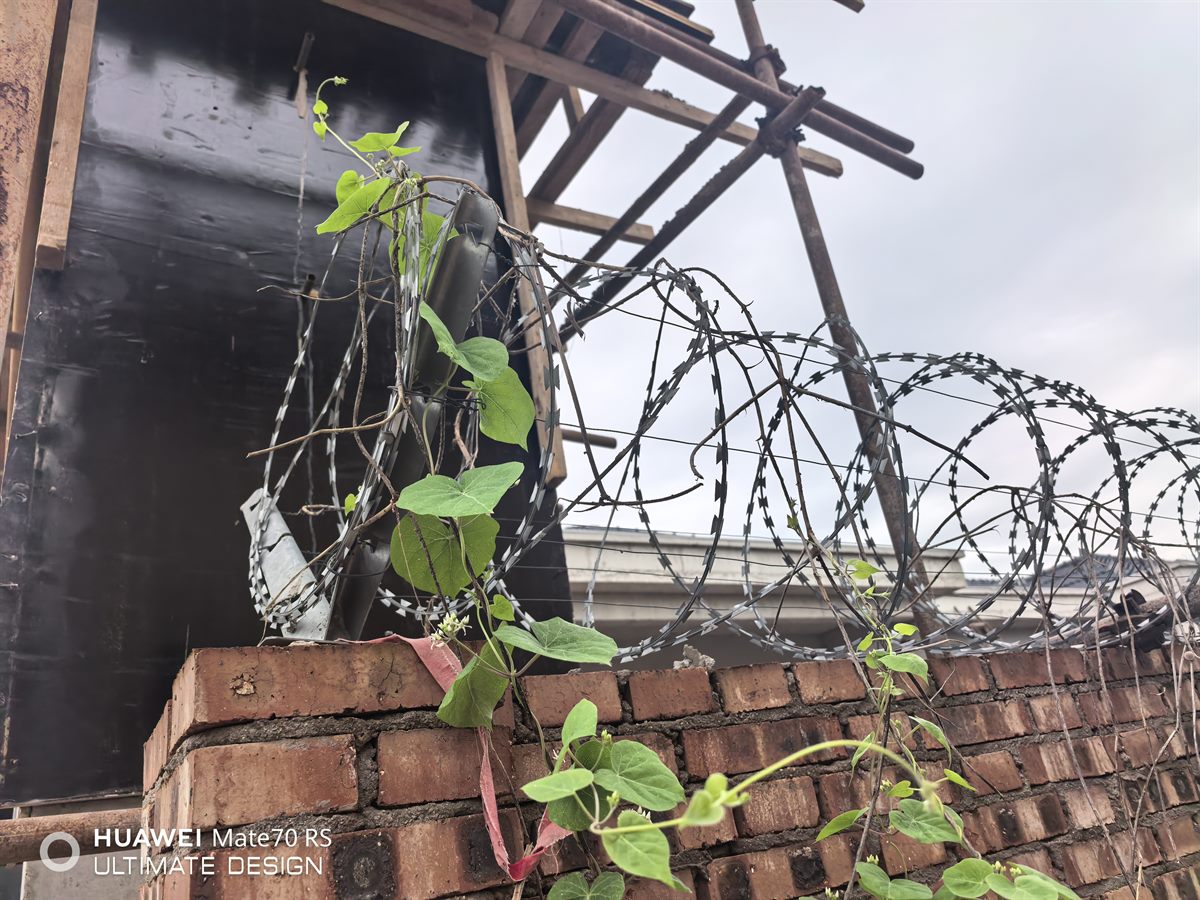
Razor Wire
Blade strip closed onto a high-tensile core wire, in coils for the fork of a Y-post.
View product → -
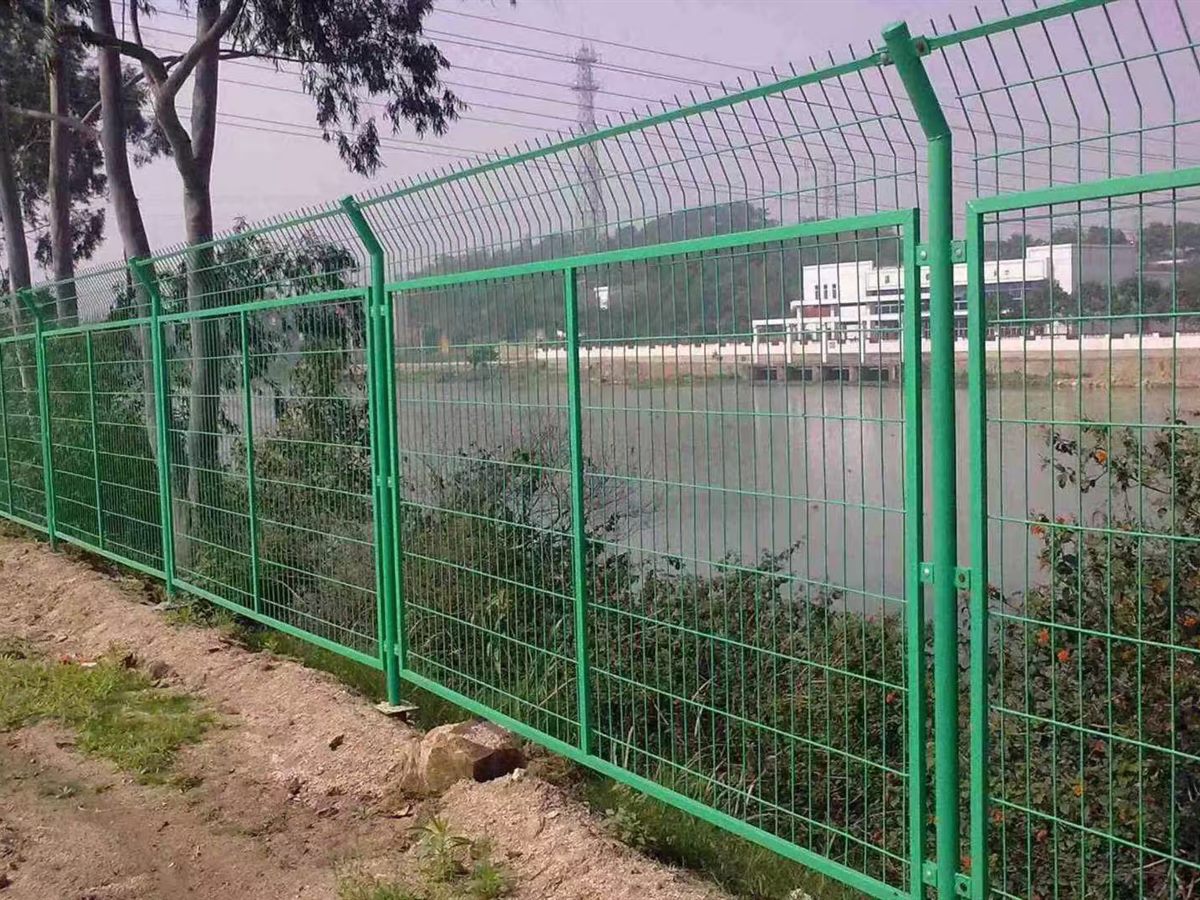
Framed Mesh Fence
The lighter framed panel, for a boundary that has to look finished rather than resist climbing.
View product → -
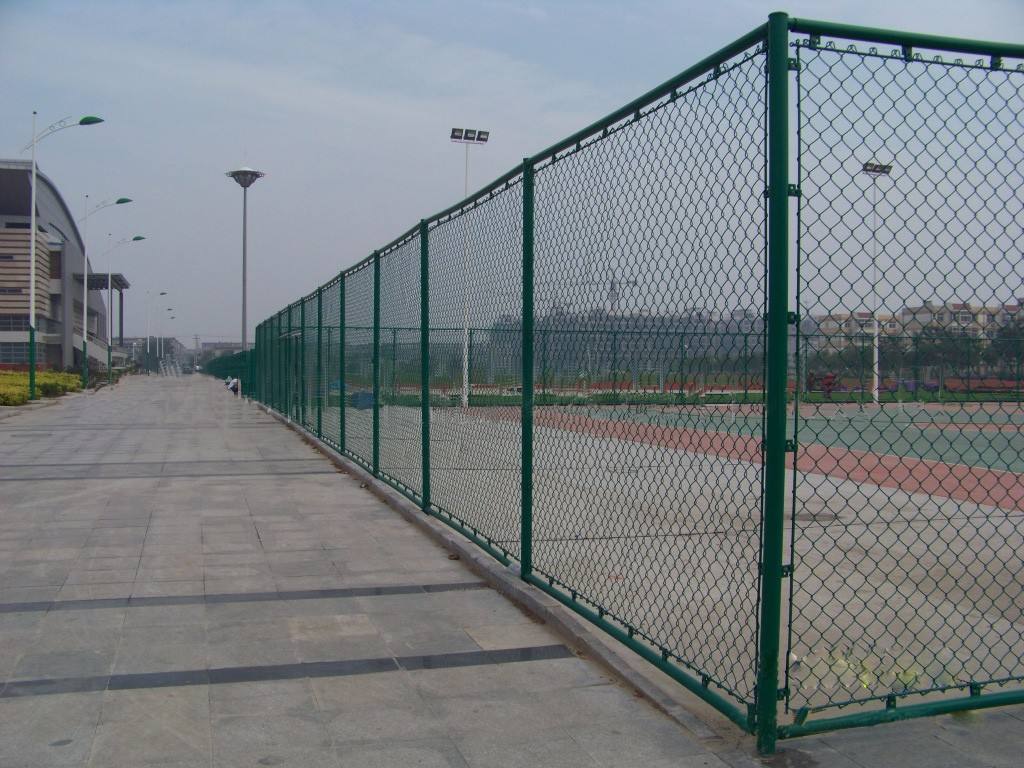
Sports Court Fence
Tall mesh enclosure for courts and pitches, set out on a layout drawing with the gates.
View product →
Next step
Send the drawing and the standard you build to
Tell us the perimeter length, the panel height and aperture, the post section and fixing, whether the fork carries a topping, and the destination port. We reply within one business day with the specification, the MOQ, the loading plan and the lead time in writing.