
Wire mesh fencing · 9 products in the family
Razor Wire
A tape with an edge, not a strand with barbs. The blade strip is a flat steel tape formed with sharp edges along its length and closed onto a high-tensile core wire that carries the tension, so the whole run presents an edge rather than a series of points. It is supplied in coils for use as a topping — above a mesh panel, above a Y-post head, above a wall or on a gate — in concertina or flat-wrap build.
On this page: the blade strip and the two builds (01), the published specification and the rows that are confirmed per order (02), how the builds differ in use (03), what we need to quote (04), packing, price and delivery (05), and four questions answered from this page (06).
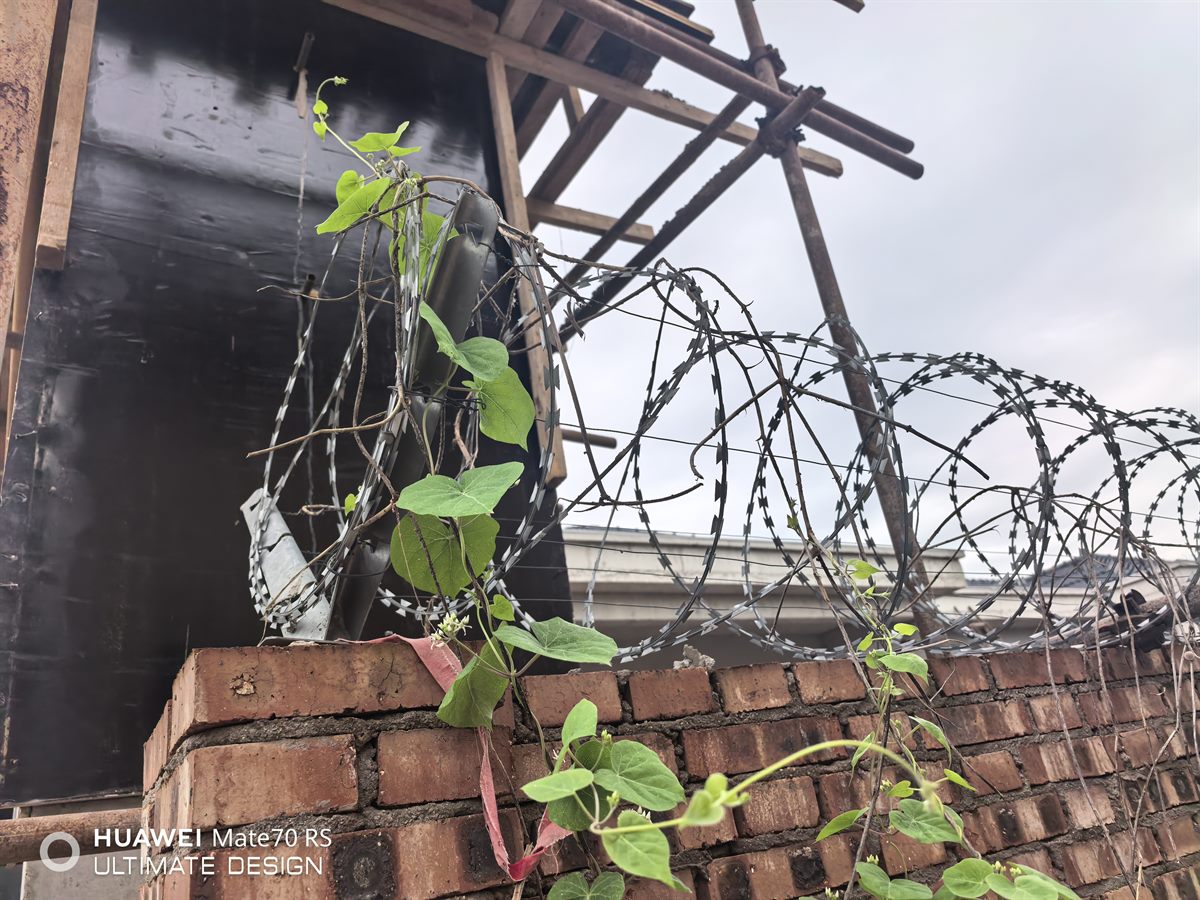
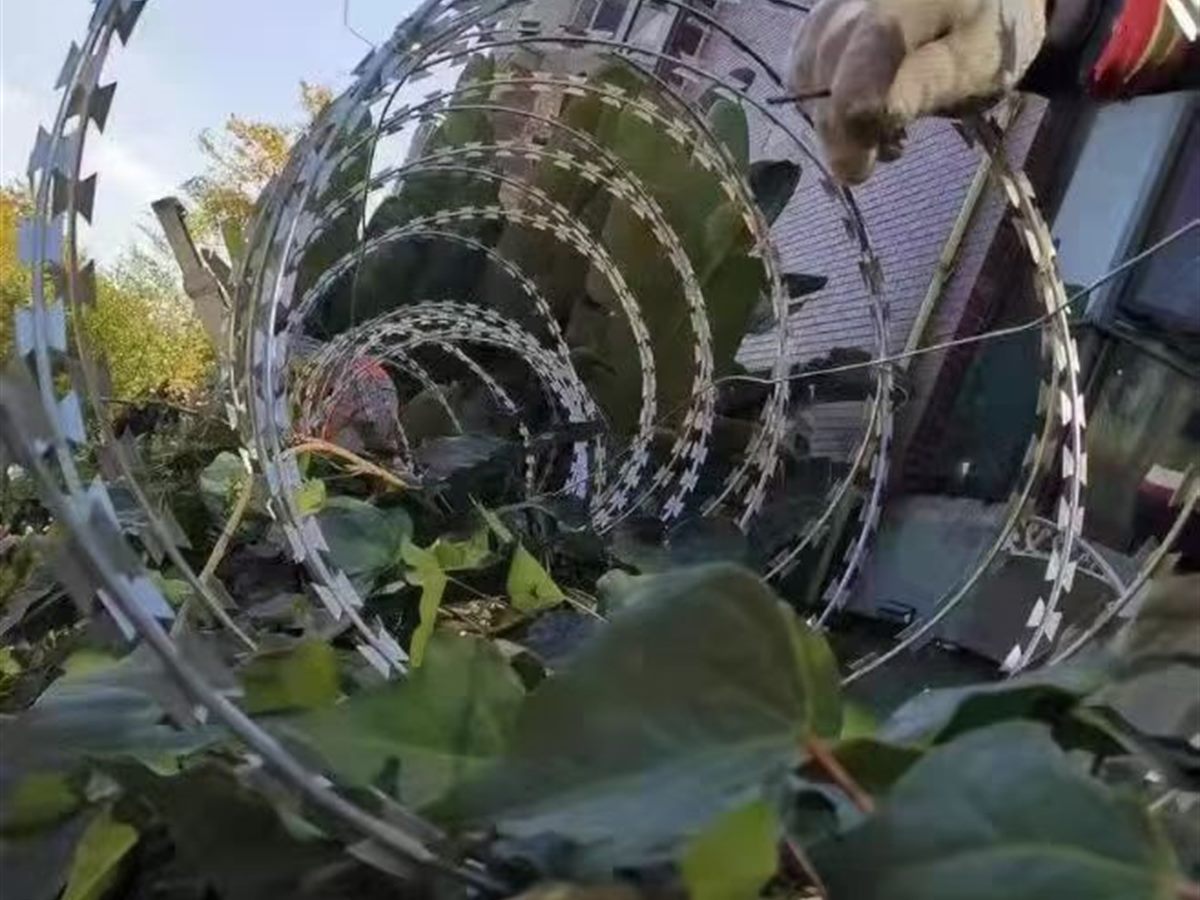
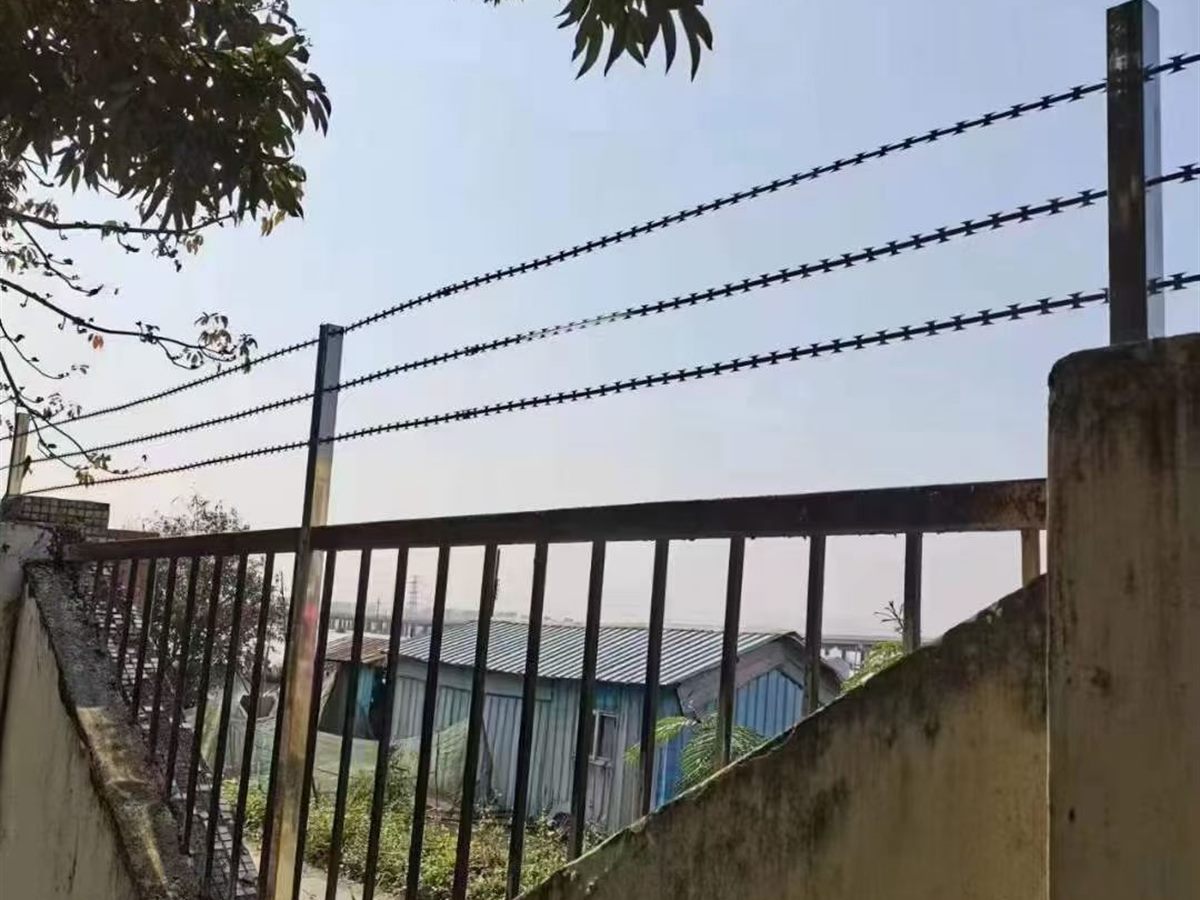
Blade strip on a core wire, in two builds
The strip takes the edge and the core takes the load. That division is what makes the coil handleable: the high-tensile core carries tension along the line, while the blade strip, closed around it, presents a cutting edge for the length of the run. Barbed wire, by comparison, twists short barbs onto a strand at a spacing, so the barrier is intermittent rather than continuous.
Two builds are supplied. Concertina closes the wire into a helix and compresses it into a coil, which is hung in a ring above the fence so it springs open if it is disturbed. Flat-wrap stretches the coil and lays it flat along the top of a fence line, a wall or a gate, so it covers a run rather than a single ring. Both arrive in coils and are cut and fixed on site by the installer.
Material is the other choice. Galvanised is the usual answer for a general perimeter; stainless steel is chosen where the wire stands in coastal air or an aggressive industrial atmosphere and the owner wants to avoid the maintenance a coated strip needs. Where the requirement is lighter, or where razor wire is not acceptable on appearance or safety grounds — around a school, for instance, or on a boundary in public view — barbed wire is supplied instead. It is usually fixed in the angled head of an anti-climb Y-post fence, or above any of the mesh panels in the family.
Razor wire — builds, materials and confirmed rows
The manufacturer's site prints no figures for this product, so the blade dimensions, coil diameter, core wire diameter and brackets are confirmed per order rather than published as a range. What is fixed is the build, the material and where the coil is intended to sit.
| Product / model reference | Razor wire (刀片刺绳) — concertina and flat-wrap blade strip on a high-tensile core wire, supplied in coils; barbed wire as an alternative. |
|---|---|
| Builds supplied | Concertina (helix compressed into a coil, hung as a ring) and flat-wrap (coil stretched flat along the line). |
| Blade strip material | Galvanised or stainless steel. |
| Core wire | High tensile. |
| Blade dimensions | Confirmed per order — the manufacturer's site prints no figures for this product. |
| Coil diameter | Confirmed per order — the manufacturer's site prints no figures for this product. |
| Core wire diameter | Confirmed per order — the manufacturer's site prints no figures for this product. |
| Fixing brackets | Confirmed per order — chosen for the fence, wall or gate the coil is fixed to. |
| Where it is fixed | As a topping above a welded mesh panel, above a Y-post fence where the angled head carries it, above a masonry wall, and above or on a gate leaf. |
| Alternative | Barbed wire, where the requirement is lighter or razor wire is not acceptable on appearance or safety grounds; supplied in coils. |
| Certification | None claimed. No certification is claimed for this product; the standard the project follows governs acceptance. |
| Packing | Coils are compressed, strapped and packed for container loading; the exact packing method is confirmed per specification with the loading plan. |
How the two builds behave, and where each belongs
- An edge along the whole length. The blade strip is formed with sharp edges along the tape, so the barrier is continuous rather than intermittent.
- A core wire that carries the tension. High-tensile core means the coil can be strained along a line without the blade strip taking the load.
- Concertina for a ring. A helix compressed into a coil, hung above the fence so it springs open when disturbed.
- Flat-wrap for a run. The coil stretched flat along a fence top, a wall top or a gate, covering distance rather than a single point.
- Galvanised or stainless. Galvanised for a general perimeter; stainless where coastal air or an aggressive industrial atmosphere would otherwise need maintenance.
- Barbed wire as the lighter option. Supplied where the requirement is lighter or razor wire is not acceptable on appearance or safety grounds.
- Brackets chosen for the fixing. The bracket follows the fence, wall or gate the coil goes onto, and is confirmed per order.
Tell us the surface it goes on and the run
Because no figures are printed for this product, the order is built from the fixing rather than from a catalogue size. Tell us what the coil is going onto — a welded mesh panel, a Y-post head, a masonry wall or a gate — and the bracket is chosen for that surface. Then give the run length and the build, and the coil is quoted with the brackets it needs.
The blade dimensions, coil diameter and core wire diameter are confirmed per order in writing. That is not a gap in the specification; it is how a product that is fixed to so many different surfaces is quoted, and it is the reason the manufacturer prints no single size. No certification is claimed for this product: the standard the project follows governs acceptance, and we say so plainly rather than implying a rating.
Coils compressed, strapped and shipped
Coils are compressed, strapped and packed for container loading, which keeps the volume of a light product under control. The exact packing method is confirmed per specification with the loading plan, and because razor wire is sharp, the packing instruction on the bundle is as much a safety document as a handling one.
| Packing | Coils are compressed, strapped and packed for container loading; the exact packing method is confirmed per specification with the loading plan. |
|---|---|
| Price | Price: quoted per order — FOB Wuhan / Shanghai, CIF or DDP |
| MOQ | Confirmed per specification — send the drawing, quantity and destination port and we reply with MOQ, loading plan and lead time within one business day. |
| Loading | Confirmed per specification — send the drawing, quantity and destination port and we reply with MOQ, loading plan and lead time within one business day. |
| Lead time | Confirmed per specification — send the drawing, quantity and destination port and we reply with MOQ, loading plan and lead time within one business day. |
| Documentation | Proforma invoice, commercial invoice, packing list and certificate of origin as required. Buyers who need CE / EN / ASTM documentation: tell us the standard and we will confirm in writing what we can supply. |
| Payment and warranty | Payment terms and warranty are agreed per order and stated on the proforma invoice. |
Four questions, answered from this page
- What is the difference between concertina and flat-wrap?
- Concertina forms the wire into a helix and compresses it into a coil, hung as a ring above the fence. Flat-wrap stretches the coil and lays it flat along a fence line, wall top or gate, covering a run rather than a single ring.
- What sizes are published?
- None. Blade dimensions, coil diameter and core wire diameter are confirmed per order, along with the brackets, because the fixing surface differs from job to job.
- Galvanised or stainless steel?
- Galvanised is the usual choice for a general perimeter. Stainless steel is chosen where the wire stands in coastal air or an aggressive industrial atmosphere and maintenance is to be avoided.
- When is barbed wire used instead?
- Where the requirement is lighter, or where razor wire is not acceptable on appearance or safety grounds — around a school, for example. Barbed wire is supplied in coils.
- Where does the coil go?
- As a topping above a welded mesh panel, above a Y-post fence where the angled head carries it, above a masonry wall, and above or on a gate leaf.
Related products
Three products it is specified with
One workshop, one drawing set. Each plate opens the product page for that item.
-
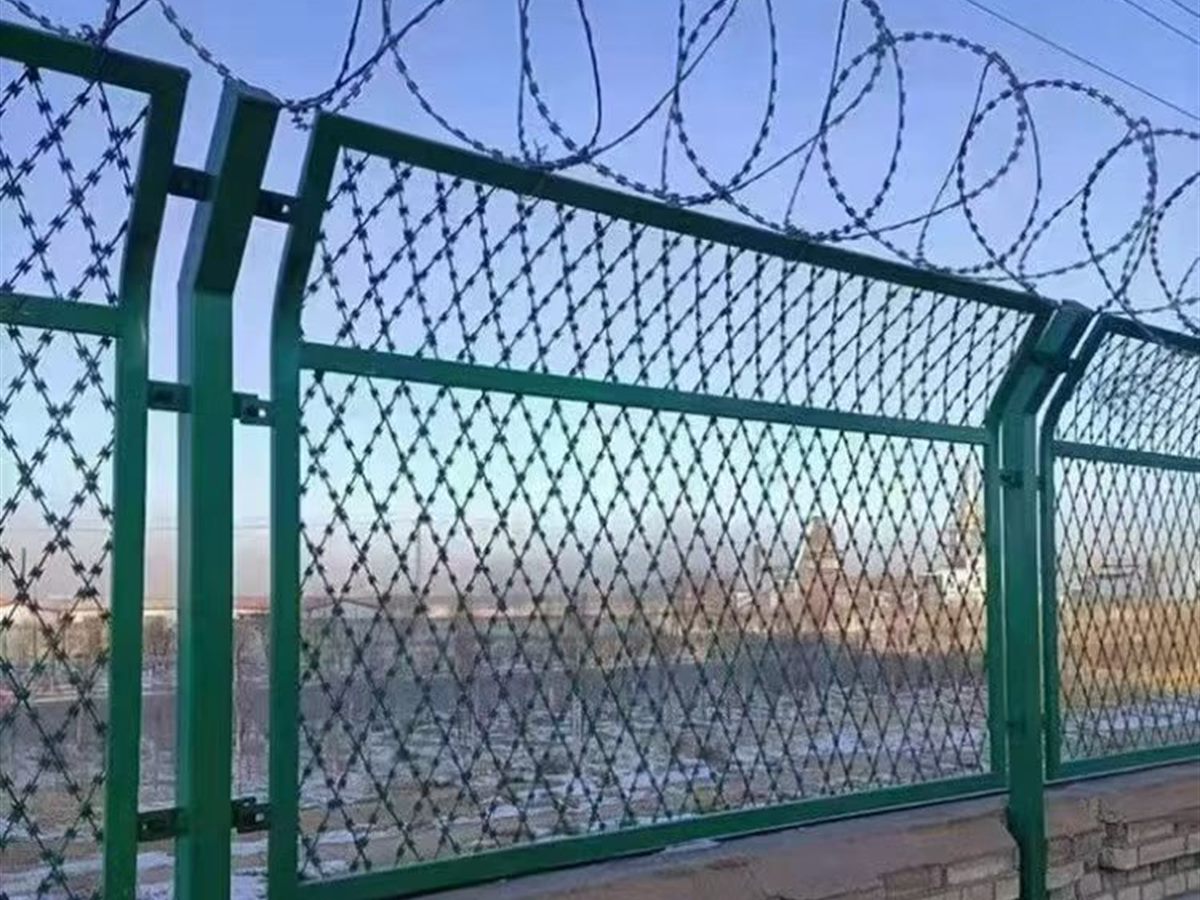
Anti-Climb Y-Post Fence
The fence built to carry the coil: angled post head, no top rail, no flat cap.
View product → -
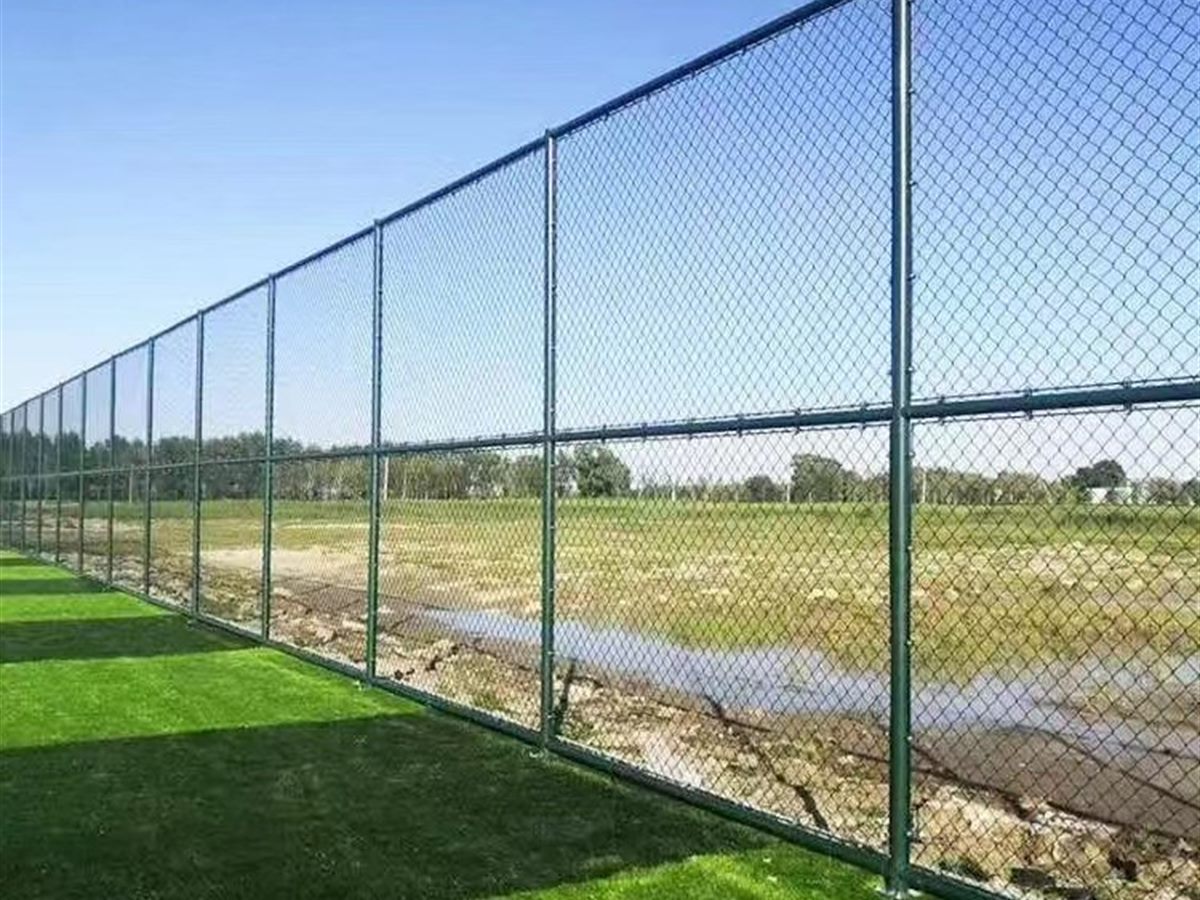
Chain-Link Fence
A woven line that a topping can be fixed above, over long and uneven runs.
View product → -
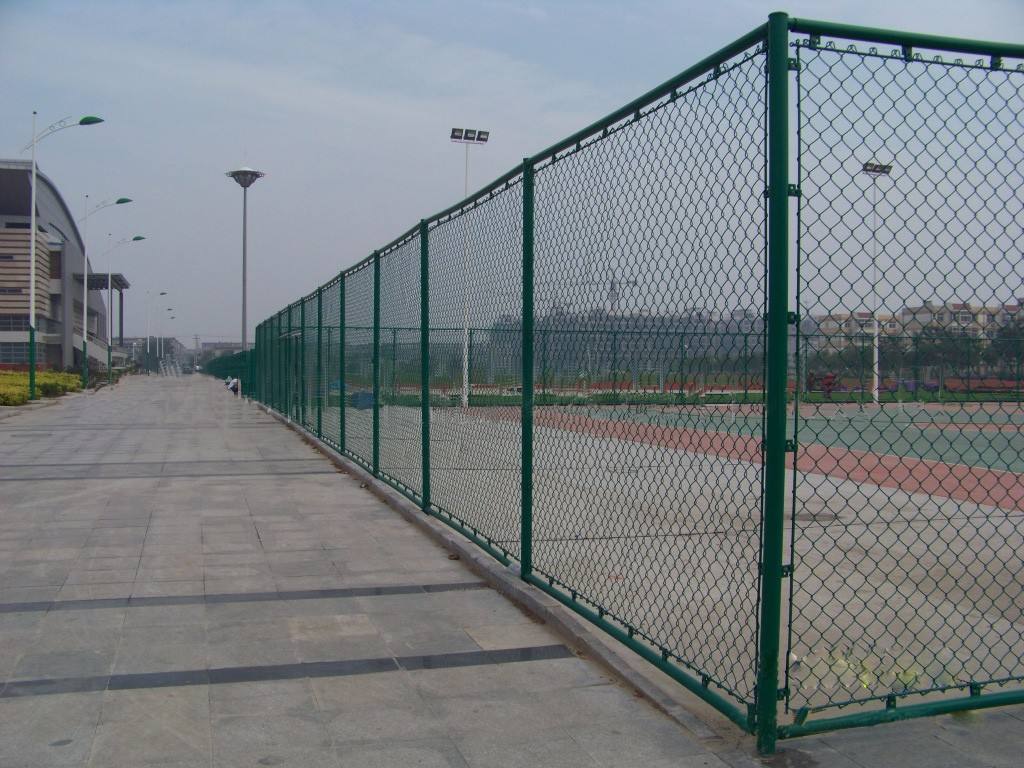
Sports Court Fence
A tall enclosure where the boundary is about containment rather than security.
View product →
Next step
Tell us the surface, the run and the build
Send the fence, wall or gate the coil goes onto, the run length, whether you want concertina or flat-wrap, the material and the destination port. We reply within one business day with the blade and coil specification, the MOQ, the loading plan and the lead time in writing.