
Guardrails & railings · 7 products in the family
W-Beam Steel Road Guardrail
The standardised corrugated-beam barrier, and the only product on this site quoted against JT/T 281—2007, the Ministry of Transport industry specification for highway corrugated-beam steel guardrail panels. Every dimension below is a published figure of that system: 4320 mm panels, 4 m post spacing, twin-wave 310 mm or triple-wave 505 mm beams with an 85 mm wave height, on Φ114 / Φ140 mm posts. This is not the same product as the general Road Guardrail, which is built to a project drawing and carries no JT/T figures at all.
On this page: what the W-beam system is and how it differs from the project-specification road guardrail (01), the full published specification including masses and per-kilometre quantities (02), the characteristics and assembly (03), working to another national standard (04), packing, price and delivery (05), and four questions answered from this page (06).


Two road products, and this is the standardised one
The range contains two road products and they are never interchangeable. W-Beam Steel Road Guardrail — this page — is the corrugated-beam system published against JT/T 281—2007: a 4320 mm panel on a 4 m post spacing, a twin-wave or triple-wave beam of a stated width and plate thickness, on a stated post section, with a stated mass per panel and a stated quantity of parts per kilometre. Road Guardrail is the general road and municipal line, made to the project specification from barrier units, beam and rail sections, posts and fixings. It cites no JT/T figures, because it is not this system.
The engineering is in the beam profile. A vehicle striking a corrugated beam is guided along it rather than through it: the wave in the plate is what gives the panel its stiffness across the span, and the post spacing is what the beam spans. Both published figures are 4320 mm and 4 m, and they work together — the panel is lapped and bolted so that the net gap between posts comes out at 4 m, which is why the two numbers are always quoted as a pair.
The manufacturer states that the panels have good corrosion resistance and are resistant to ageing. Where a project follows AASHTO, EN or another national standard, the beam profile, plate thickness, post section, hole pattern and accessory set may all differ, so tell us the standard and we confirm in writing what we can supply against it.
W-beam steel road guardrail — published figures
Every row below is a published figure for this system, including the theoretical masses and the quantity of parts in a standard kilometre. They are reproduced unchanged, because they are what a beam quotation is built from.
| Product / model reference | W-beam steel road guardrail — corrugated beam guardrail, panel and post system. |
|---|---|
| Standard cited | JT/T 281—2007《高速公路波形梁钢护栏板》 — Ministry of Transport industry specification for highway corrugated-beam steel guardrail panels (as cited by the manufacturer). |
| Panel length | 4320 mm overall, net 4 m after installation. |
| Post spacing | 4 m. |
| Twin-wave (two-wave) beam | Width 310 mm, wave height 85 mm, plate thickness 3 mm or 4 mm. |
| Twin-wave theoretical mass | 49.16 kg for the 3 mm panel; 65.44 kg for the 4 mm panel. |
| Twin-wave mass per kilometre | 12.3 t at 3 mm plate; 16.388 t at 4 mm plate. |
| Triple-wave (three-wave) beam | Length 4320 mm, beam width 505 mm, wave height 85 mm, plate thickness 4 mm, theoretical mass 102 kg. |
| Triple-wave post | Used with a 130 × 130 mm square-tube post. |
| Post section | Φ114 mm or Φ140 mm round post, wall thickness 4.5 mm. |
| Post length | Normally 1.85 m / 1.95 m / 2.00 m / 2.15 m depending on the requirement. |
| Post theoretical mass | 12.15 kg/m for Φ114 mm; 15.04 kg/m for Φ140 mm. |
| Quantity per kilometre (standard section) | 250 guardrail panels; 250 posts at 4 m spacing; 2 end terminals; 250 post caps; 250 spacer blocks (防阻块); 250 connector bolt sets; 2000 splicing bolt sets. |
| Manufacturer's stated characteristics | Good corrosion resistance; resistant to ageing. |
| Assembly | Panels are lapped and bolted to the posts with the connector and splicing bolt sets; the spacer block sits between post and beam. Posts, post caps, end terminals, spacer blocks and bolt sets are supplied as one system. |
| Packing | Panels and posts are bundled and palletised for container loading; the exact packing method is confirmed per specification with the loading plan. |
What the published figures tell you
- A stated standard. JT/T 281—2007, the Ministry of Transport industry specification for highway corrugated-beam steel guardrail panels, cited by the manufacturer.
- Panel and spacing in one pair. A 4320 mm panel with a net 4 m after installation, on a 4 m post spacing — the two figures that turn a run length into a count.
- Two beam widths. Twin-wave at 310 mm in 3 mm or 4 mm plate; triple-wave at 505 mm in 4 mm plate, at a theoretical 102 kg.
- An 85 mm wave height. The same on both beams, which is what gives the panel its stiffness across the span.
- Published masses. 49.16 kg and 65.44 kg per twin-wave panel, 12.15 kg/m and 15.04 kg/m per post, and 12.3 t or 16.388 t of beam per kilometre.
- Post lengths that follow the ground. Normally 1.85 m / 1.95 m / 2.00 m / 2.15 m depending on the requirement.
- One system, not a parts list. Posts, caps, end terminals, spacer blocks and bolt sets are supplied with the beam.
- Stated characteristics. Good corrosion resistance and resistance to ageing, as the manufacturer states.
Published against JT/T — and honest about other standards
The figures on this page are published against the Chinese industry specification JT/T 281—2007, and that is what makes this product quotable from a page rather than from a drawing. It is also its limit. If the project is written to AASHTO, EN or another national standard, the beam profile, the plate thickness, the post section, the hole pattern and the accessory set may all differ, and the published figures here cannot be assumed to satisfy that standard. Tell us which standard you follow and we confirm in writing what we can supply against it.
What is not a standard question is the run. Give us the length in metres and the beam type — twin-wave in 3 mm or 4 mm, or triple-wave in 4 mm — and the per-kilometre quantities above become a bill of parts, with the end terminals, caps, spacer blocks and bolt sets counted to match. Where the road is a municipal or authority detail rather than a corrugated beam, this is the wrong page: that work is quoted as the Road Guardrail, from the drawing.
Packed by weight, because beam is heavy
Panels are stacked and steel-banded into bundles, and posts, caps, spacer blocks, end terminals and bolt sets are bundled and bagged separately, each bundle marked with the panel type, the post section and the drawing reference. A container load of steel barrier runs out of weight long before it runs out of space, so the published masses are the figures the loading plan is built on: tell us the container size, the beam type and the maximum bundle weight you can unload.
| Packing | Panels and posts are bundled and palletised for container loading; the exact packing method is confirmed per specification with the loading plan. |
|---|---|
| Price | Price: quoted per order — FOB Wuhan / Shanghai, CIF or DDP |
| MOQ | Confirmed per specification — send the drawing, quantity and destination port and we reply with MOQ, loading plan and lead time within one business day. |
| Loading | Confirmed per specification — send the drawing, quantity and destination port and we reply with MOQ, loading plan and lead time within one business day. |
| Lead time | Confirmed per specification — send the drawing, quantity and destination port and we reply with MOQ, loading plan and lead time within one business day. |
| Documentation | Proforma invoice, commercial invoice, packing list and certificate of origin as required. Buyers who need CE / EN / ASTM documentation: tell us the standard and we will confirm in writing what we can supply. |
| Payment and warranty | Payment terms and warranty are agreed per order and stated on the proforma invoice. |
Four questions, answered from this page
- How is this different from the Road Guardrail?
- This is the standardised corrugated-beam system published against JT/T 281—2007, with fixed panel, beam, plate, post and per-kilometre figures. The Road Guardrail is the general road and municipal line made to the project specification from barrier units, beam and rail sections, posts and fixings, and it quotes no JT/T figures. They are two products with separate specifications and separate quotations.
- What are the panel and post figures?
- A 4320 mm panel with a net 4 m after installation, on a 4 m post spacing. Posts are Φ114 mm or Φ140 mm with a 4.5 mm wall, normally 1.85 m / 1.95 m / 2.00 m / 2.15 m long depending on the requirement.
- Twin-wave or triple-wave?
- Twin-wave is 310 mm wide with an 85 mm wave height in 3 mm or 4 mm plate. Triple-wave is 505 mm wide with an 85 mm wave height in 4 mm plate, at 102 kg, and goes onto a 130 × 130 mm square-tube post rather than a Φ114 / Φ140 mm round post.
- What is in a kilometre?
- 250 guardrail panels, 250 posts at 4 m spacing, 2 end terminals, 250 post caps, 250 spacer blocks (防阻块), 250 connector bolt sets and 2000 splicing bolt sets.
- Can you supply to AASHTO or EN?
- Tell us the standard and we will confirm in writing what we can supply. The figures here are published against JT/T 281—2007, and another standard may change the profile, plate, post section, hole pattern and accessories.
Related products
Two road lines and one median screen
The first plate is the other, separate road product. Each plate opens the product page for that item.
-
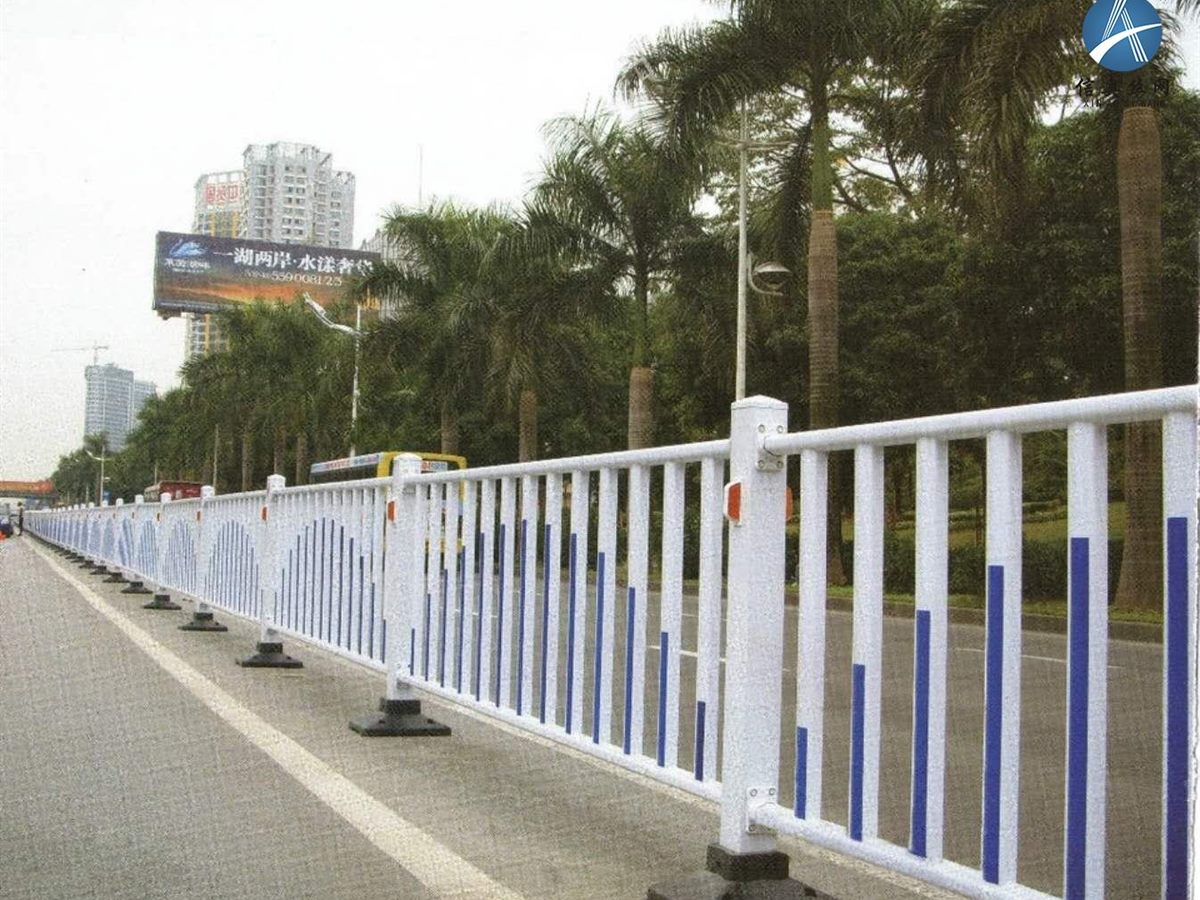
Road Guardrail
The separate project-specification product: units, beam and rail sections, posts and fixings to the drawing.
View product → -
-
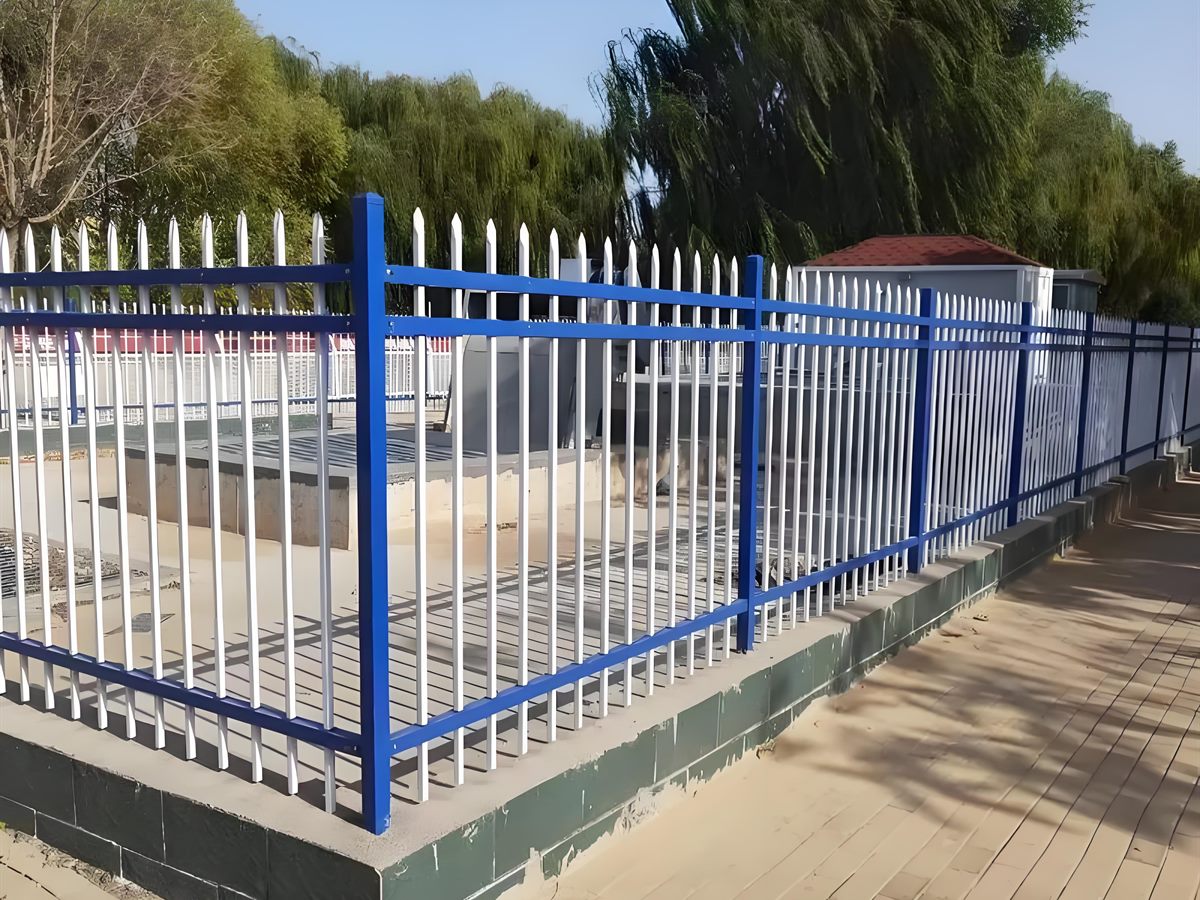
Zinc-Steel Perimeter Railing
A pedestrian boundary line, bolted in 1.8 m × 3 m sections rather than beam panels.
View product →
Next step
Send the run length and the beam type
Tell us the length of the run, the beam type — twin-wave 3 mm or 4 mm, or triple-wave 4 mm — the post length, the standard you follow and the destination port. We reply within one business day with the bill of parts, the MOQ, the loading plan and the lead time in writing.