
Wire mesh fencing · 9 products in the family
Sports Court Fence
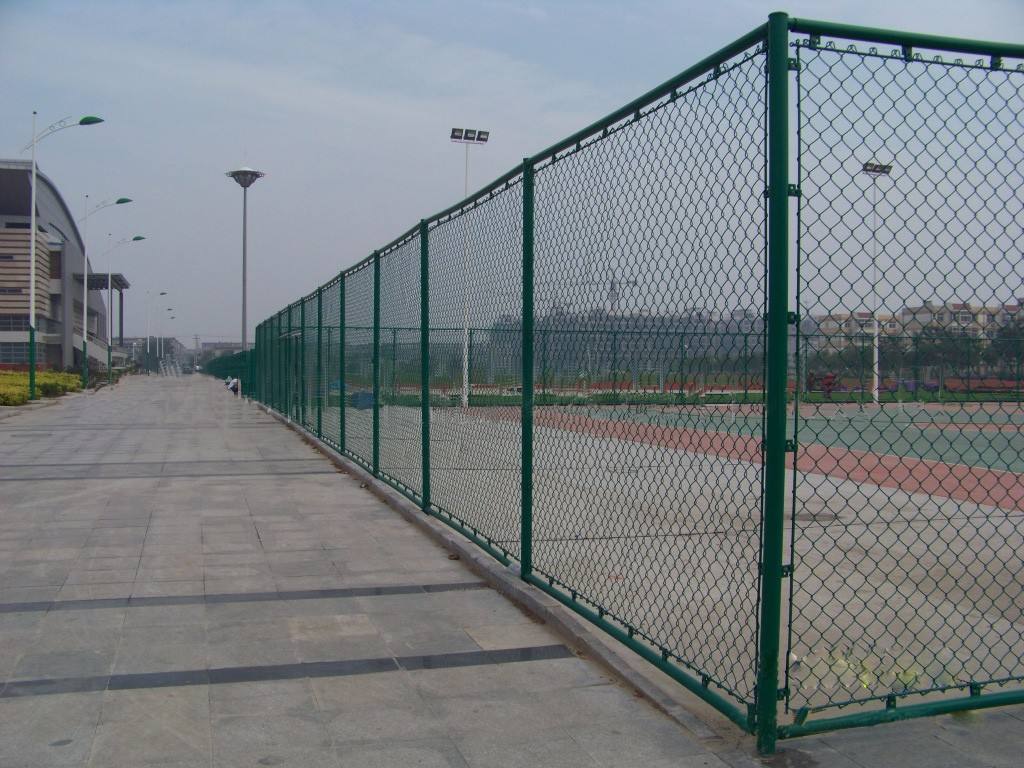
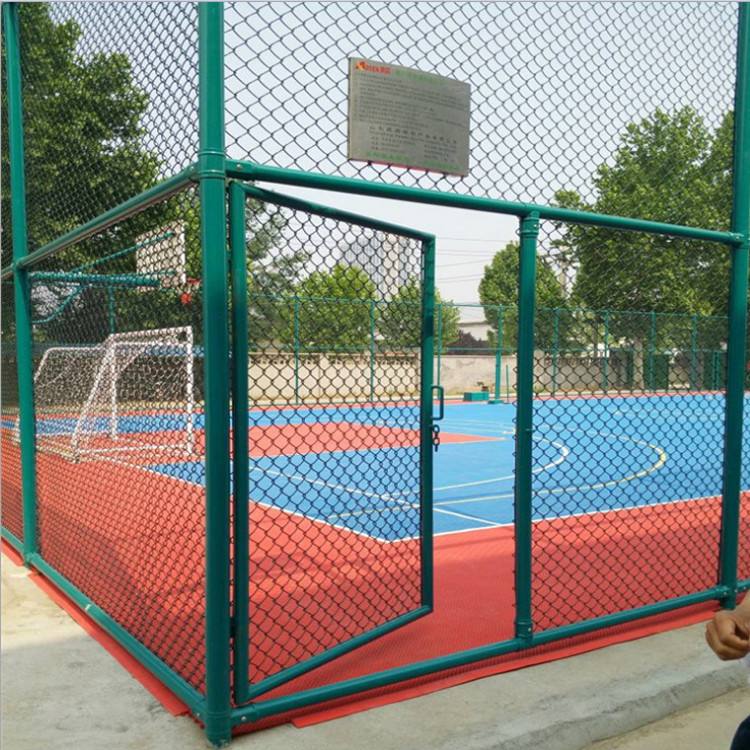
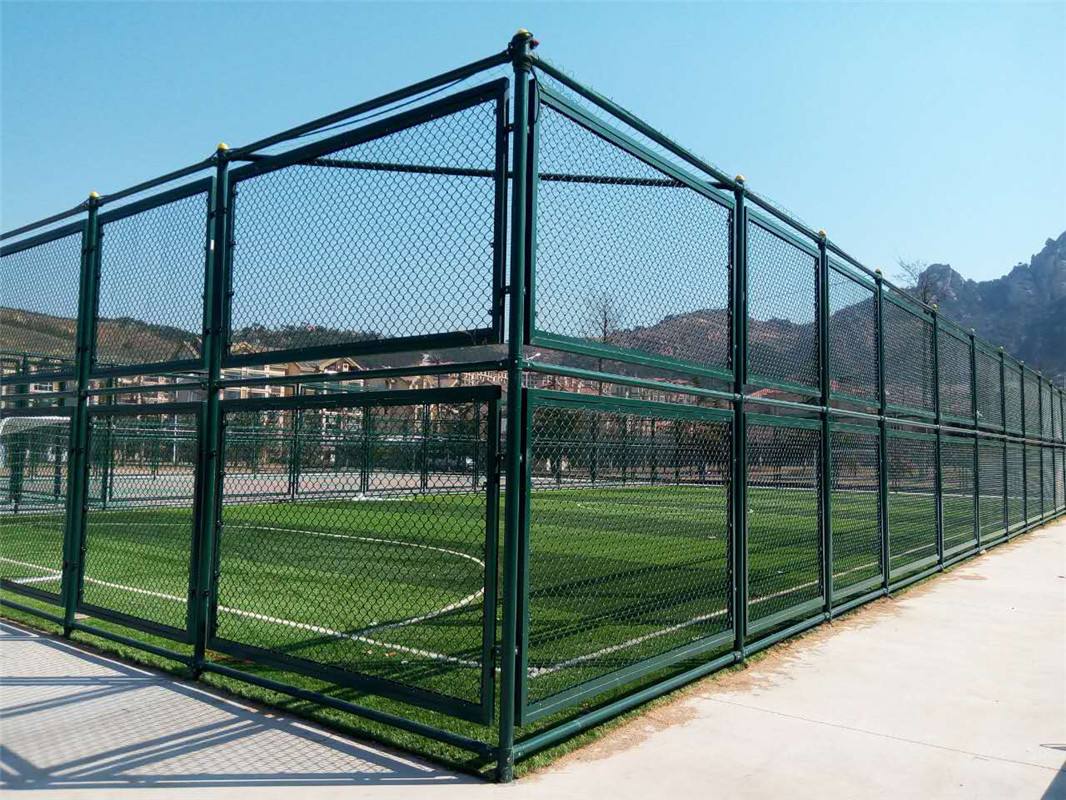
A ball does not respect a low boundary. This is the high enclosure that keeps play inside a court: panels of 3000 × 4000 mm in coated wire, carried on 60 mm posts with cross rails, at a height — usually 4 m or 6 m — set by what has to be kept in and what stands outside. Height is the first decision because it drives the panel, the post and the wind load on the line.
On this page: what the enclosure is and where it goes (01), the published height, wire, panel and post figures (02), what the panel-and-rail build gives you (03), the layout decisions the drawing carries (04), packing, price and delivery (05), and four questions answered from this page (06).
Height first, then the run
The published panel is 3000 × 4000 mm, the wire is galvanised and then plastic-coated at 3.8 mm, and the mesh is 45 × 45 mm or 50 × 50 mm. Those figures describe the panel; the height is what makes it a court fence. Usually the enclosure runs at 4 m or 6 m, and the post — 60 mm tube with a 2.5 mm wall — carries a 48 mm cross rail with a 2 mm wall to hold the panel line against the wind it presents at that height.
Because the build is supplied as a set — posts, side lugs and bolts with the panel and rail — the enclosure is one system rather than a collection of parts. That matters at 6 m, where a panel is a sail and every fixing is doing real work.
The range goes further than a plain court surround, and the published heights say where. Tennis courts are taken at 3 m on the sides and 4 m at the ends; 4 m or more where the fence stands next to housing or a road; 0.8 m where a low surround is wanted; and 6 m or more for roof-top courts. For a boundary that is simply a tall mesh line without a court inside it, the anti-climb Y-post fence and the framed mesh fence are the other options in the family.
Sports court fence — the published figures
Height, wire, aperture, panel, post and rail are all published, along with the heights used for particular courts. Post spacing and the rail layout are not: they follow the run and the exposure, and are confirmed on the drawing.
| Product / model reference | Sports court fence — high mesh panel, post and cross rail system. Quotation against your drawing or the standard you follow; no catalogue model number is issued until the drawing is agreed. |
|---|---|
| Height | Usually 4 m or 6 m. |
| Wire | Galvanised and then plastic-coated; coated wire 3.8 mm. |
| Mesh aperture | 45 × 45 mm or 50 × 50 mm. |
| Panel size | 3000 × 4000 mm. |
| Post | 60 mm / 2.5 mm. |
| Cross rail | 48 mm / 2 mm. |
| Fittings | Posts, side lugs and bolts. |
| Anti-corrosion | Electro-galvanising, hot-dip galvanising, spraying or dipping; primer plus metal paint on request. |
| Other printed heights | Tennis courts 3 m at the sides and 4 m at the ends; 4 m or more next to housing or roads; 0.8 m where a low surround is wanted; 6 m or more for roof-top courts. |
| Post spacing and rail layout | Made to the project specification — send us the drawing or the standard you follow. |
| Packing | Panels, posts, cross rails and fittings are bundled and palletised for container loading; the exact packing method is confirmed per specification with the loading plan. |
What the panel, post and rail give you
- 4 m or 6 m as the usual height. Tall enough that a ball stays inside, with the height chosen against what surrounds the court.
- Coated wire at 3.8 mm. Galvanised and then plastic-coated, so the wire carries a galvanised base under the coating.
- 45 × 45 mm or 50 × 50 mm mesh. An aperture small enough that a ball cannot pass and the panel still reads as open mesh.
- A 3000 × 4000 mm panel. One module size, which keeps the run regular and the panel count simple.
- A 60 mm post at 2.5 mm wall. Sized for the height, with a 48 mm cross rail at 2 mm wall to hold the panel line.
- One build, not a parts list. Posts, side lugs and bolts come with the panel and rail.
- Anti-corrosion by four routes. Electro-galvanising, hot-dip galvanising, spraying or dipping, with primer plus metal paint on request.
- Published heights for real courts. Tennis at 3 m sides and 4 m ends, 4 m or more beside housing or a road, 0.8 m for a low surround, 6 m or more on a roof.
The layout drawing sets the run
Post spacing and the number of cross rails are made to the project specification. A tall enclosure presents far more area to the wind than a boundary fence, so the spacing is set from the run and the exposure rather than from a fixed bay — and the rail count follows, because a second rail is what stops a 6 m panel from working at its fixings.
The drawing also carries the things a fence line has to interrupt: gate positions and their widths, the corners, and any point where the enclosure meets a building or a retaining wall. Send those with the run length and the height you want, together with the standard you follow, and the layout is confirmed in writing before the panels are made.
Tall panels, bundled and palletised
Panels, posts, cross rails and fittings are bundled and palletised for container loading. A 3000 × 4000 mm panel is a large flat item, so the load is planned around panel stacks and post bundles rather than a single mixed pallet, and the exact packing method is confirmed per specification with the loading plan.
| Packing | Panels, posts, cross rails and fittings are bundled and palletised for container loading; the exact packing method is confirmed per specification with the loading plan. |
|---|---|
| Price | Price: quoted per order — FOB Wuhan / Shanghai, CIF or DDP |
| MOQ | Confirmed per specification — send the drawing, quantity and destination port and we reply with MOQ, loading plan and lead time within one business day. |
| Loading | Confirmed per specification — send the drawing, quantity and destination port and we reply with MOQ, loading plan and lead time within one business day. |
| Lead time | Confirmed per specification — send the drawing, quantity and destination port and we reply with MOQ, loading plan and lead time within one business day. |
| Documentation | Proforma invoice, commercial invoice, packing list and certificate of origin as required. Buyers who need CE / EN / ASTM documentation: tell us the standard and we will confirm in writing what we can supply. |
| Payment and warranty | Payment terms and warranty are agreed per order and stated on the proforma invoice. |
Four questions, answered from this page
- How high is a sports court fence?
- Usually 4 m or 6 m. The published heights also cover tennis courts at 3 m on the sides and 4 m at the ends, 4 m or more next to housing or a road, 0.8 m for a low surround, and 6 m or more for roof-top courts.
- What wire and mesh are used?
- Galvanised and then plastic-coated wire at 3.8 mm, in a mesh aperture of 45 × 45 mm or 50 × 50 mm, in panels of 3000 × 4000 mm.
- What post and rail sections?
- A 60 mm post with a 2.5 mm wall, and a 48 mm cross rail with a 2 mm wall, supplied with posts, side lugs and bolts as one build.
- How is post spacing decided?
- Post spacing and the rail layout are made to the project specification, set from the run and the exposure and confirmed on the drawing.
- How is the steel protected?
- By electro-galvanising, hot-dip galvanising, spraying or dipping, with a primer plus metal paint finish available on request.
Related products
Three enclosures from the same family
One workshop, one drawing set. Each plate opens the product page for that item.
-
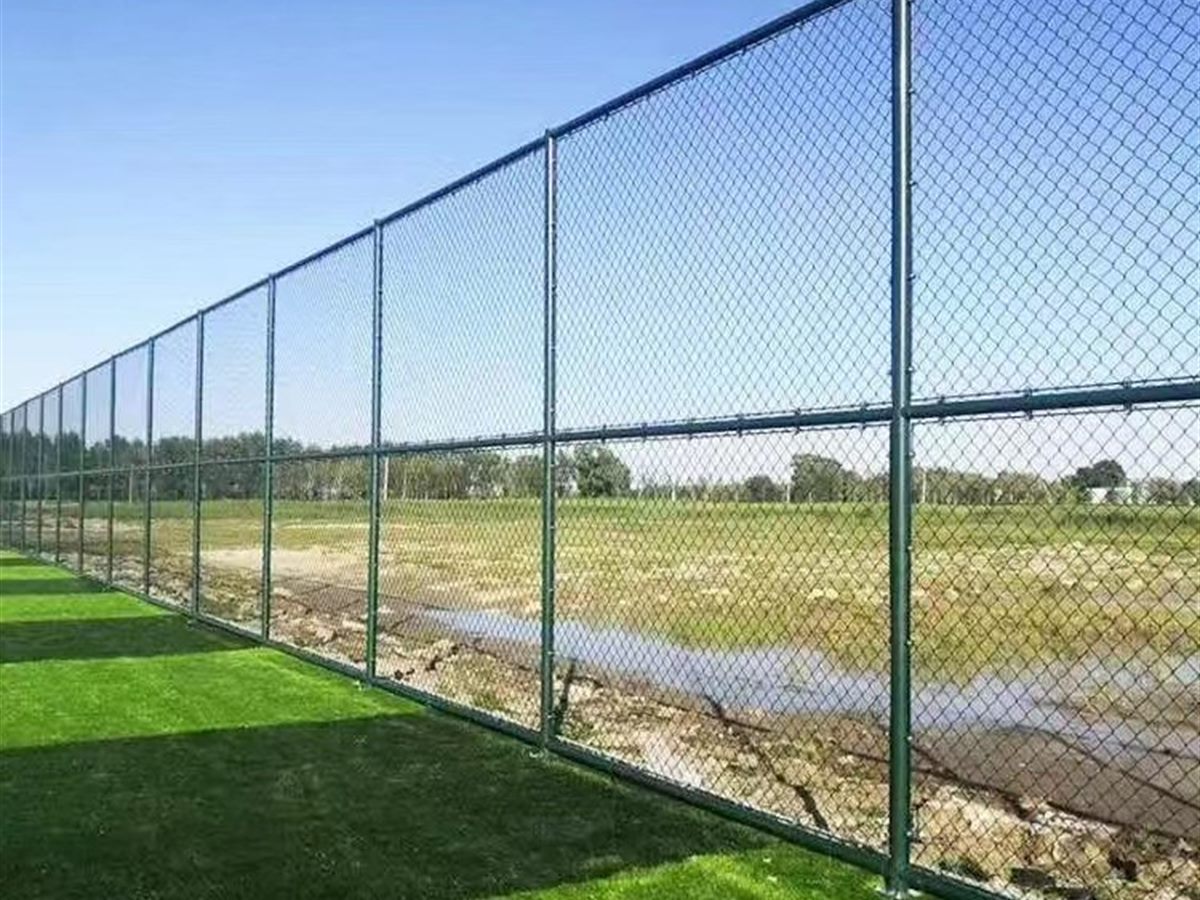
Chain-Link Fence
The woven diamond mesh line, also used for sports grounds and parks.
View product → -
Anti-Climb Y-Post Fence
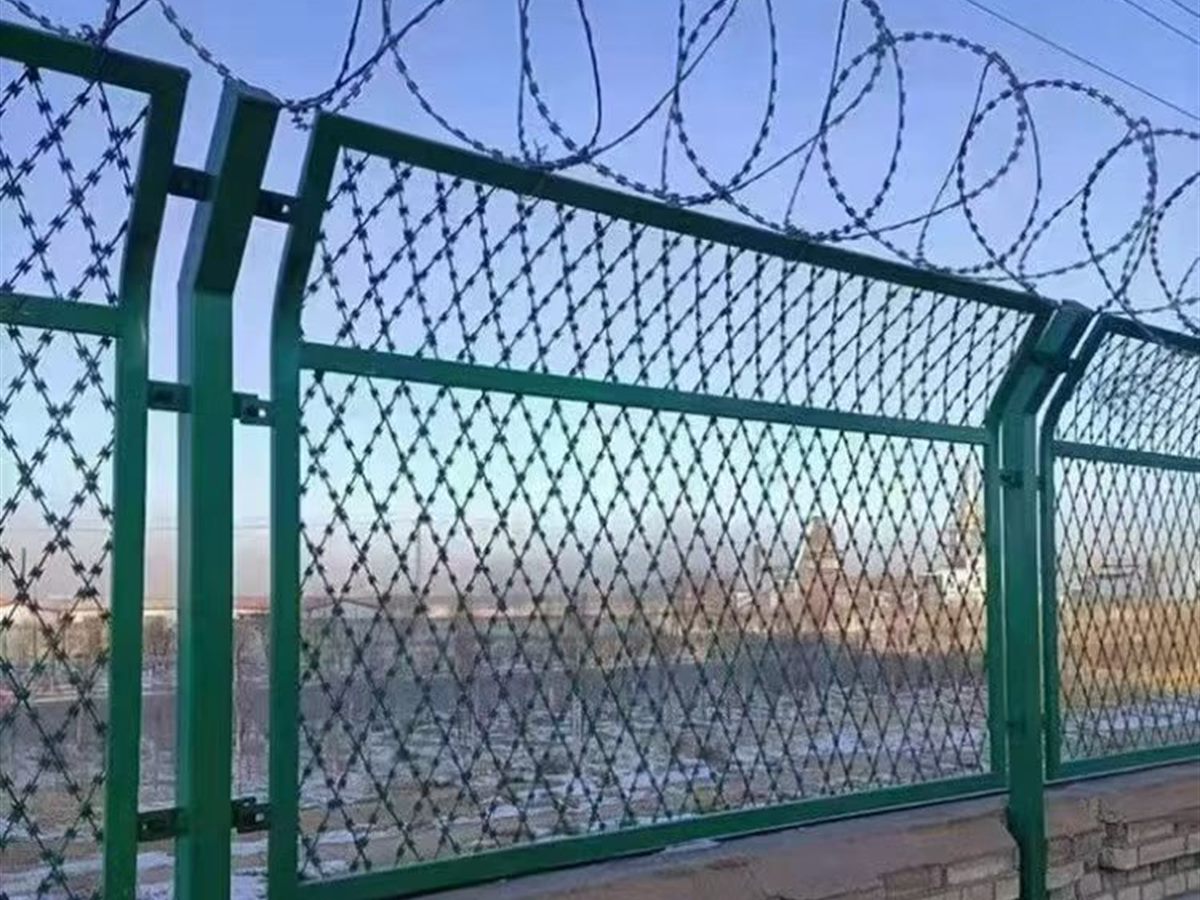
A tall line built to resist climbing rather than to keep a ball in.
View product → -
Temporary Mesh Fence
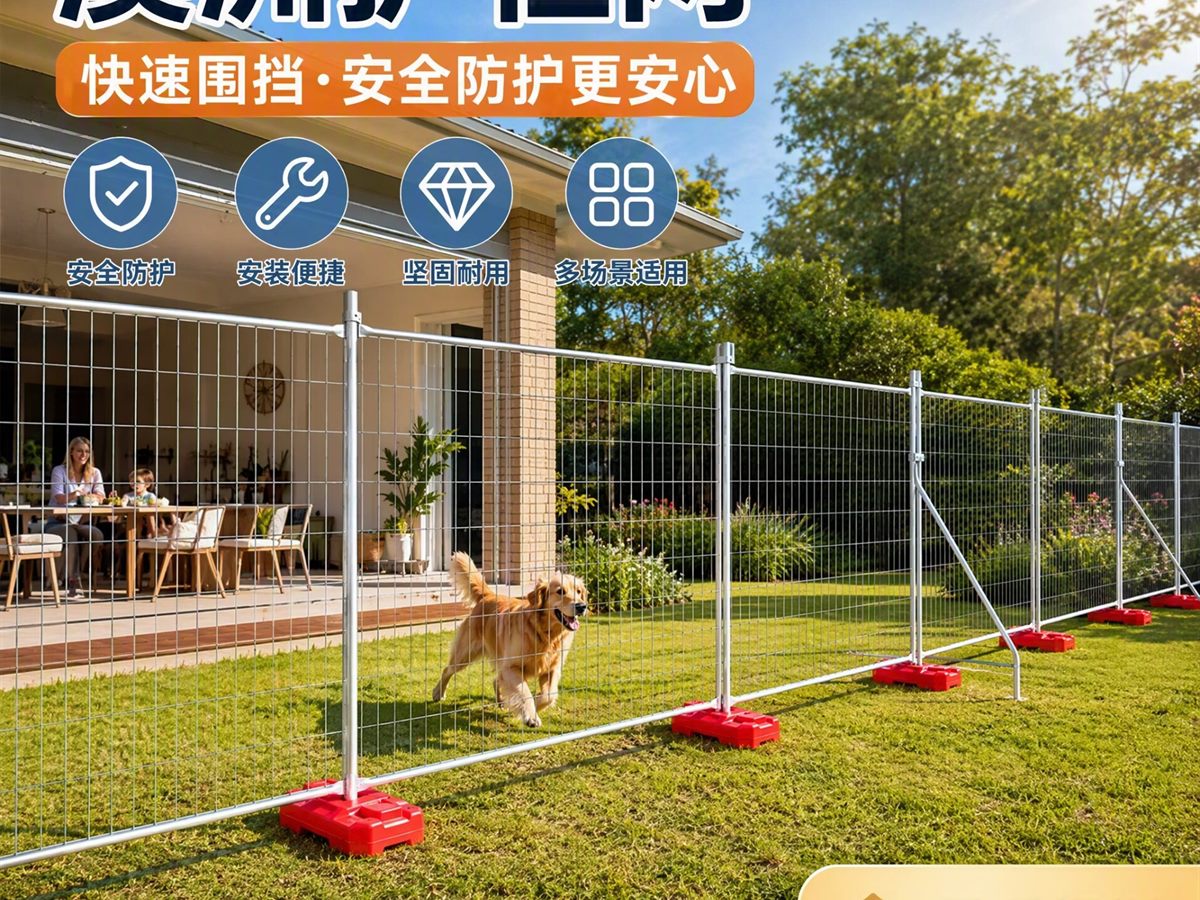
Movable panels for a court that is closed for works rather than fenced for good.
View product →
Next step
Send the court layout and the height
Tell us the court dimensions and the height you want — 0.8 m, 3 m, 4 m, 6 m or more — the run length, the gate positions, the finish and the destination port. We reply within one business day with the specification, the MOQ, the loading plan and the lead time in writing.