
Wire mesh fencing · 9 products in the family
Chain-Link Fence
A diamond mesh that is woven, not welded: each wire is pre-bent and then threaded through the strand above and below, so the panel flexes, turns a corner and follows the ground instead of demanding a dead-level footing. It is the light, open line for sports grounds, parks, roads, farms and general perimeter enclosure — specified here by wire gauge, aperture, panel size and post section.
On this page: the woven build and where it suits (01), the published wire, aperture, panel and post figures (02), what the construction gives you in practice (03), what is fixed on the drawing rather than by us (04), how it is packed, quoted and shipped (05), and four questions answered from this page alone (06).
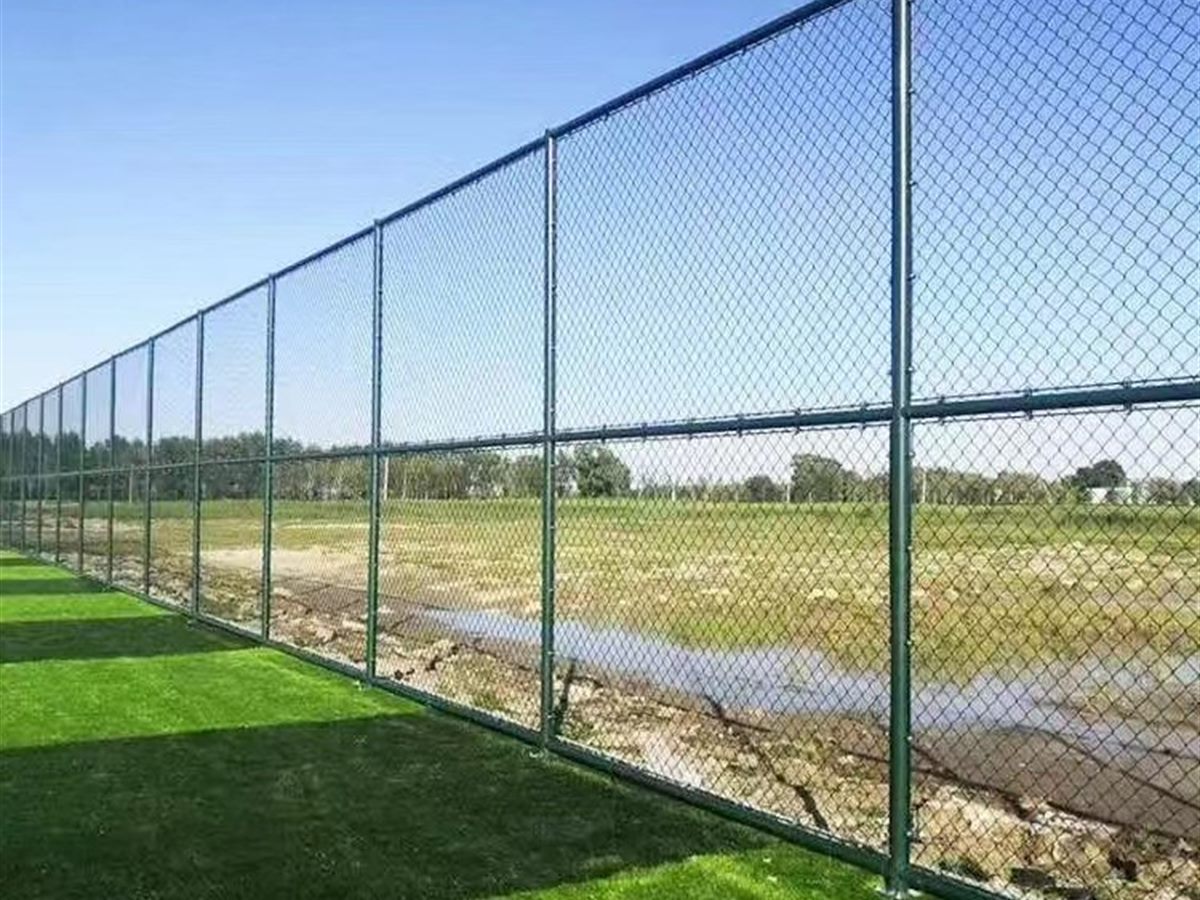
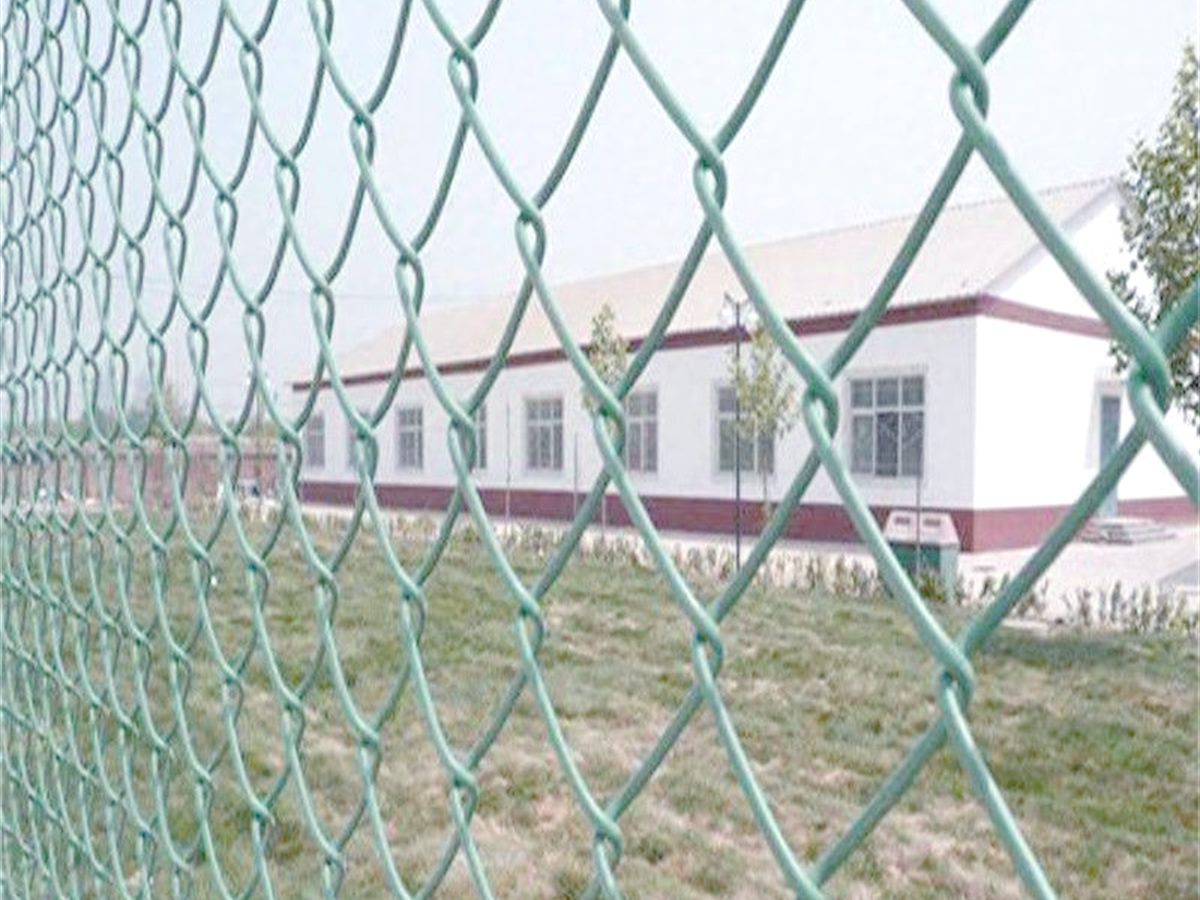
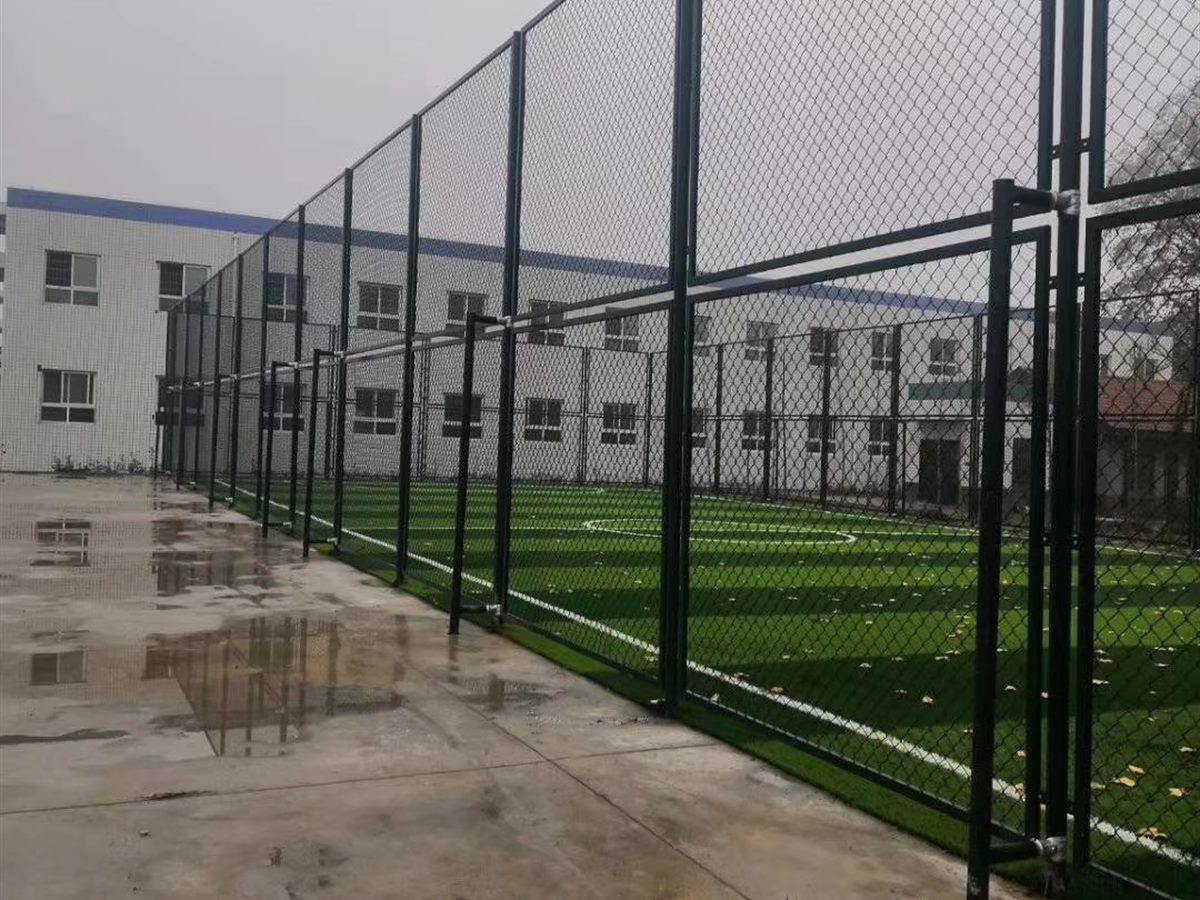
A woven line, and why that matters on site
Chain-link is made the slow way: the wire is bent into a zig-zag, then threaded through the row above and the row below, so the crossings form diamonds and hold each other without a weld. Nothing is fused at the intersection, which is exactly why the finished panel behaves differently from a welded one — it gives a little under load, it wraps around a corner post without a bespoke corner panel, and on a sloping site it can be dressed down to the ground line rather than stepped.
That behaviour decides where it belongs. It is used for sports grounds, parks, roads, farms and general perimeter enclosure: long runs where an open mesh line is wanted, where the ground is not perfectly level, and where the fence has to look light rather than like a wall. It is a boundary product, not an impact product — where a panel has to stay flat and rigid over a long span, a framed mesh fence carries its own tube frame instead; and where the line has to come down and go back up for a works programme, the answer is a temporary mesh fence on movable feet.
Everything above the wire is a separate decision. Wire diameter runs from 1.5 mm to 4 mm; the aperture is commonly 50 × 50 mm, 60 × 60 mm or 70 × 70 mm, with other apertures available; panels are supplied in sizes such as 1 m × 2 m, 1.5 m × 2 m, 2 m × 2.5 m and 2 m × 3 m, with other sizes made; and the post is square or round section, finished the same way as the mesh.
Chain-link fence — the published figures
These are the figures for this product as published. Post spacing, gates and corners are not among them, because they are set by the run and confirmed on the drawing; everything else below is fixed data and is carried into the quotation unchanged.
| Product / model reference | Chain-link fence — woven diamond mesh panel and post system. Quotation against your drawing or the standard you follow; no catalogue model number is issued until the drawing is agreed. |
|---|---|
| Type | Woven mesh. The wire is pre-bent and threaded so the strands cross in a diamond pattern; the panel is not welded at the intersections. |
| Wire diameter | 1.5–4 mm. |
| Mesh aperture | 50 × 50 mm, 60 × 60 mm, 70 × 70 mm and others. |
| Panel sizes | 1 m × 2 m, 1.5 m × 2 m, 2 m × 2.5 m, 2 m × 3 m and others. |
| Posts | Square or round section. |
| Surface treatment | PVC coated or hot-dip galvanised. |
| Colour | Mainly green and blue. |
| Post spacing, gates and corners | Confirmed against the drawing or the buyer's standard — send us the run length, the slope and the opening widths and we confirm the post layout on the drawing. |
| Typical applications | Sports grounds, parks, roads, farms and general perimeter enclosure. |
| Packing | Panels and posts are bundled and palletised for container loading; the exact packing method is confirmed per specification with the loading plan. |
What the woven construction gives you
- No weld at the crossing. The wire is pre-bent and threaded, so the diamond holds by tension rather than by fusion — the joint cannot rust at a weld because there is no weld.
- A panel that moves with the ground. Being flexible, the mesh follows the level of the run and turns corners without a purpose-made panel.
- Wire from 1.5 mm to 4 mm. The gauge is chosen against what the line has to resist, and it is stated on the quotation by diameter, not by a trade name.
- Three common apertures. 50 × 50 mm, 60 × 60 mm and 70 × 70 mm cover most enquiries; other apertures are available.
- Four published panel sizes. 1 × 2, 1.5 × 2, 2 × 2.5 and 2 × 3 m, with other sizes made to the order.
- Square or round posts. The section is the buyer's choice and the caps and fittings follow it.
- Two finishes, two colours. PVC coated or hot-dip galvanised, mainly in green and blue.
What we fix, and what the drawing fixes
The published range is a starting point, not a closed catalogue. Panels, posts and finishes are produced to the project specification, so an aperture, a wire diameter, a panel size or a colour outside the list above is quoted from the drawing rather than refused. What we will not do is guess: post spacing, gate positions and corner details are confirmed against your drawing or the standard you follow, together with the run length and the slope along it, and they appear on the approved shop drawing before production starts.
Two things are worth settling before the enquiry goes out, because both change the price structure rather than the panel. The first is the ground: a post set in concrete, a base plate on a slab and a socket in a kerb are three different assemblies, and the mesh is quoted with whichever one the site needs. The second is the opening: gate leaves are usually a separate item on a chain-link run, and their width and hanging side are needed with the drawing. Send the drawing, the quantity and the destination port and the specification comes back in writing within one business day.
How the order is packed, priced and shipped
Mesh, panels, posts and fittings travel as one programme. Bundles are labelled with the post section and the drawing reference so that a bundle can be identified on site without opening it, and the fittings are bagged separately rather than buried in the load. The exact method is confirmed per specification with the loading plan, because a bundle that cannot be unloaded at destination is not a saving.
| Packing | Panels and posts are bundled and palletised for container loading; the exact packing method is confirmed per specification with the loading plan. |
|---|---|
| Price | Price: quoted per order — FOB Wuhan / Shanghai, CIF or DDP |
| MOQ | Confirmed per specification — send the drawing, quantity and destination port and we reply with MOQ, loading plan and lead time within one business day. |
| Loading | Confirmed per specification — send the drawing, quantity and destination port and we reply with MOQ, loading plan and lead time within one business day. |
| Lead time | Confirmed per specification — send the drawing, quantity and destination port and we reply with MOQ, loading plan and lead time within one business day. |
| Documentation | Proforma invoice, commercial invoice, packing list and certificate of origin as required. Buyers who need CE / EN / ASTM documentation: tell us the standard and we will confirm in writing what we can supply. |
| Payment and warranty | Payment terms and warranty are agreed per order and stated on the proforma invoice. |
No price figure is published on this page, and no MOQ or lead time is promised before the specification is known. Every one of those figures depends on the drawing or standard, the quantity and the destination port — send those three and the answer comes back complete rather than indicative.
Four questions, answered from this page
- Is chain-link welded or woven?
- Woven. The wire is pre-bent and threaded so the strands cross in a diamond pattern, and the panel is not welded at the intersections. That is what allows it to flex, turn corners and follow ground level.
- What wire and aperture can I have?
- Wire from 1.5 mm to 4 mm, with the aperture commonly 50 × 50 mm, 60 × 60 mm or 70 × 70 mm. Other apertures are available — tell us what you need and it is quoted from the specification.
- What panel sizes and posts are published?
- Panels in 1 m × 2 m, 1.5 m × 2 m, 2 m × 2.5 m and 2 m × 3 m, with other sizes made. Posts are square or round section, PVC coated or hot-dip galvanised, mainly green and blue.
- How is the post layout decided?
- Post spacing, gate positions and corners are confirmed against your drawing or the standard you follow, from the run length, the slope and the opening widths. They are not assumed from a catalogue.
- Is a price or MOQ published here?
- No. Price is quoted per order — FOB Wuhan / Shanghai, CIF or DDP — and MOQ, loading plan and lead time are confirmed per specification once we have the drawing, the quantity and the destination port.
Related products
Three lines usually quoted beside it
Same workshop, same drawings, same loading plan. Each plate opens the product page for that item.
-
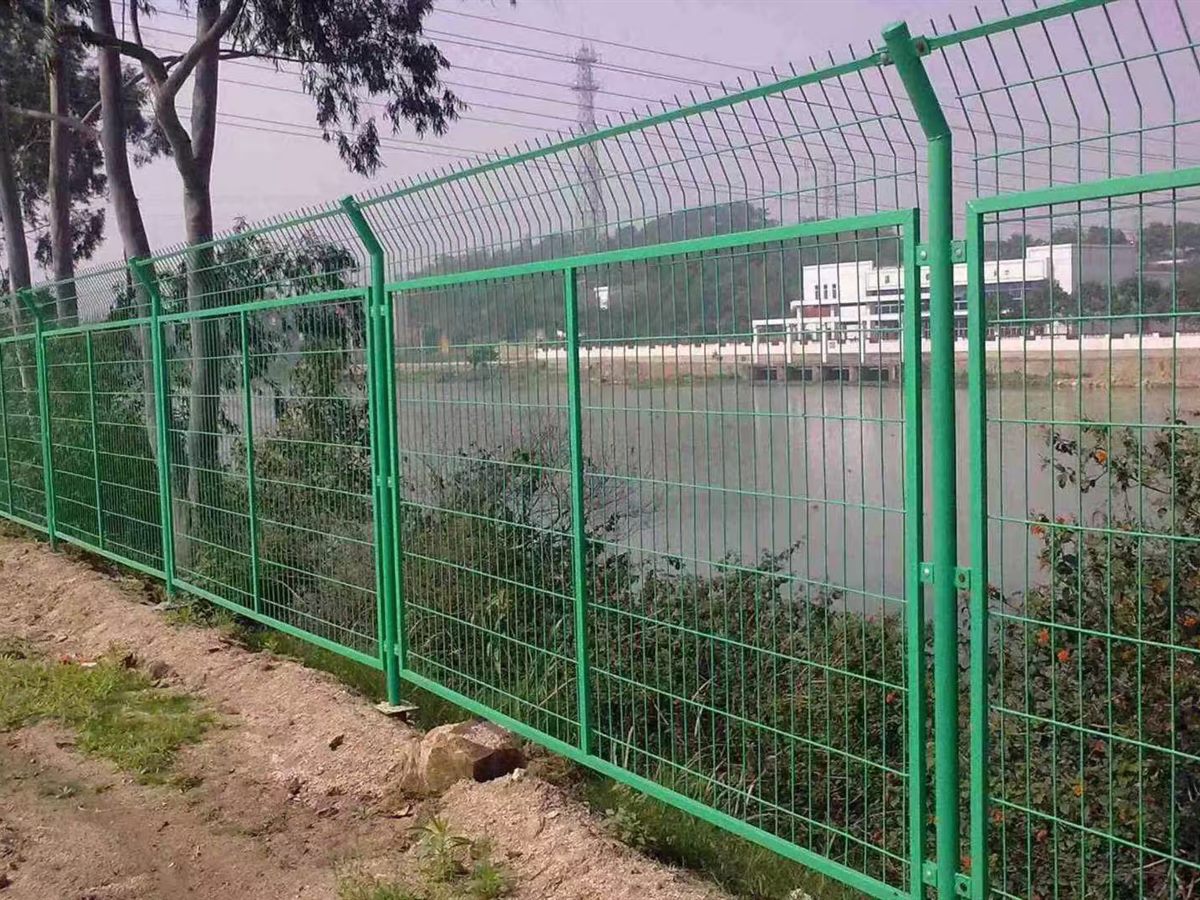
Framed Mesh Fence
The rigid alternative: welded mesh set into a square-tube frame and bolted to the posts, so a long panel cannot sag.
View product → -
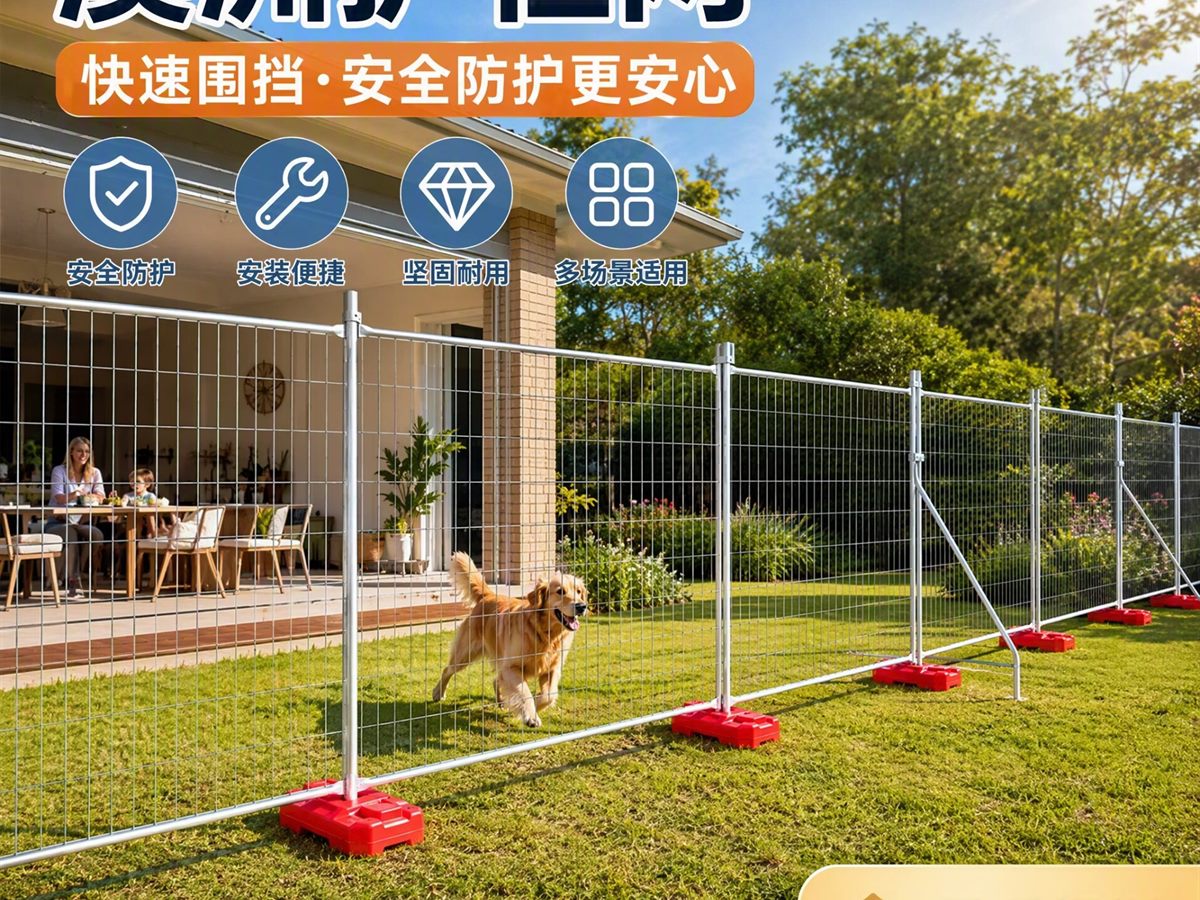
Temporary Mesh Fence
Movable welded panels on feet or base plates for work areas, events and separation that has to come down again.
View product → -
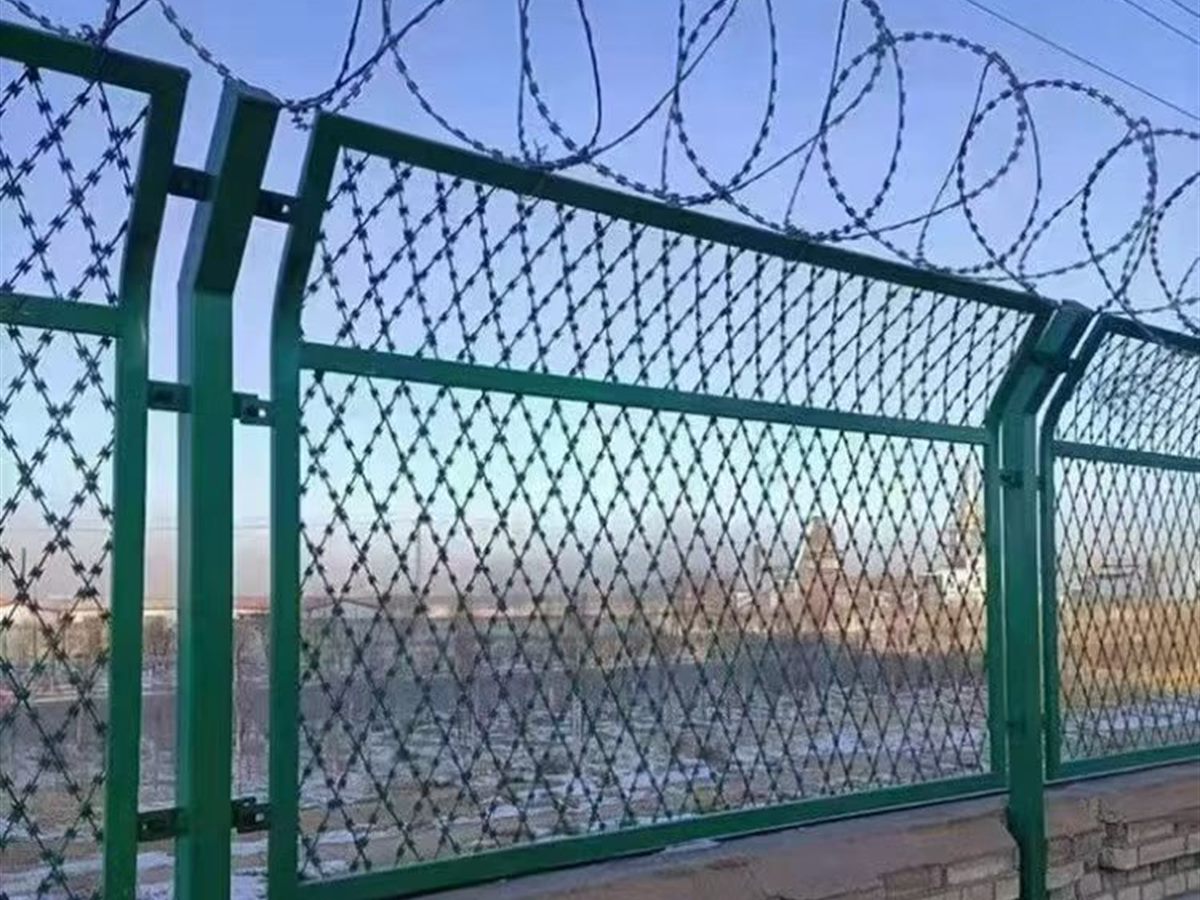
Anti-Climb Y-Post Fence
Welded panels on Y-shaped posts with an angled head — no top rail and no flat ledge to take hold of.
View product →
Next step
Send the run length, the aperture and the post section
Tell us the wire diameter and aperture, the panel size, the post section, the finish and the destination port — plus the slope, the corners and the opening widths if the line turns or has gates. We reply within one business day with the specification, the MOQ, the loading plan and the lead time in writing.