
Guardrails & railings · 7 products in the family
Crowd-Control Barrier
A line a crowd cannot walk through and a marshal can still pick up. Each section is steel, set down on its own removable feet and linked to the sections either side, so a row becomes a barrier that holds its shape under pressure — and comes apart into a stack of flat panels when the event is over. Panel size, the joint between sections and the finish are all made to the drawing.
On this page: how the interlock and the loose feet work (01), the published rows and the ones the drawing fills in (02), what the connection does under crowd pressure (03), what we need to quote (04), packing, price and delivery (05), and four questions answered from this page (06).
The joint and the loose foot are the product
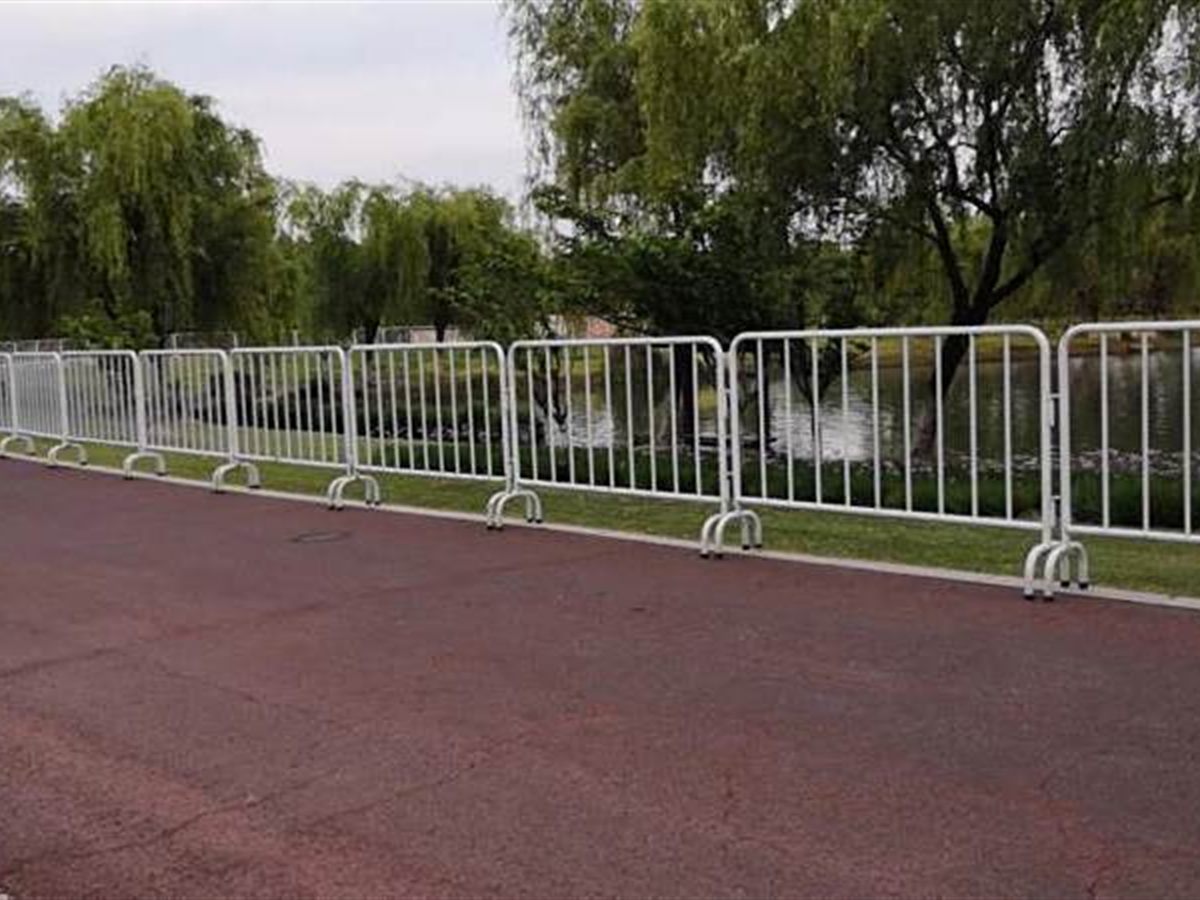
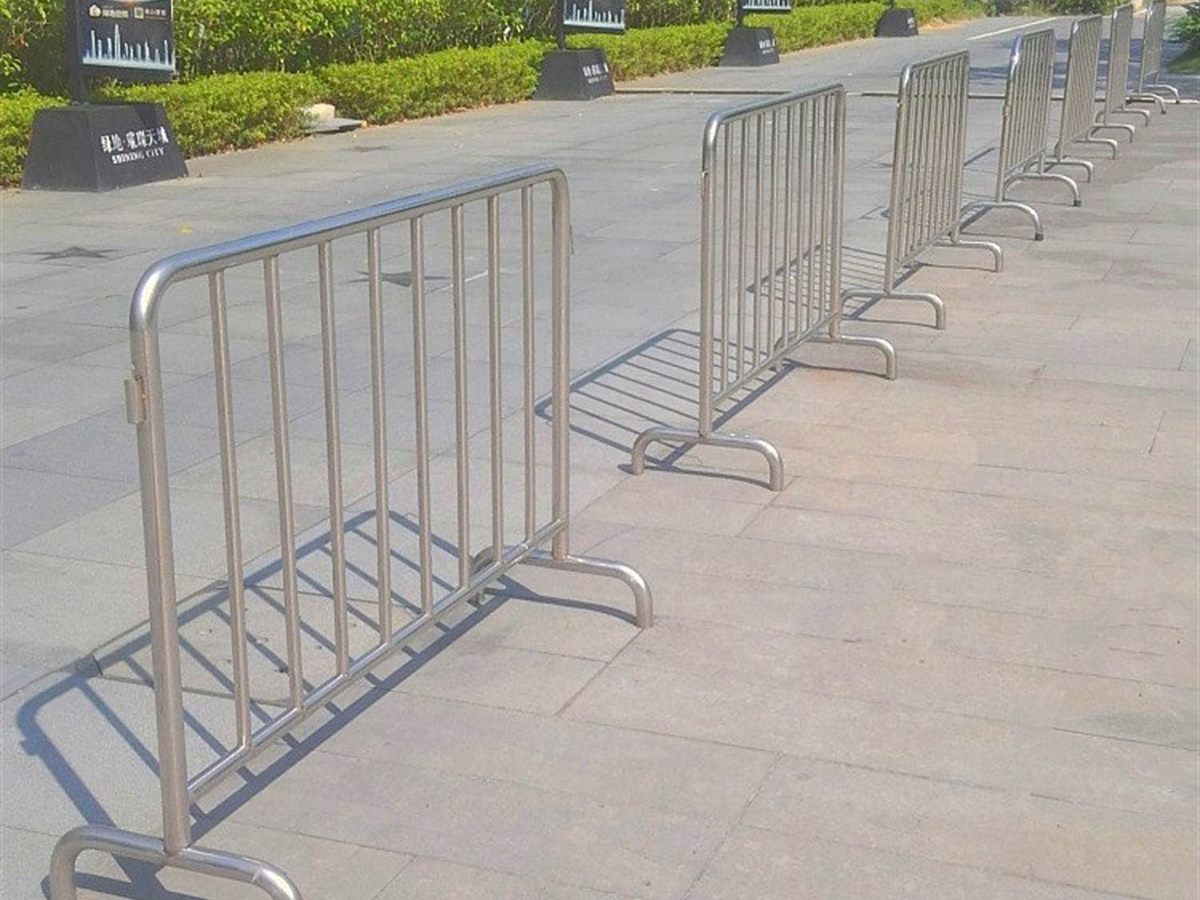
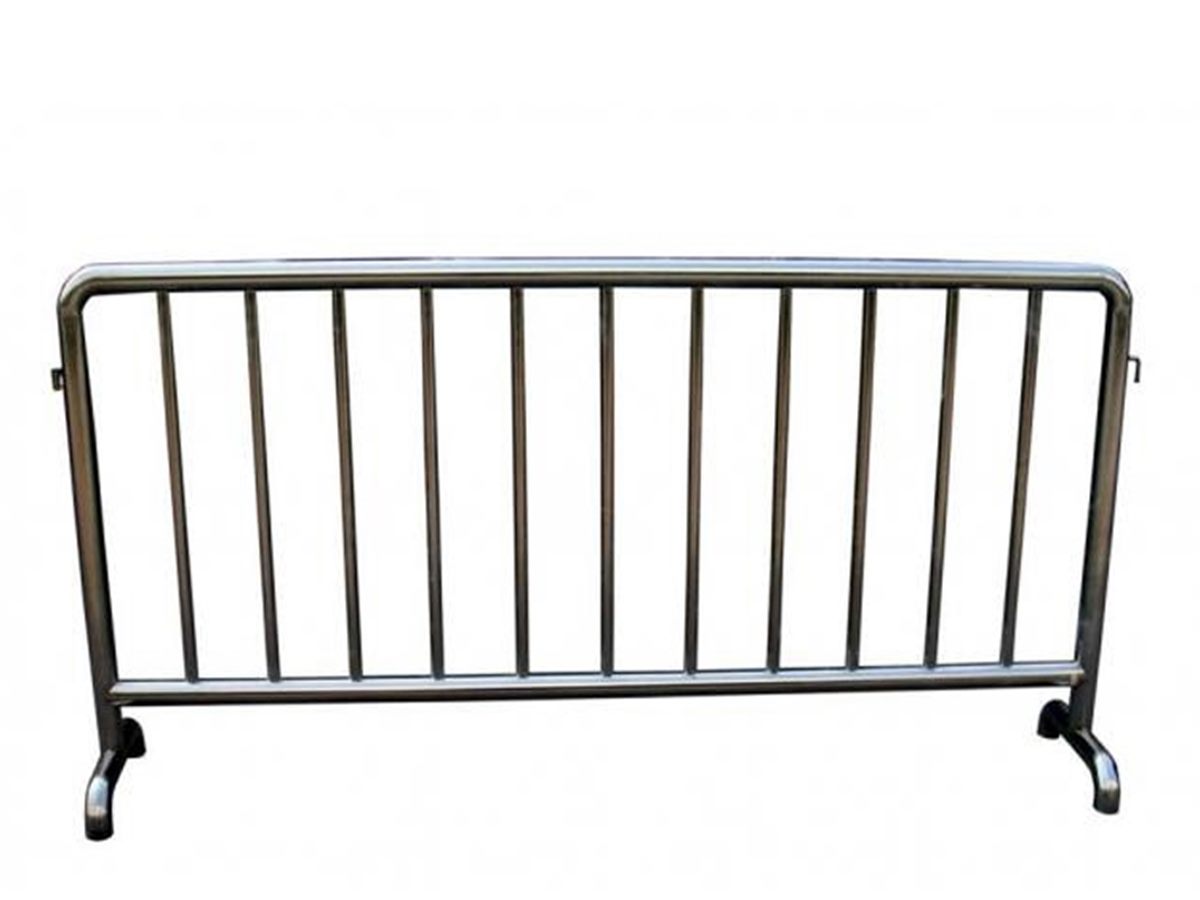
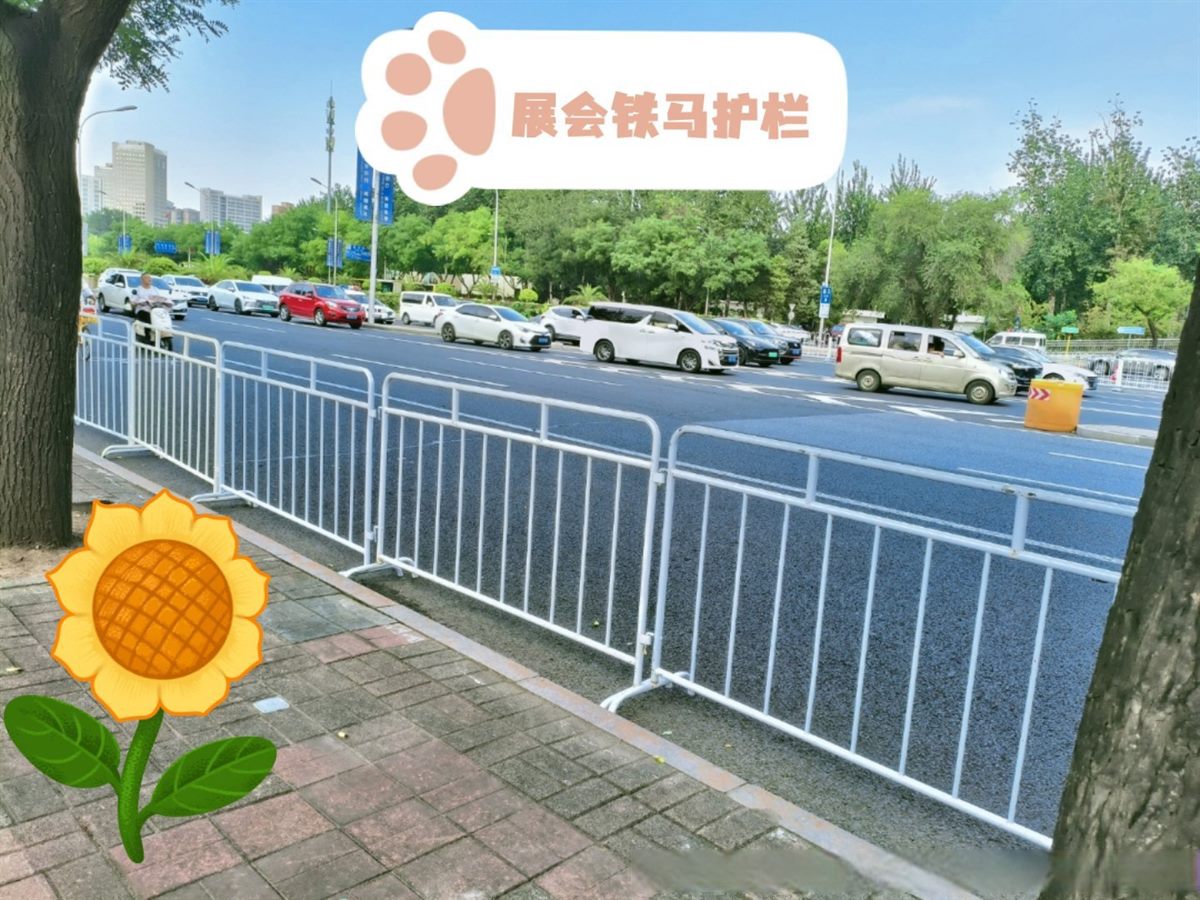
Two details make a barrier out of a panel. The first is the connection: sections interlock, so a run holds its line under crowd pressure instead of being pushed apart at the joints. The second is the foot: it comes off, so sections stack flat for transport and storage and the run can be re-laid in a different shape each time it is used.
That is a different duty from the rest of the family. This barrier guides people rather than stopping vehicles, which is why it is used for queuing lanes and ticket lines, a barrier line in front of a stage or a pitch, a pedestrian route separated from a working area, a works entrance kept clear, and the perimeter of a fenced-off section at a public event. Where the requirement is vehicle impact, the published specification points elsewhere — to the road guardrail or to a permanent line such as the zinc-steel perimeter railing.
No panel size, frame section or weight is published for this product, so the panel and the finish are made to the project specification. What is fixed is the principle: interlocking sections, removable feet, and a joint type chosen to suit how the line is handled.
Crowd-control barrier — fixed rows and open rows
The rows that carry a value are the connection and the feet. Panel size, frame section, finish and the joint type are made to the drawing, and they are confirmed on the shop drawing before production.
| Product / model reference | Crowd-control barrier (铁马) — interlocking steel barrier sections with removable feet. |
|---|---|
| Panel size | Made to the project specification — send us the drawing or the standard you follow. |
| Frame section | Made to the project specification — send us the drawing or the standard you follow. |
| Finish | Made to the project specification — confirmed on the shop drawing. |
| Connection between sections | Interlocking; the joint type (pin, hook or bolted plate) is made to the project specification and confirmed on the shop drawing. |
| Feet | Removable, so that the sections stack flat for transport and storage. |
| Typical use | Queuing lanes and ticket lines, event and venue crowd lines, pedestrian routes, works entrances, public event perimeters. |
| Not intended for | Vehicle impact or permanent fence duty — for those, the road guardrail and the zinc-steel perimeter railing in the same family are quoted instead. |
| Packing | Sections and feet are stacked, bundled and palletised for container loading; the exact packing method is confirmed per specification with the loading plan. |
What the interlock and the feet give you
- A line that holds at the joints. The sections interlock, so crowd pressure is carried across the run rather than opening it at the connections.
- Feet that come off. Sections stack flat for transport and storage, and the same run can be laid in a new shape next time.
- A joint chosen for handling. Pin, hook or bolted plate, made to the specification and confirmed on the shop drawing.
- Panel size and finish to the drawing. The section is made for the line it has to hold, not cut down from a stock size.
- An honest scope. The specification states plainly that this is not a vehicle barrier or a permanent fence, and names what is quoted for those duties.
- Handling considered. Tell us whether sections are carried by hand or moved on a trolley and the panel weight is planned to it.
Length of line, handling and joint type
Tell us the length of line you need to hold, whether the sections have to fold or stack for transport, whether the feet must come off, the finish you want and the destination port, and the panel and the connection are confirmed on the shop drawing. Nothing about the panel is taken from a catalogue, because the product is defined by how the line is used rather than by a standard bay.
Two practical questions decide the rest. How will the sections be moved — by hand, two people to a section, or on a trolley — because that sets the panel weight the run can live with. And will the line be re-laid in a different shape, because a joint that is quick to open is worth more than a joint that is slightly stiffer.
Sections stacked, feet bagged, one load
Sections and feet are stacked, bundled and palletised for container loading, with the feet kept together as their own bundles rather than loaded loose. Because the sections stack flat, the load is compact for its run length. The exact packing method is confirmed per specification with the loading plan.
| Packing | Sections and feet are stacked, bundled and palletised for container loading; the exact packing method is confirmed per specification with the loading plan. |
|---|---|
| Price | Price: quoted per order — FOB Wuhan / Shanghai, CIF or DDP |
| MOQ | Confirmed per specification — send the drawing, quantity and destination port and we reply with MOQ, loading plan and lead time within one business day. |
| Loading | Confirmed per specification — send the drawing, quantity and destination port and we reply with MOQ, loading plan and lead time within one business day. |
| Lead time | Confirmed per specification — send the drawing, quantity and destination port and we reply with MOQ, loading plan and lead time within one business day. |
| Documentation | Proforma invoice, commercial invoice, packing list and certificate of origin as required. Buyers who need CE / EN / ASTM documentation: tell us the standard and we will confirm in writing what we can supply. |
| Payment and warranty | Payment terms and warranty are agreed per order and stated on the proforma invoice. |
Four questions, answered from this page
- What holds the run together?
- The sections interlock. The joint type — pin, hook or bolted plate — is made to the project specification and confirmed on the shop drawing, and it is the joint that carries crowd pressure across the run.
- Are the feet removable?
- Yes. The feet come off, so the sections stack flat for transport and storage and the run can be re-laid in a different shape.
- What panel size is published?
- None. Panel size, frame section and finish are made to the project specification and confirmed on the shop drawing.
- Where is it used?
- Queuing lanes and ticket lines, event and venue crowd lines, pedestrian routes, works entrances and public event perimeters.
- Can it be used as a vehicle barrier or a permanent fence?
- No. For vehicle impact or permanent fence duty the specification points to the road guardrail or the zinc-steel perimeter railing in the same family.
Related products
Three lines that share a works entrance
One workshop, one drawing set. Each plate opens the product page for that item.
-
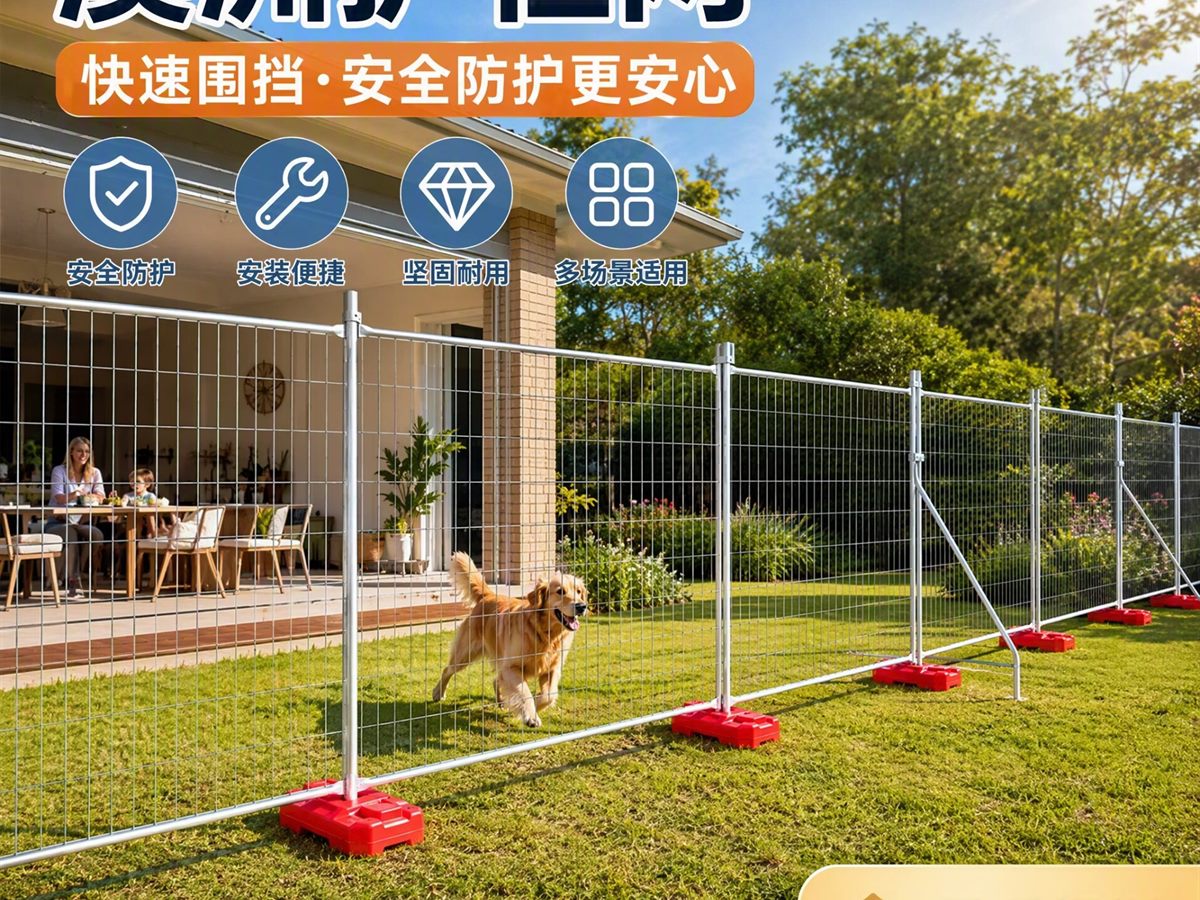
Temporary Mesh Fence
Movable mesh panels that close a work area and move with the front.
View product → -
-
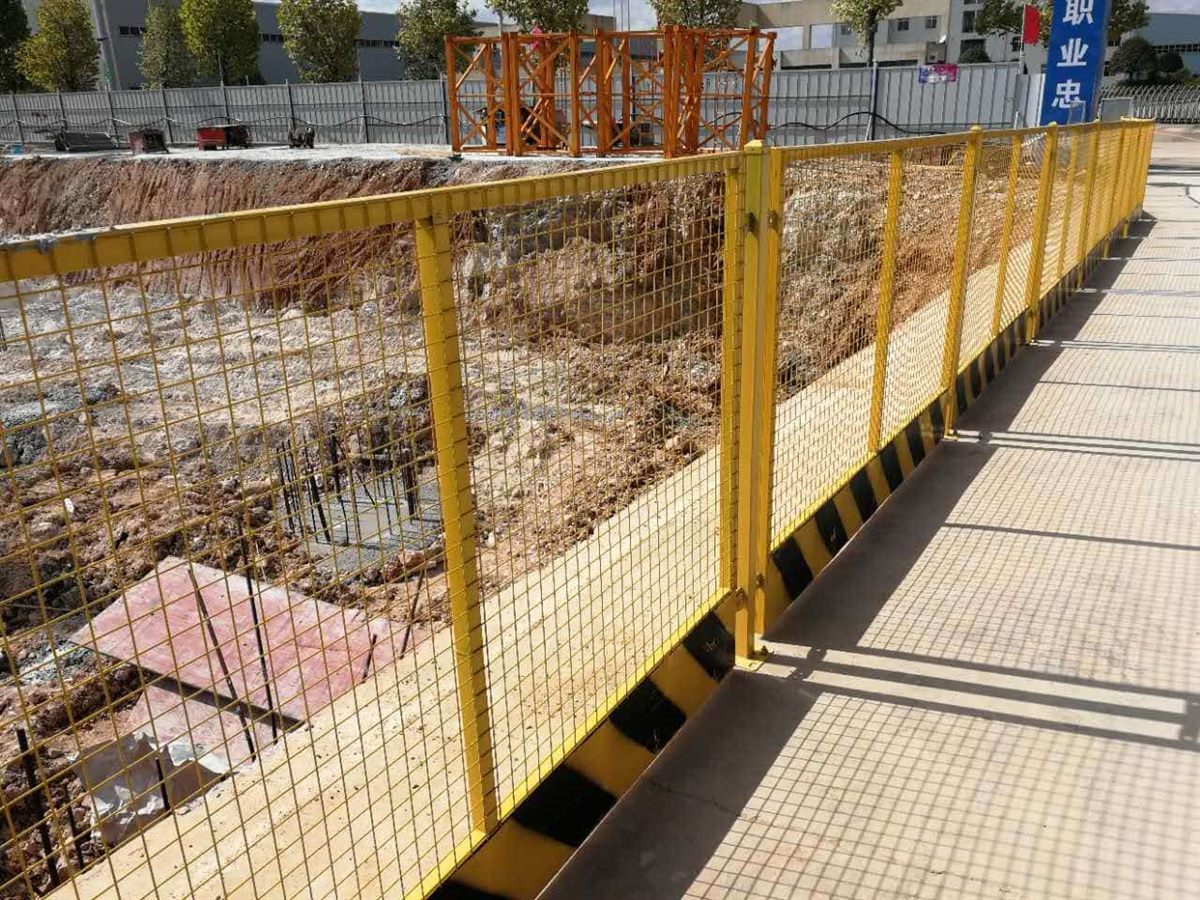
Excavation Edge Guardrail
Fixed edge protection for a pit or slab edge, rather than a crowd line.
View product →
Next step
Send the line length and the joint you want
Tell us the length of line, how the sections will be handled, whether the feet must come off, the joint type, the finish and the destination port. We reply within one business day with the specification, the MOQ, the loading plan and the lead time in writing.