
Wuhan manufacturer · since 2014
Hoarding, guardrails and wire mesh fencing — made in Wuhan since 2014
Hubei Hongying Guardrail Co., Ltd. produces all three families at its own workshop in Jiangxia District, Wuhan: hoarding and site fencing to close a work area, guardrails and railings to protect an edge, an opening or a road, and wire mesh fencing for boundaries, infrastructure and security. A 5,000 m² workshop, a 2,000 m² finished-goods warehouse and 60,000 m a month of capacity, supplying municipal and metro construction projects in central China since 2014.
What this page covers: the 22 products in three labelled bands, then a seven-part selection and engineering guide — how the families combine on one site, how to choose hoarding, guardrails and mesh fencing, how quotation and documentation work, and how packing, loading and lead time are confirmed.
The range
Everything we make, in the order a site needs it
Three bands, one workshop. Each card below opens the product page for that item; the specification figures for each family are collected in the guide further down this page.
Wire Mesh Fencing
9 productsHot-dip galvanised steel wire and galvanised tube frame, finished hot-dip galvanised, electrostatically sprayed or PVC dipped. Mesh aperture, wire diameter and post spacing are made to the project specification — send us the drawing or the standard you follow.
-
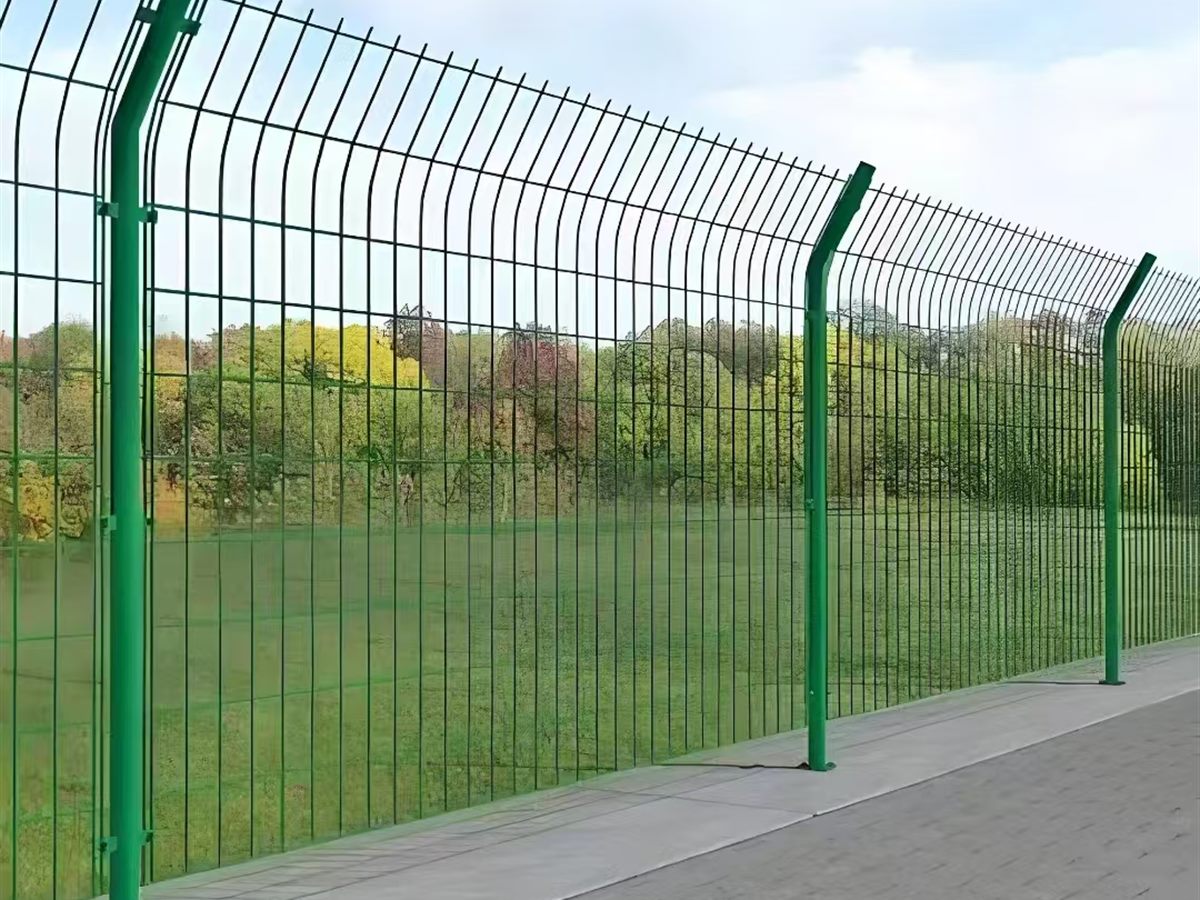
Double-Wire Mesh Fence
Two horizontal wires and one vertical wire welded into a rigid panel on round or square posts, in galvanised, powder-coated or PVC-dipped finish.
View product → -
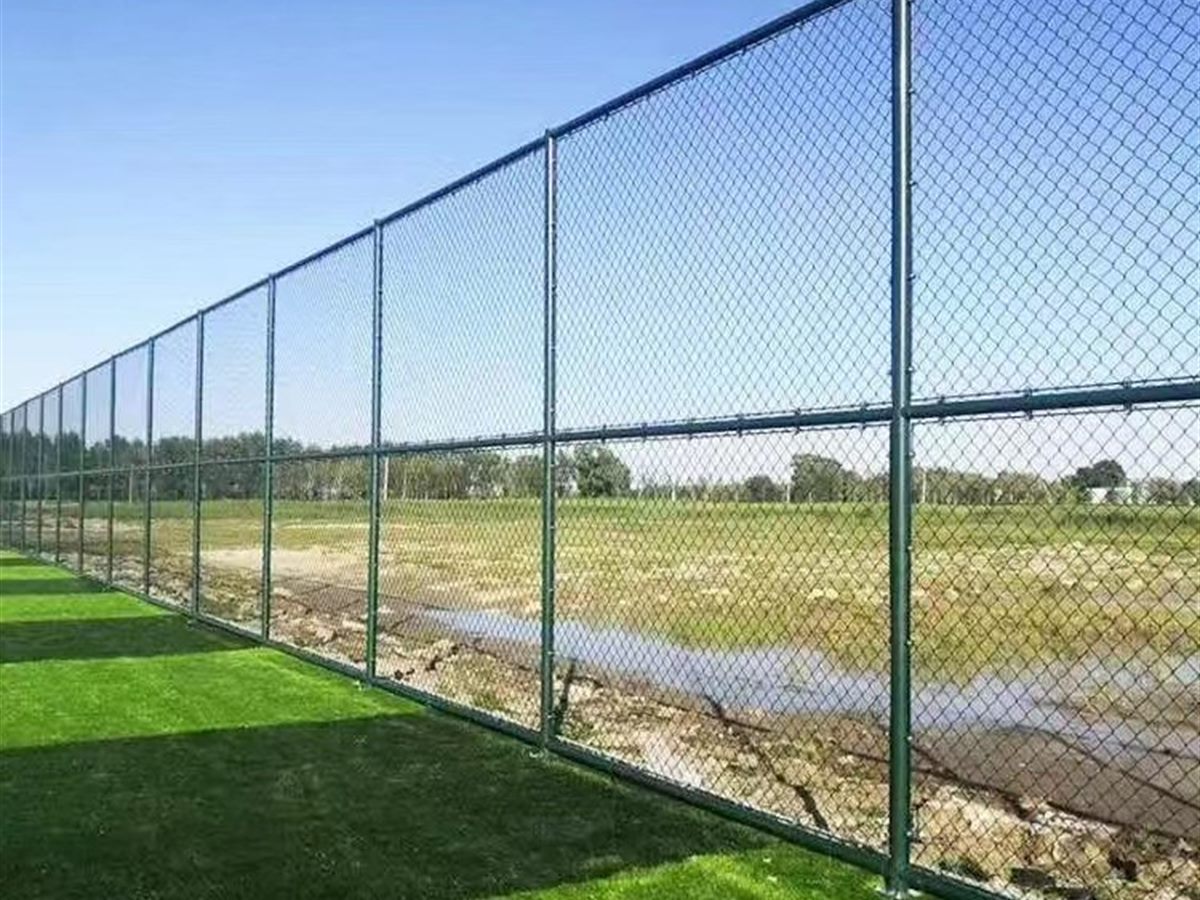
Chain-Link Fence
Woven diamond mesh on round posts with line and corner posts, top rail, tension bands and bracing — the quickest fence to erect over a long run.
View product → -
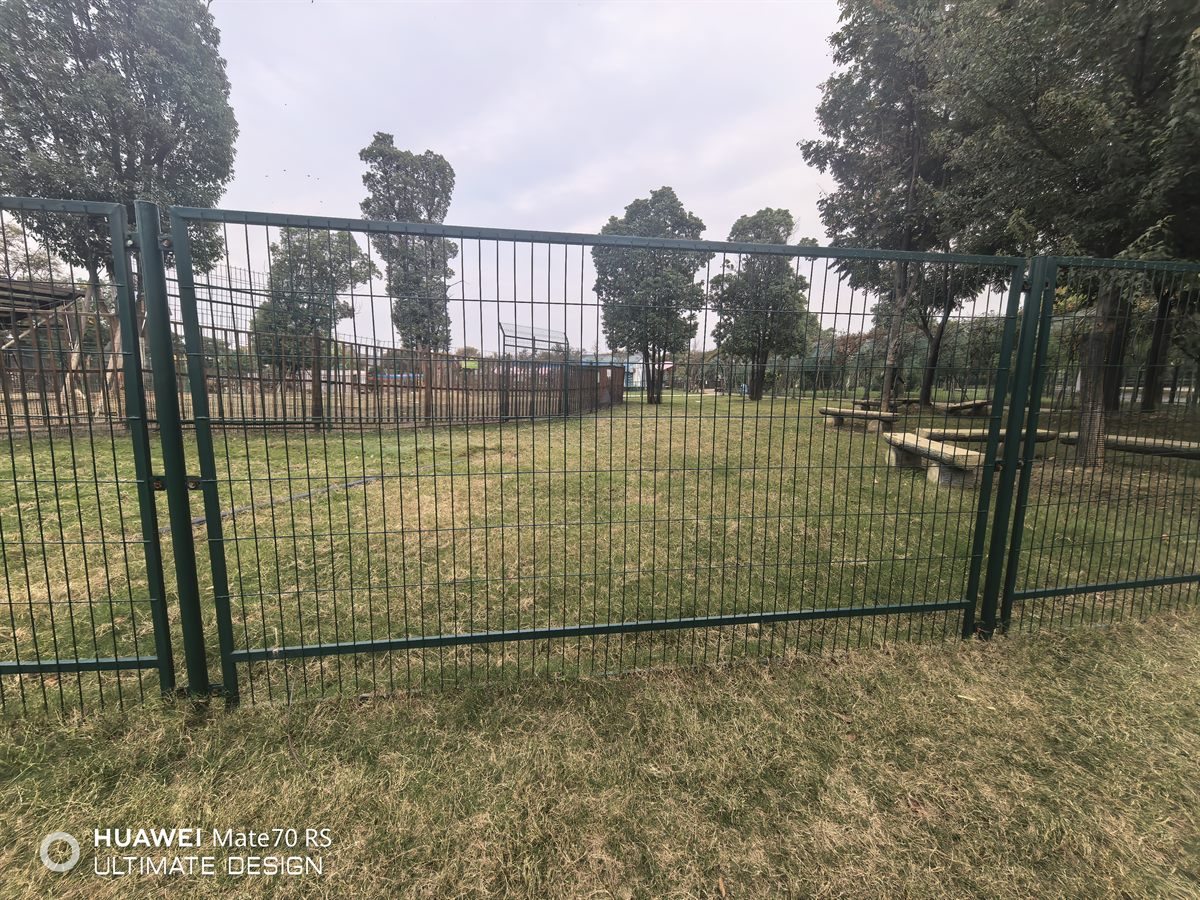
Peach-Post Mesh Fence
Welded mesh panels clipped to peach-shaped steel posts with matching caps and clips.
View product → -
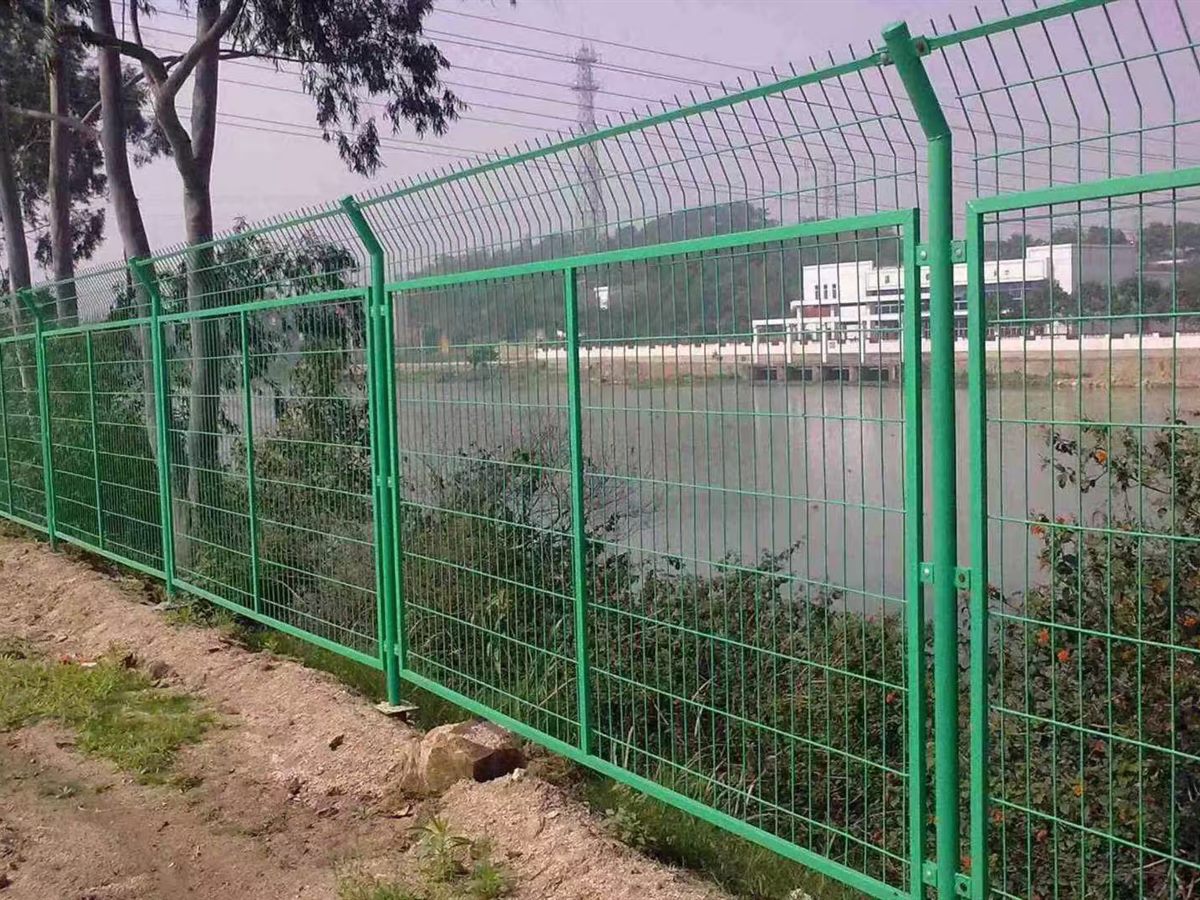
Framed Mesh Fence
Welded mesh set into a square-tube frame and bolted to the posts, so a long panel does not sag the way a plain roll of mesh will.
View product → -
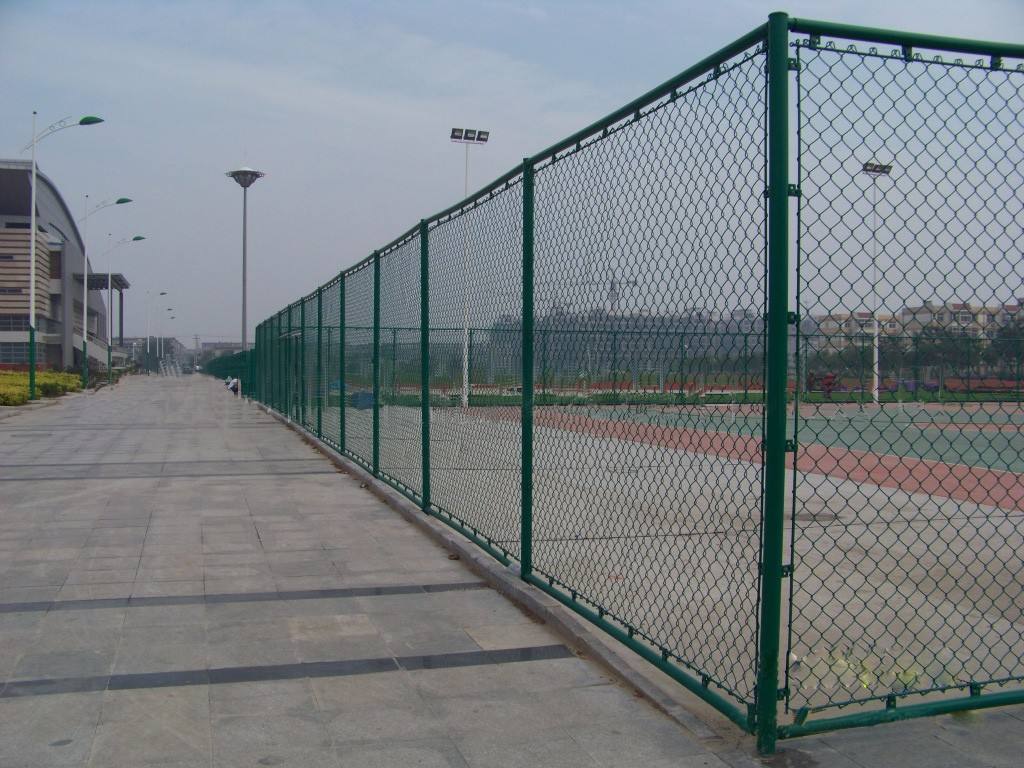
Sports Court Fence
Tall mesh enclosure for courts and pitches; panel height, post spacing and gate positions are set out on the layout drawing.
View product → -
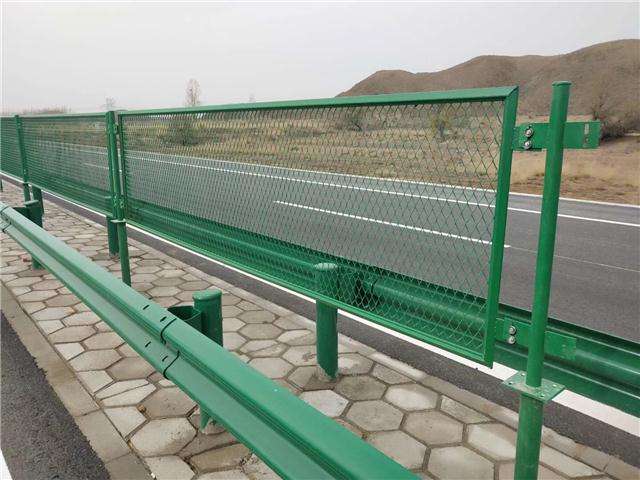
Anti-Glare Mesh
Mesh with angled or louvred blades that cuts headlight glare between carriageways, mounted on the same posts as the fence line.
View product → -
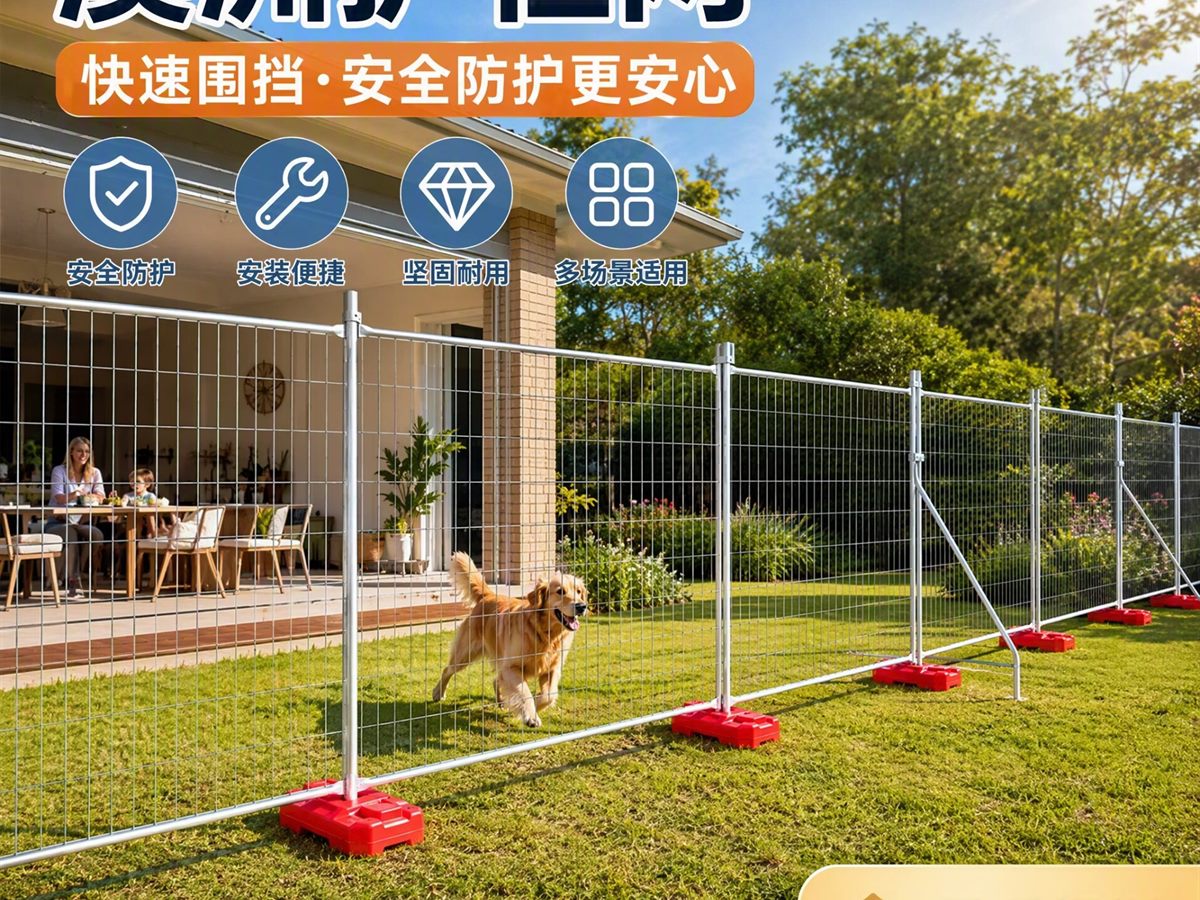
Temporary Mesh Fence
Movable welded mesh panels on feet or base plates, lifted and re-positioned by hand for work areas, events and temporary separation.
View product → -
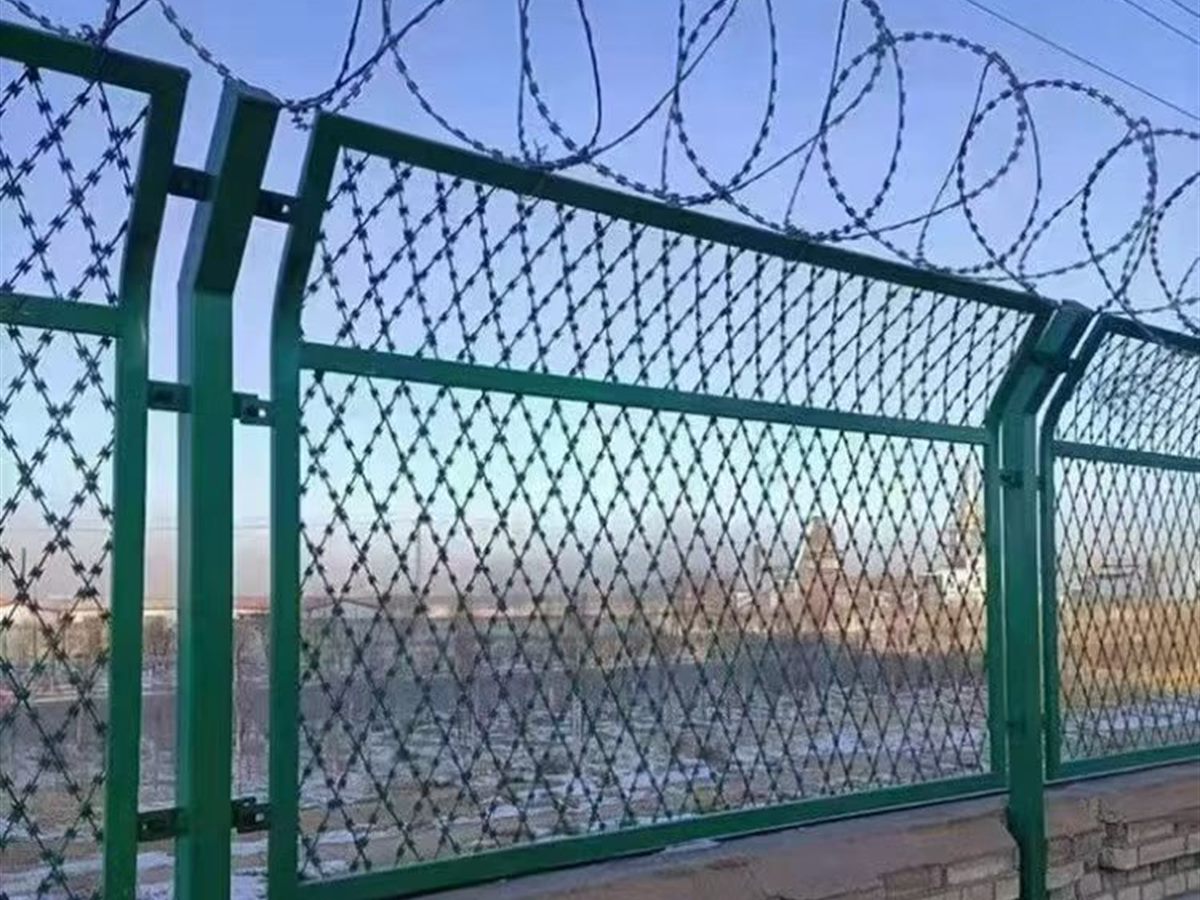
Anti-Climb Y-Post Fence
Welded mesh panels on Y-shaped posts with an angled head — no continuous top rail and no flat ledge to take hold of; razor wire can be fixed in the fork.
View product → -
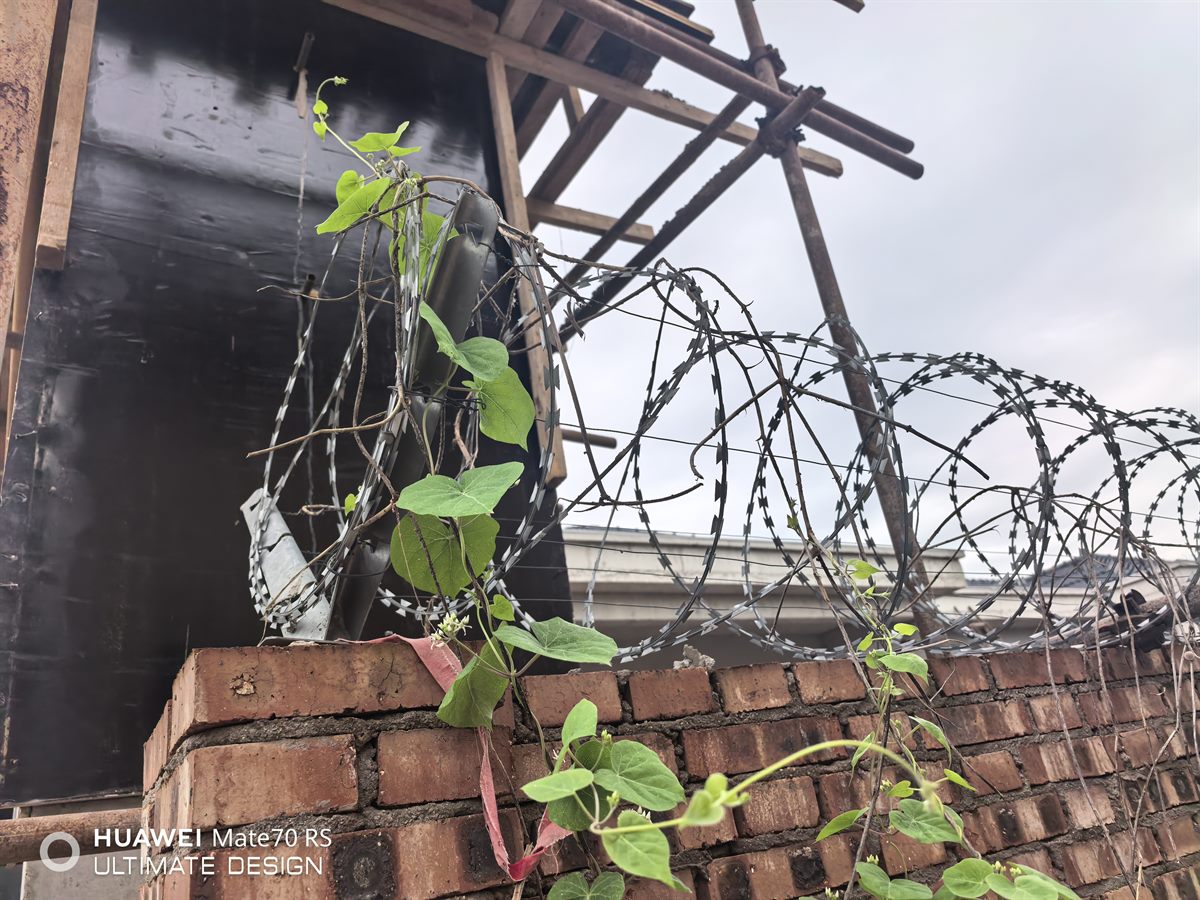
Razor Wire
Blade strip closed onto a high-tensile core wire, supplied in coils — concertina or flat-wrap, galvanised or stainless, with barbed wire as the lighter alternative.
View product →
Guardrails & Railings
6 productsSteel, zinc-steel and PVC protection for an excavation edge, a slab edge, a road, a crowd or a green area. Note that two separate products sit at the top of this band: the standardised W-Beam Steel Road Guardrail and the general Road Guardrail made to the project specification.
-
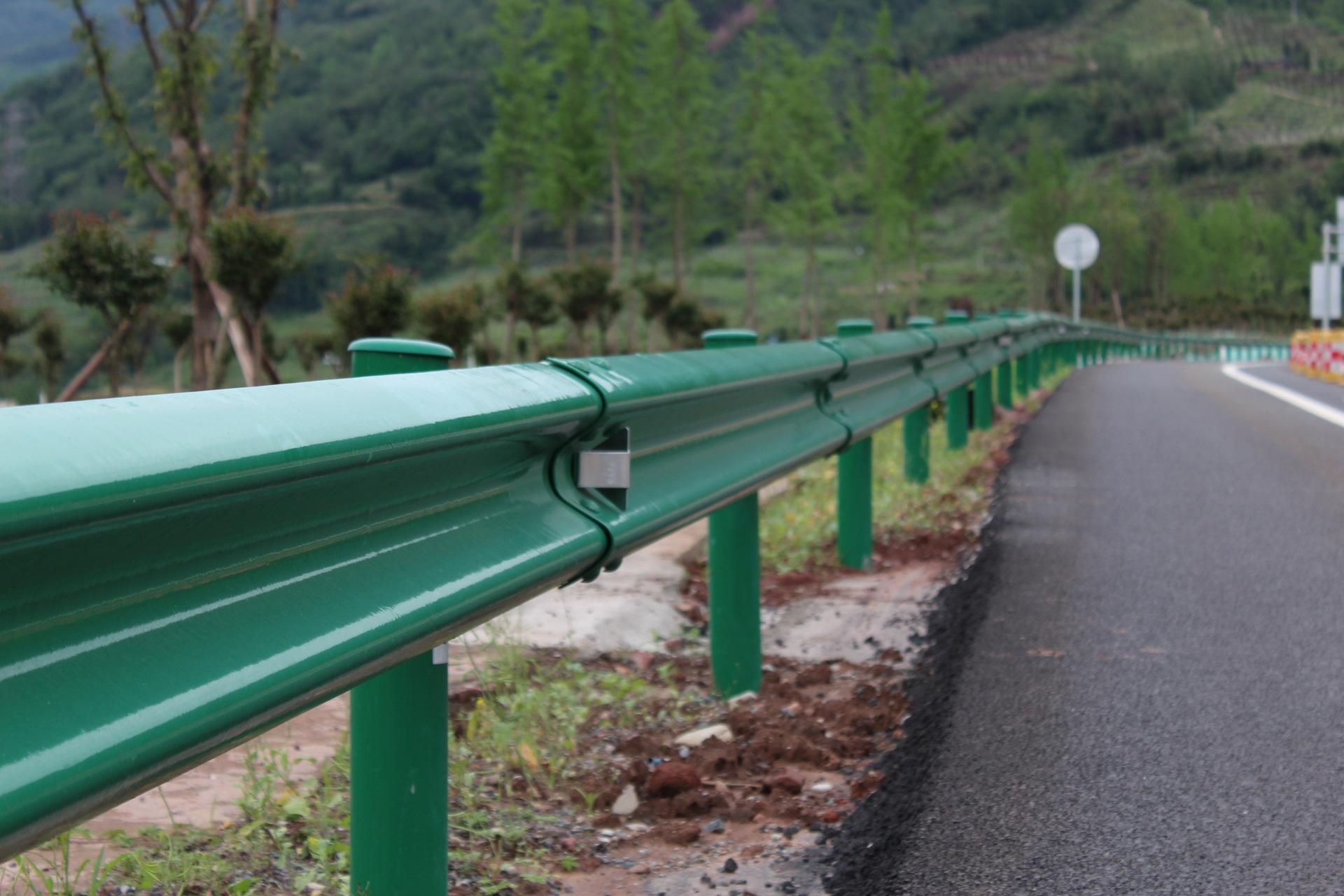
W-Beam Steel Road Guardrail
Corrugated beam panels 4320 mm long on a 4 m post spacing — twin-wave 310 mm or triple-wave 505 mm, 85 mm wave height, 3 mm or 4 mm plate, on Φ114 / Φ140 mm posts. JT/T 281—2007 figures.
View product → -
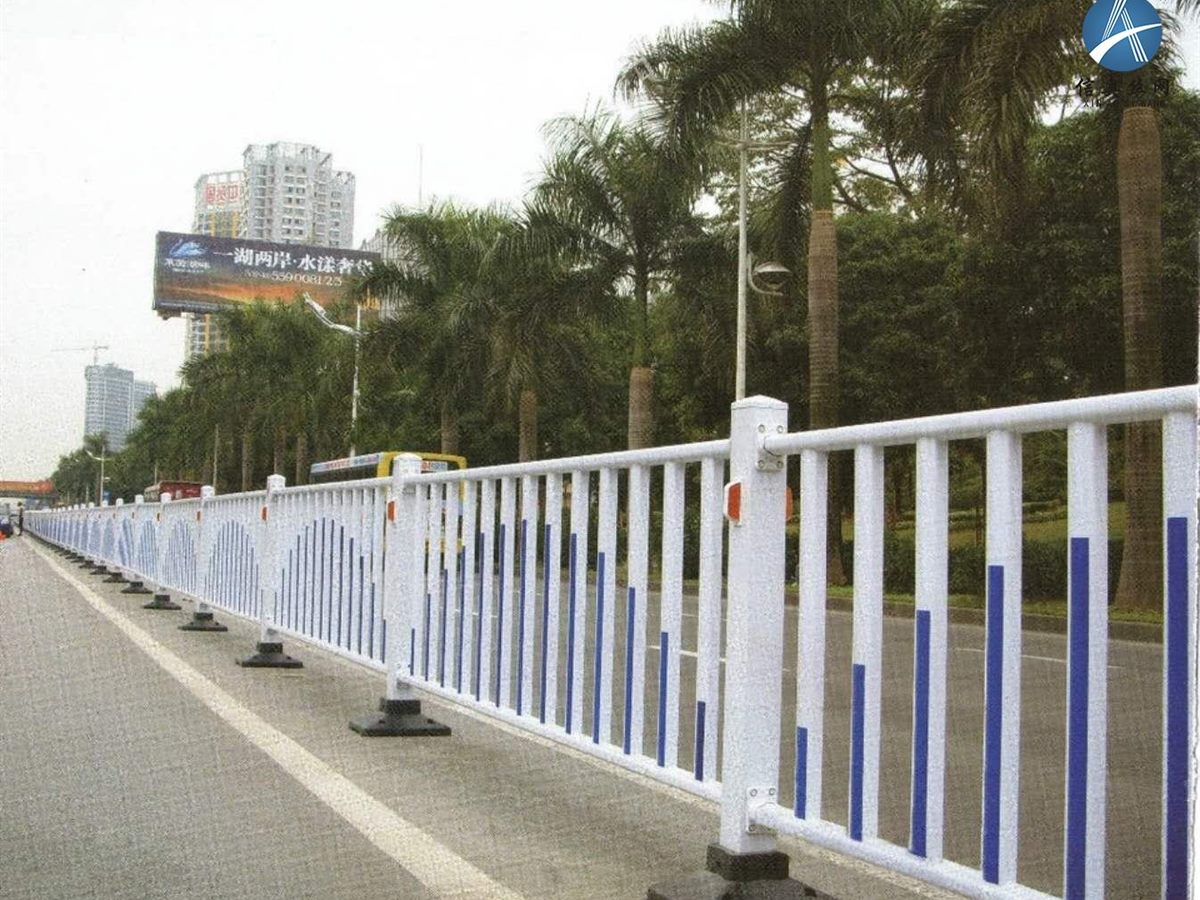
Road Guardrail
Roadside and median barrier units, beam and rail sections, posts and fixings made to the project specification — send the drawing or the standard you follow.
View product → -
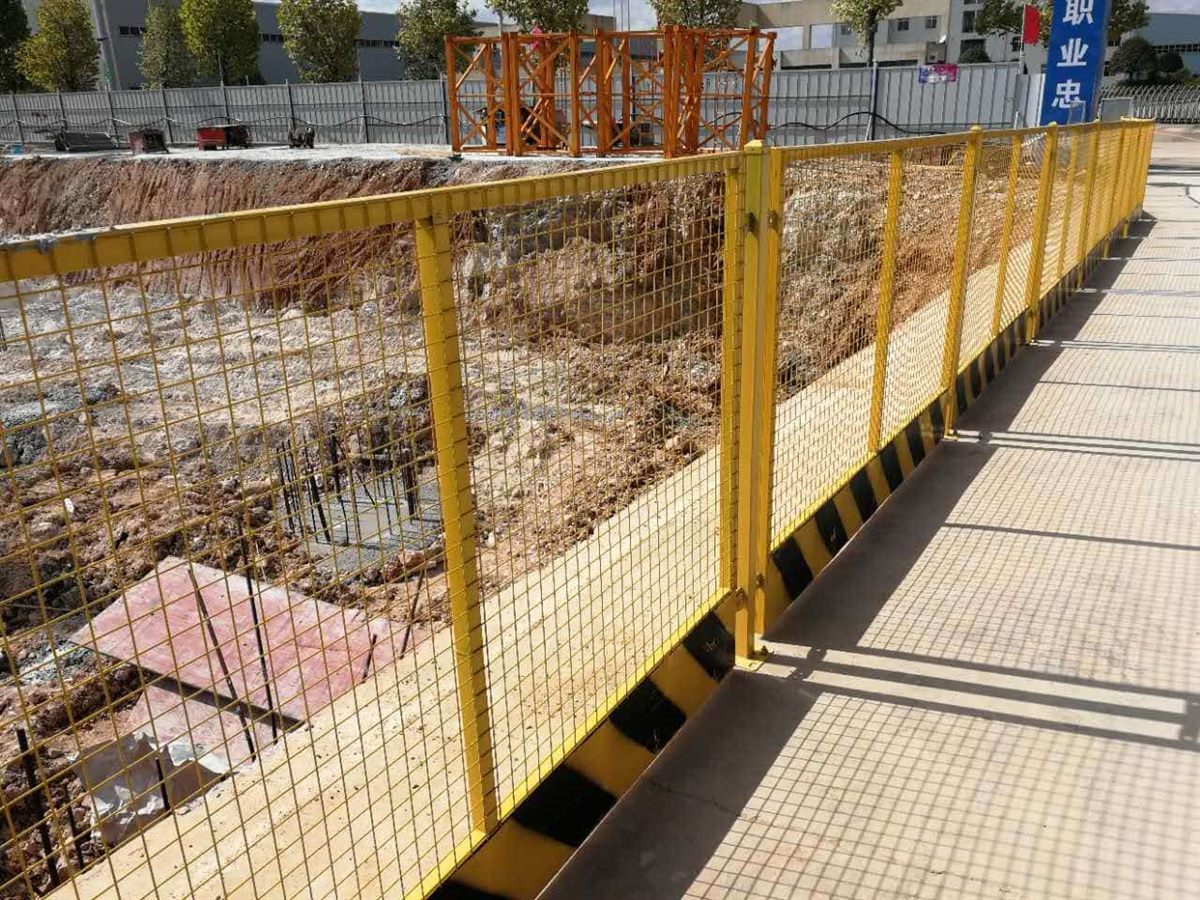
Excavation Edge Guardrail
Mesh-panel type on a 20 × 30 / 30 × 30 mm frame with 50 × 50 mm mesh, or vertical-tube type on a 30 × 30 mm frame — both on a 50 × 50 mm square-tube post.
View product → -
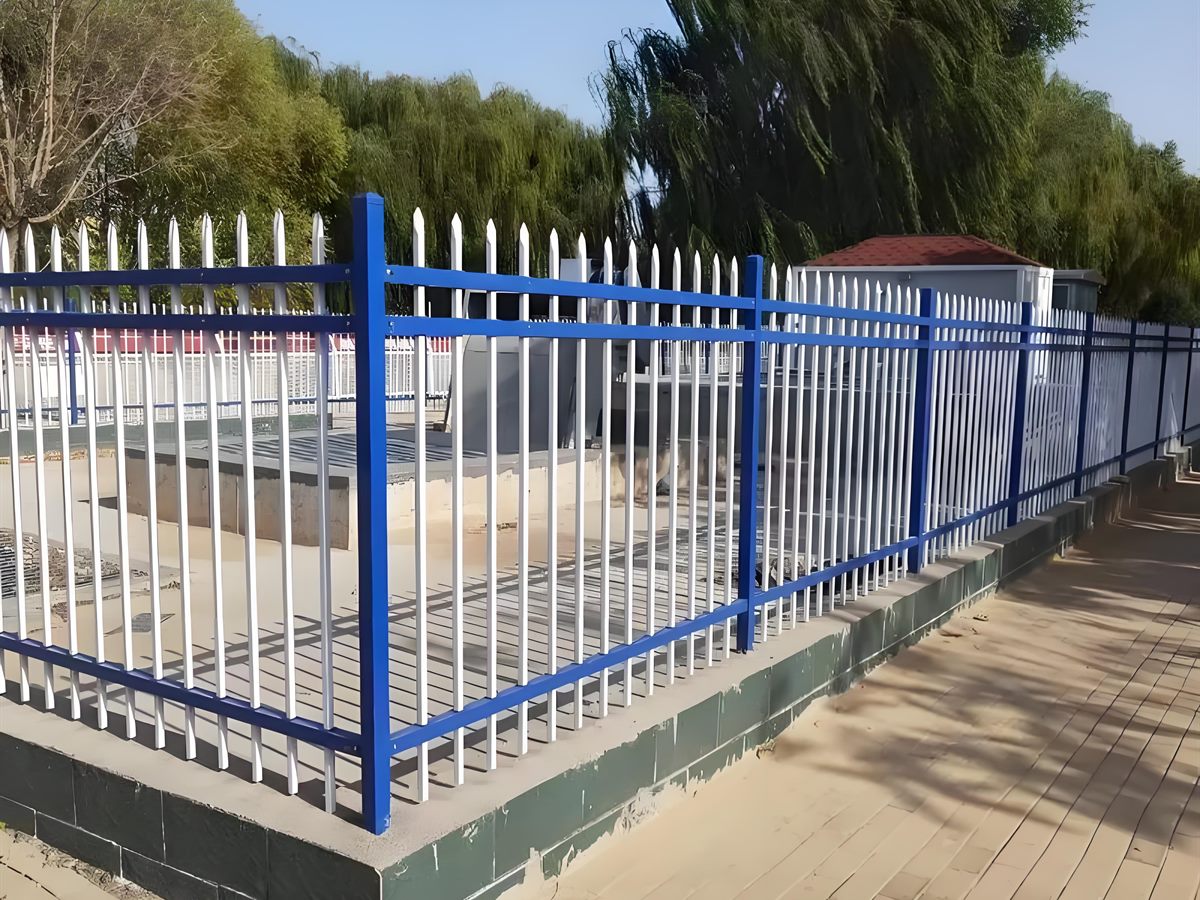
Zinc-Steel Perimeter Railing
1.2–2.0 m high × 3 m sections, 2–4 rail levels, 50 × 50 / 40 × 40 mm posts and rails, 19 × 19 mm bars, hot-dip galvanised and powder coated, assembled without welding.
View product → -
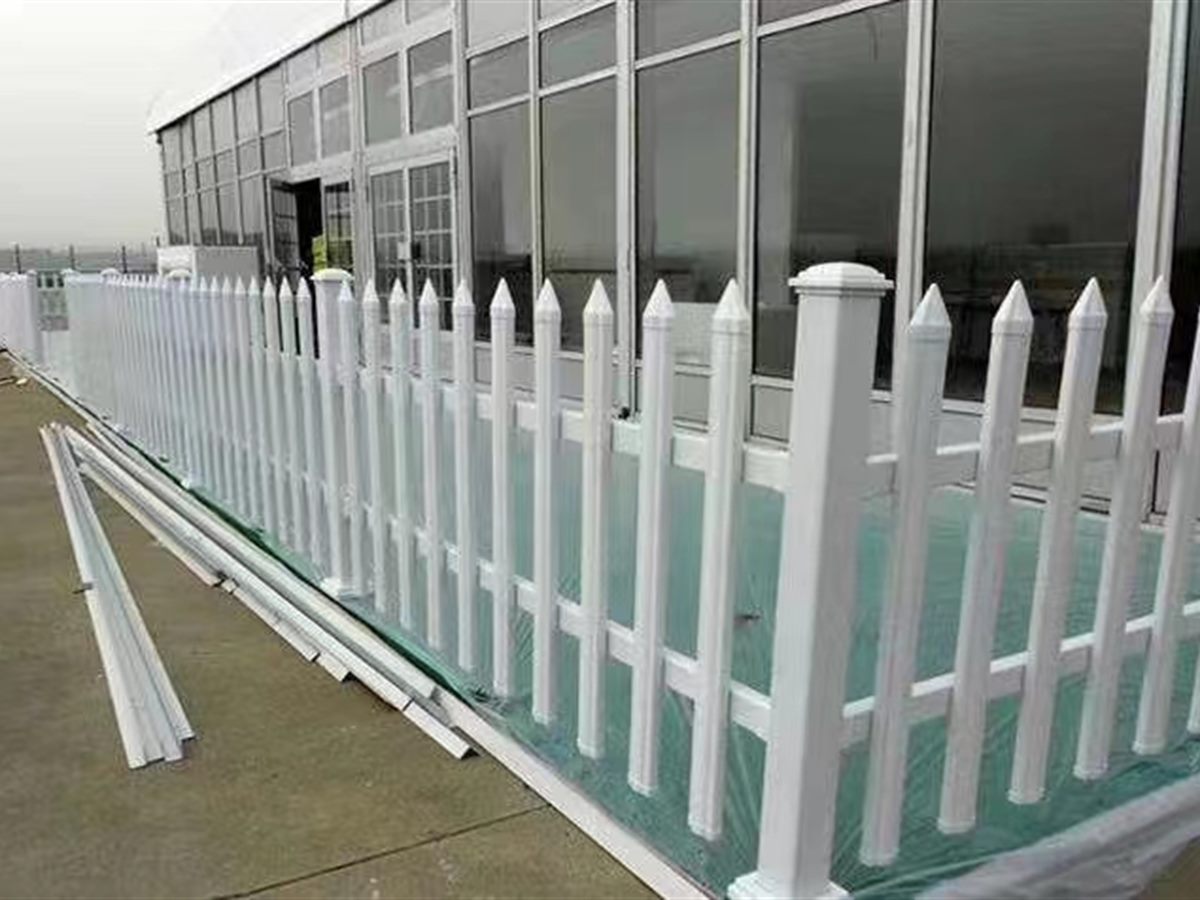
PVC Railing
PVC profile rails and posts over a galvanised core for roadside and garden boundaries, in the colour you specify and cut to the run on the drawing.
View product → -
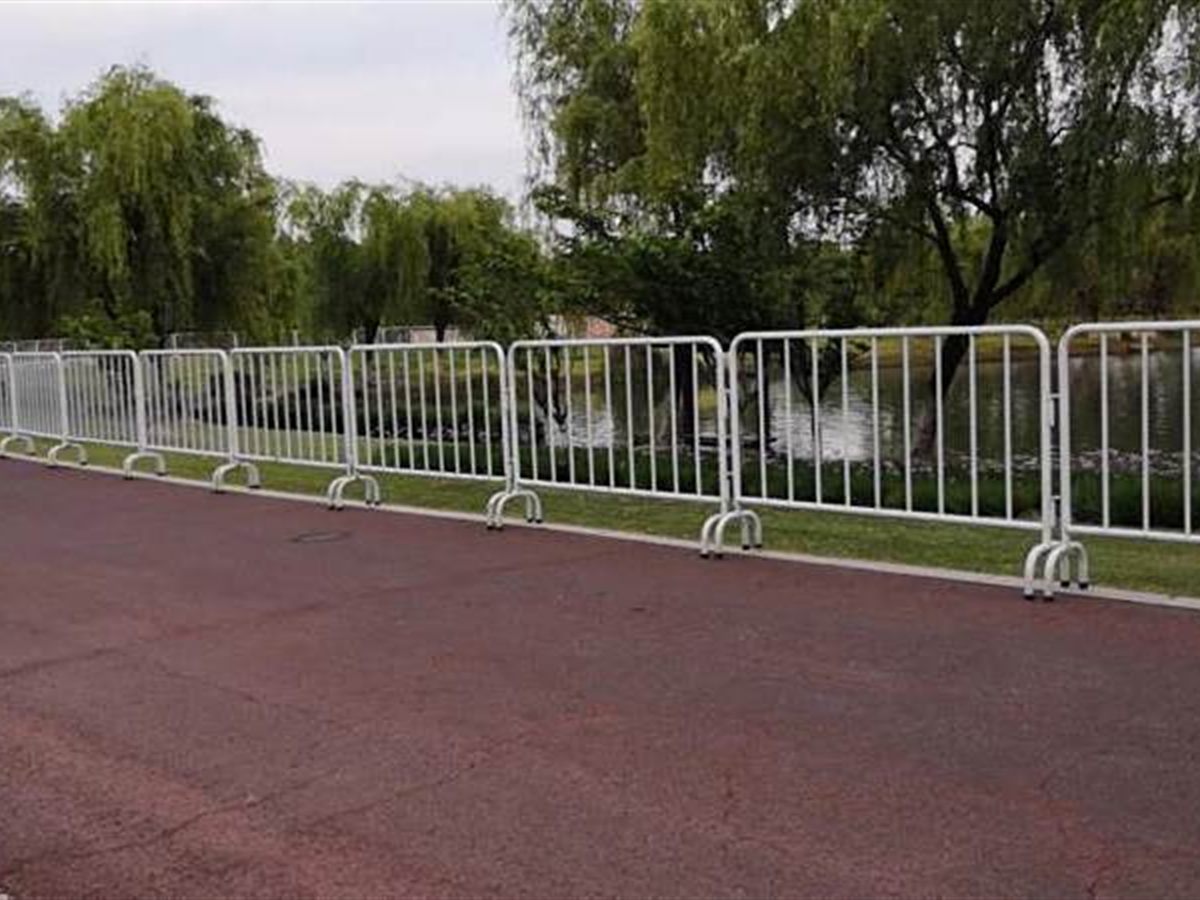
Crowd-Control Barrier
Interlocking barrier sections with removable feet for queuing, events and pedestrian separation, in the panel size and finish you specify.
View product →
Hoarding & Site Fencing
6 productsGalvanised or coated steel posts, colour-steel, PVC or perforated panels, and the water-filled barriers that go with them. Colour and print are matched to a RAL reference or a physical sample and confirmed on the shop drawing.
-
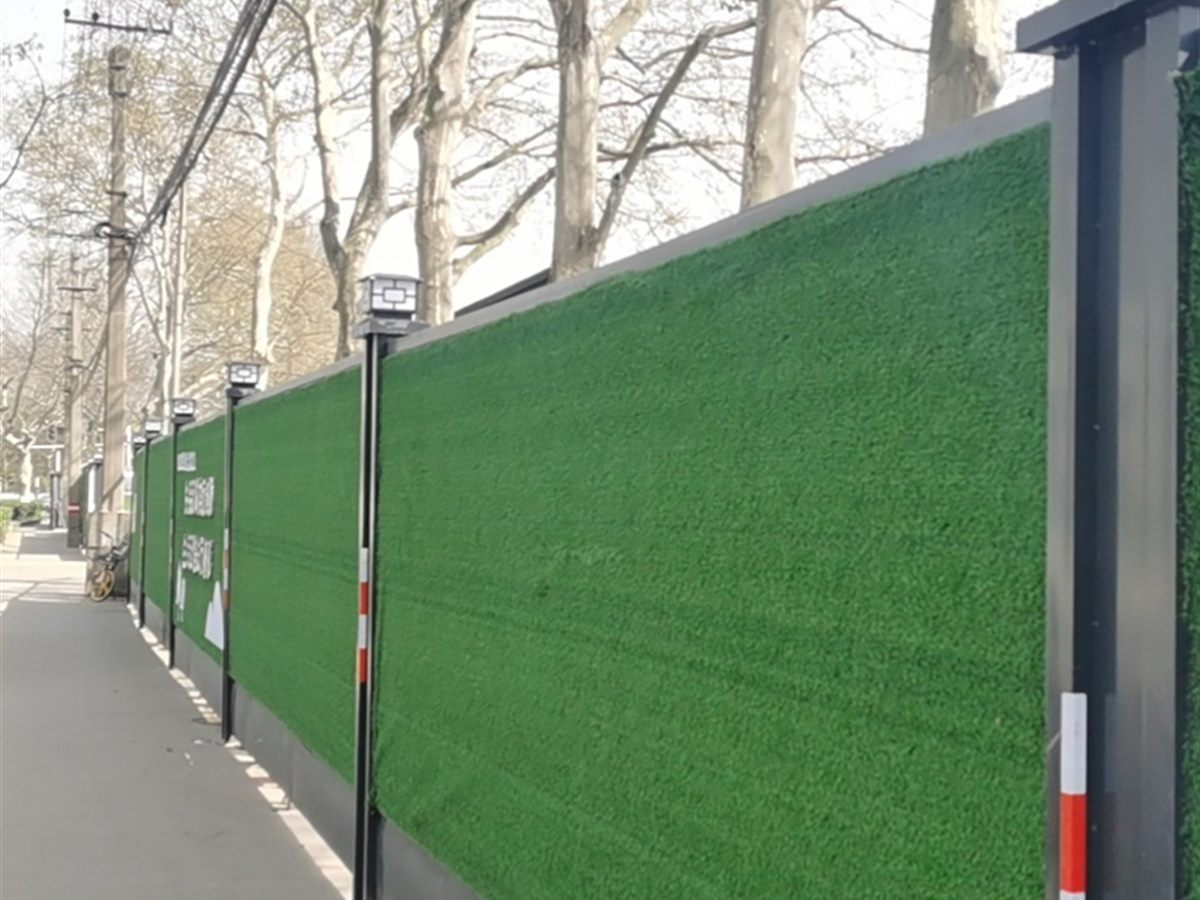
Municipal Hoarding
220 × 300 × 0.9 mm galvanised post, 80 × 80 × 1.0 mm concealed post, a 480 mm white panel over a 400 mm grey panel, 50 × 50 × 0.9 mm brace and flange / expansion-bolt fittings.
View product → -
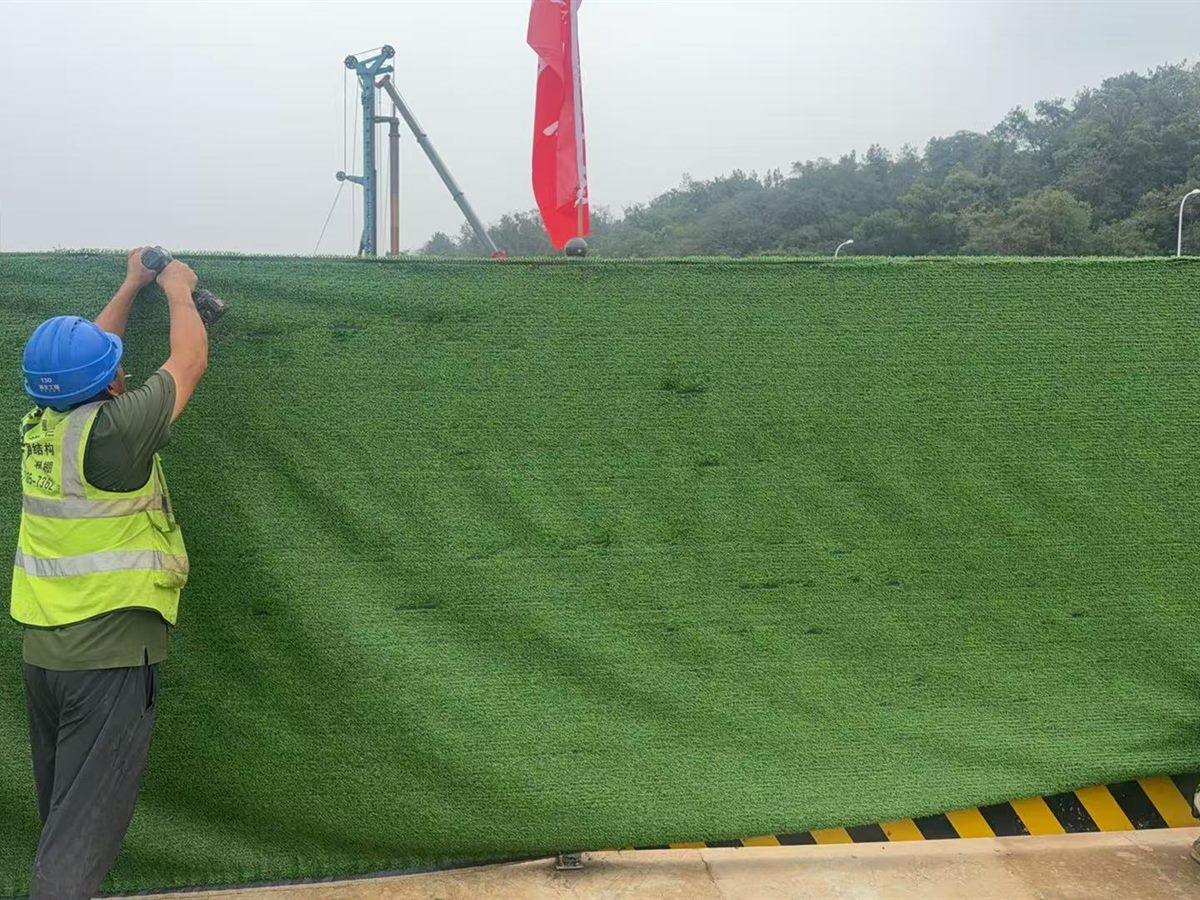
Colour-Steel Hoarding
80 × 80 × 0.8 mm coated post, 0.6 / 0.25 mm U-channel, 0.3 mm grass-green colour-steel sheet, a 0.4 mm black-yellow PVC warning panel and a 40 square-tube or L40 brace.
View product → -
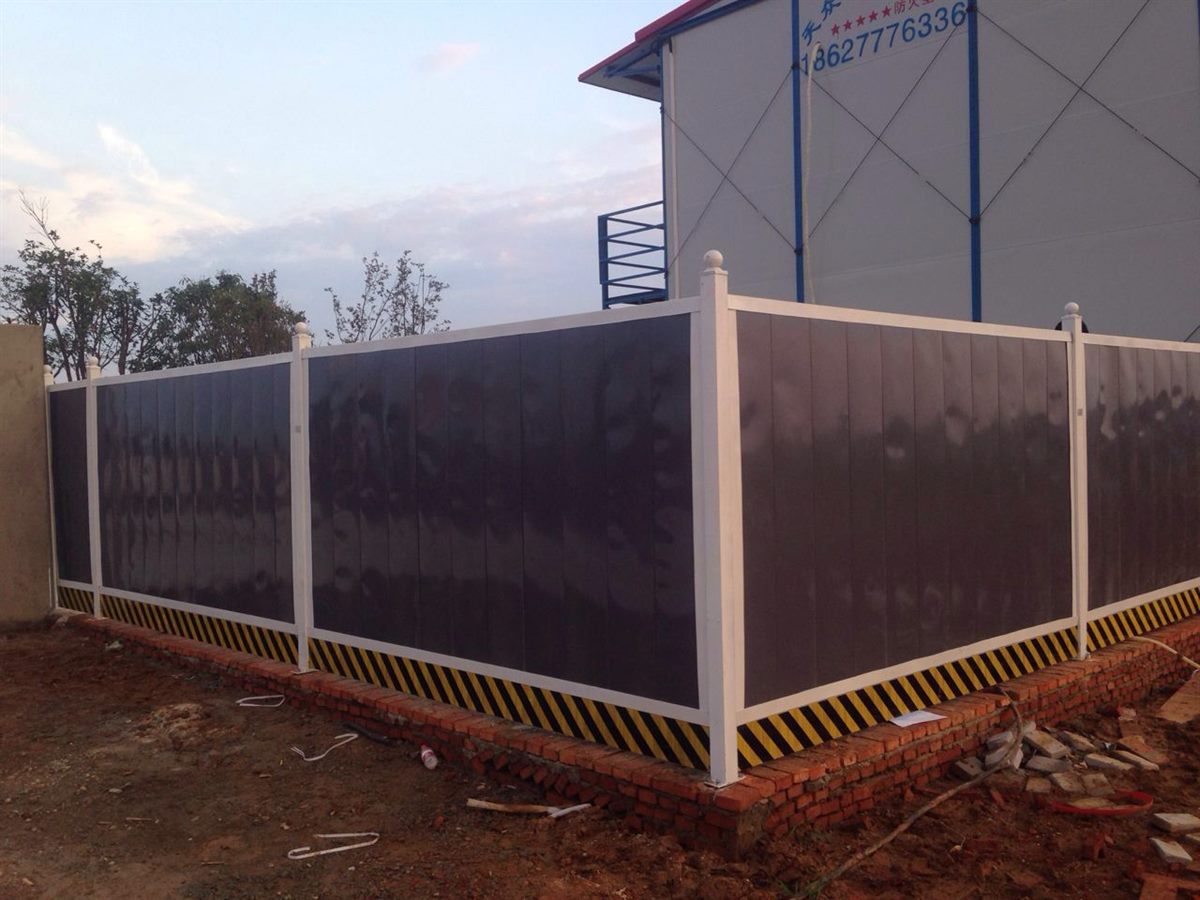
PVC Hoarding
120 × 120 mm PVC post shell over an 80 × 80 × 0.8 mm galvanised core, a 20 mm PVC panel in the colour you specify, galvanised channel and 40 square tube.
View product → -
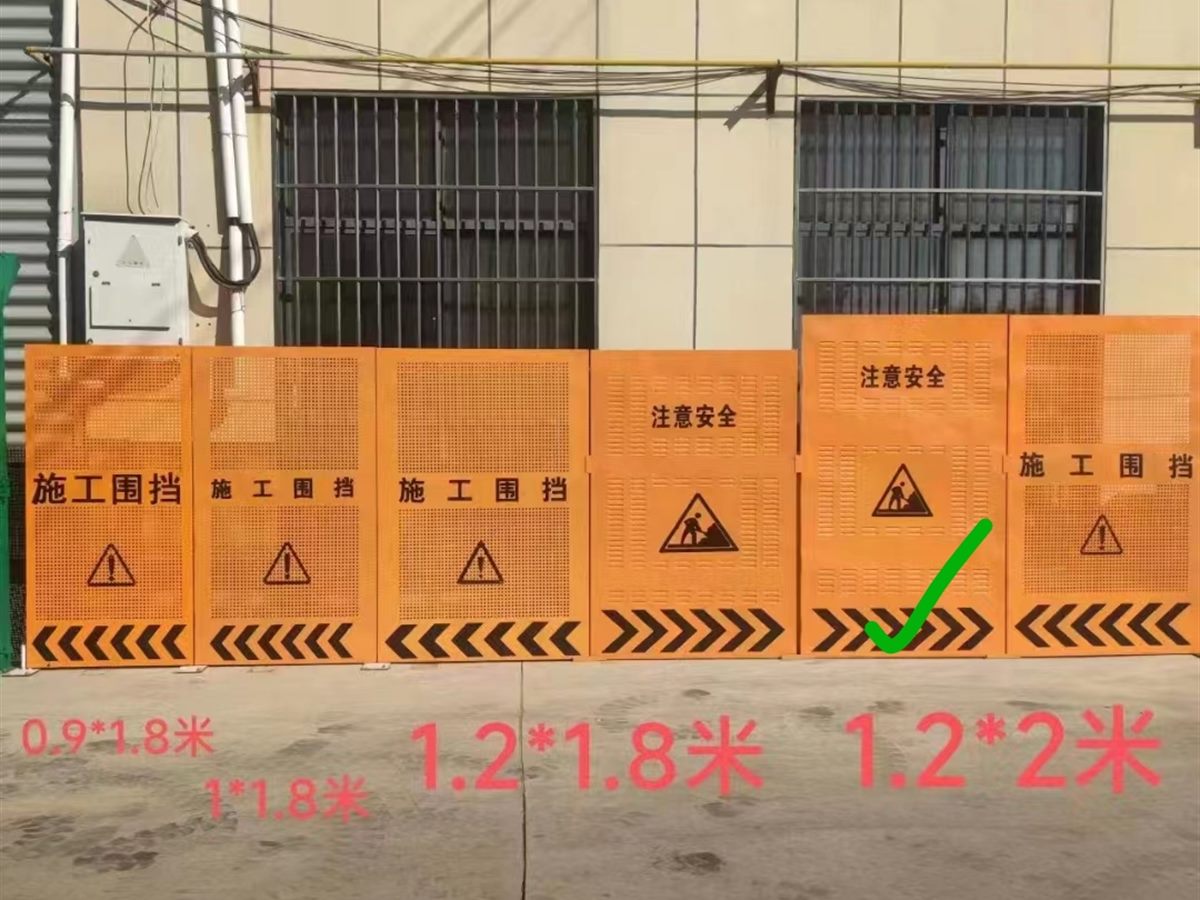
Perforated Hoarding
1,200 × 2,000 mm galvanised sheet at 0.5–0.8 mm thick with Φ10 mm perforations, a 0.7 mm steel-tube support and an electrostatic spray finish in the colour you choose.
View product → -
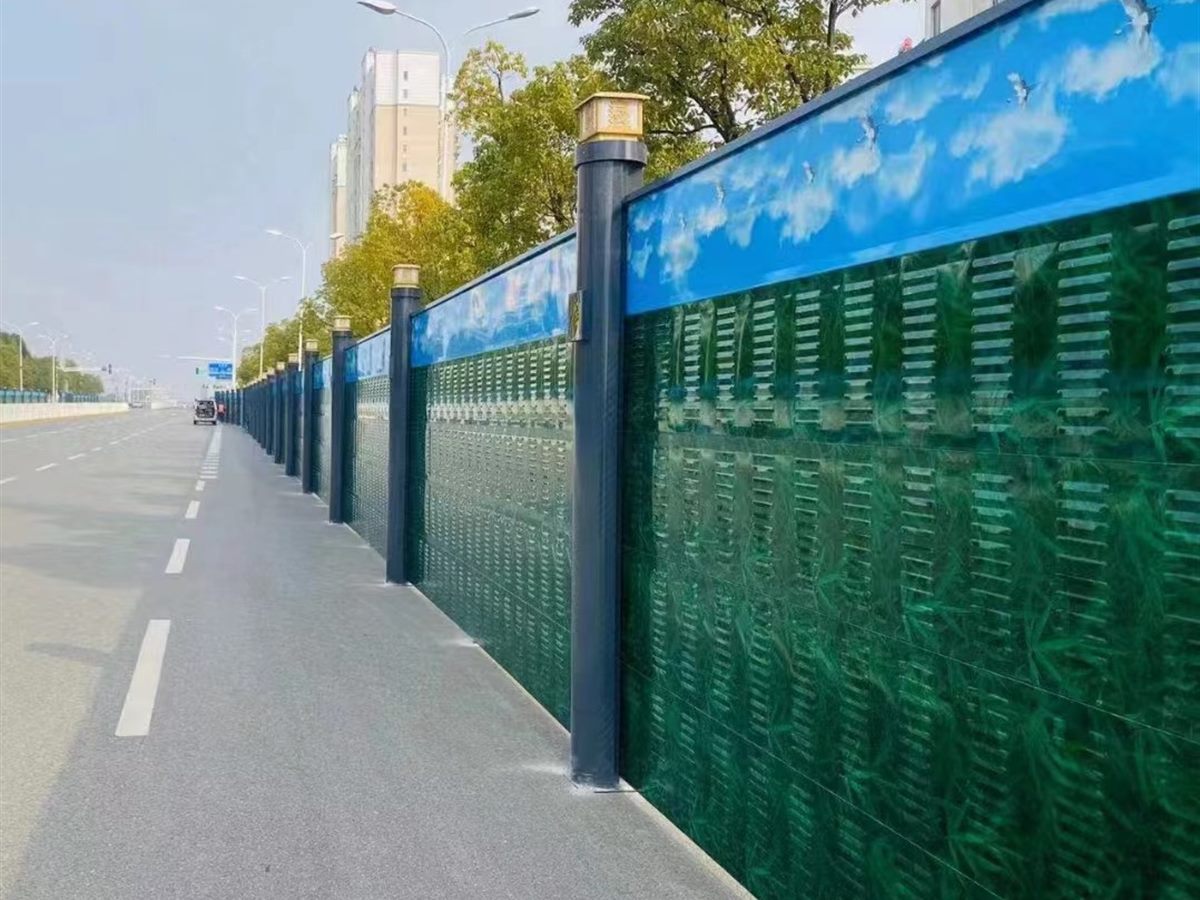
Blue-Sky Printed Hoarding
2.5 × 6 m sections with a half-round profiled post, a 480 mm printed colour-steel upper panel over a 480 mm green louvred perforated lower panel and a 60 mm U-cap.
View product → -
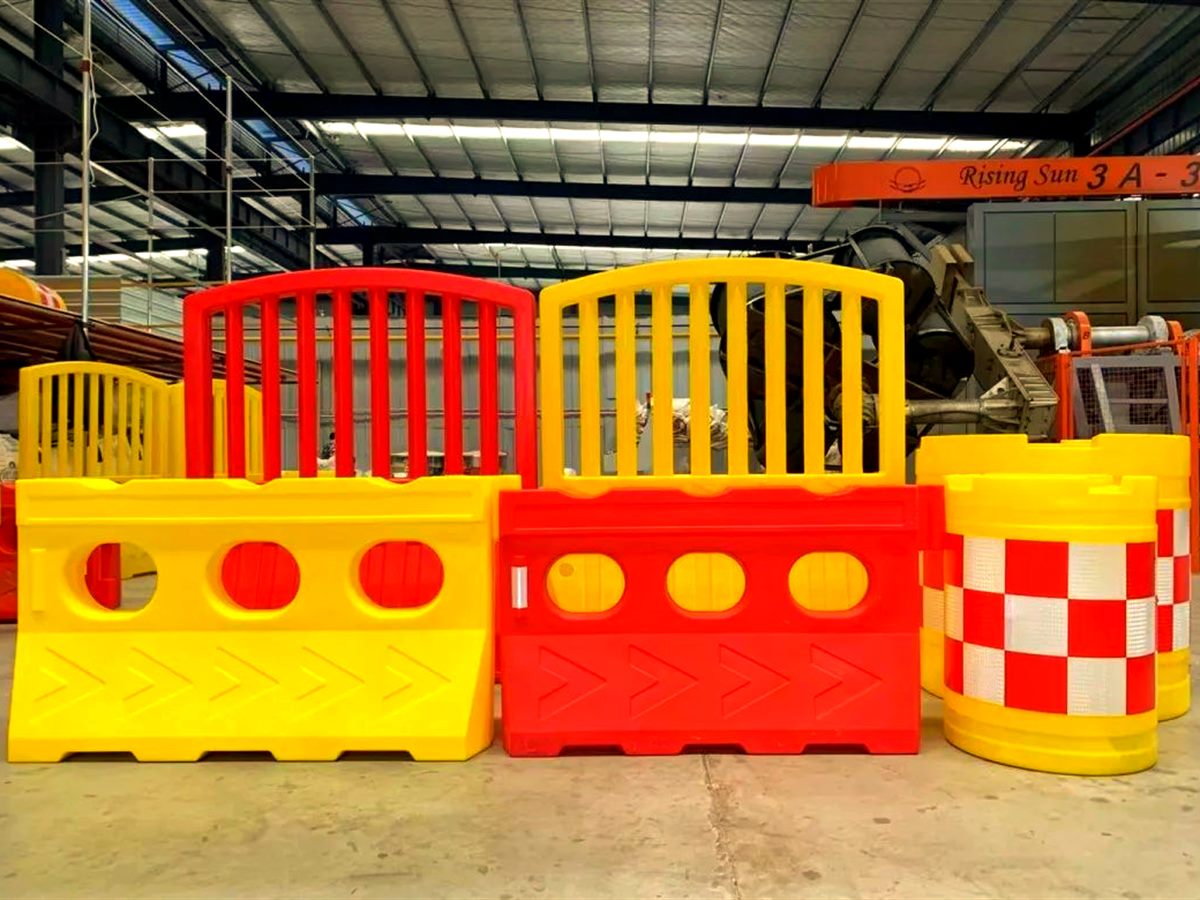
Water-Filled Barrier
Water-ballasted plastic units that interconnect for road works, lane closure, traffic management and event separation; the tall type stands 183 cm and weighs 100 kg when filled.
View product →
By application
Four site conditions, and what each one is built from
Every product above is chosen by what the site has to survive. These four pages read the same decision the other way round: the site condition first, then the configurations and the published figures that answer it.
Selection & engineering guide
How to specify the right family, then get it quoted
Issued by the workshop · Hubei Hongying Guardrail
What the three families do, and how they combine on one site
A finished site is described in three layers. Hoarding and site fencing closes the work area to the public: panels, posts, braces and bases, plus the water-filled barriers that divert traffic around it. Guardrails and railings protect what is open or at height — an excavation edge, a slab edge, a carriageway or a crowd — and are the items a safety inspector looks at first. Wire mesh fencing holds a boundary over the long run: a plant perimeter, a rail corridor, a school or a sports court.
The three are ordered together far more often than separately, and that is the practical reason to buy them from one workshop. A single site typically needs hoarding on the street frontage, mesh fence on the rear boundary, guardrail around the excavation, and a barrier where the traffic has to be diverted. Because all three are made in Jiangxia, they can be quoted as one programme, drawn to one set of site dimensions, packed on one loading plan and shipped on one bill.
Two rules of thumb keep a mixed order clean. Decide the ground fixing before the panel, because a post set in concrete, a base plate on a slab and the foot of a hoarding panel are three different products. And give the run lengths in metres with the corner and gate positions, because every family is counted from a run, never from a square metre.
| Part of the site | Family | What is installed there |
|---|---|---|
| Street frontage and perimeter, closing the works | Hoarding & Site Fencing | Municipal, colour-steel, PVC, perforated or printed hoarding on posts, braces and bases; water-filled barrier where traffic is diverted. |
| An open edge, an opening, or a carriageway | Guardrails & Railings | Excavation edge guardrail, W-beam or project-specification road guardrail, crowd-control barrier, planter railing. |
| A long boundary, infrastructure or a secure line | Wire Mesh Fencing | Double-wire, chain-link, framed, peach-post or Y-post mesh, anti-glare mesh on a median, razor wire as topping. |
How to choose hoarding: height, panel, base, wind
Height is set by the works behind the panel and by the local rule, not by preference. Our published hoarding panels start at a 1,200 × 2,000 mm perforated sheet and run to 2.5 × 6 m printed sections. The taller the run, the more of the wind load is carried by the post and the brace rather than by the panel, so height and bracing are decided together.
Panel choice follows what the frontage has to do. Colour-steel sheet at 0.3 mm is the light, fast option. A 20 mm PVC board gives a solid coloured face. Perforated galvanised sheet at 0.5–0.8 mm lets wind and light through and takes an electrostatic spray in the colour you choose. A printed section carries an image instead. Base and fixing come next: flange plates and expansion bolts for a concrete slab, a 400 × 300 × 110 mm precast concrete base where the run is temporary and has to come down again, and the detail on the drawing where the ground is neither.
Wind is the last question and the one that fails first. Bracing is what keeps a run standing: 50 × 50 × 0.9 mm square tube on municipal hoarding, 40 square tube or L40 on colour-steel, a galvanised channel and 40 square tube on PVC. Where the hoarding is replaced by a plastic barrier, the tall water-filled type is rated to wind force grade 7–8 and is ballasted with 100 kg of water per unit.
| Product | Panel | Post and base | Bracing |
|---|---|---|---|
| Municipal Hoarding | 480 mm white panel over a 400 mm grey panel | 220 × 300 × 0.9 mm galvanised tube; concealed post 80 × 80 × 1.0 mm; flange and expansion bolt | 50 × 50 × 0.9 mm square tube |
| Colour-Steel Hoarding | 0.3 mm grass-green colour-steel sheet; 0.4 mm black-yellow PVC warning panel | 80 × 80 × 0.8 mm coated square tube; U-channel 0.6 / 0.25 mm | 40 square tube or L40 |
| PVC Hoarding | 20 mm PVC board, custom colour | 120 × 120 mm PVC shell over an 80 × 80 × 0.8 mm galvanised core | Galvanised channel and 40 square tube |
| Perforated Hoarding | 1,200 × 2,000 mm galvanised sheet, 0.5–0.8 mm, Φ10 mm holes | Steel-tube support, 0.7 mm wall | Fixing detail confirmed on the drawing |
| Blue-Sky Printed Hoarding | 2.5 × 6 m section; 480 mm printed upper panel, 480 mm green louvred lower panel | Half-round profiled post; concealed post 80 × 80 × 0.9 mm; 60 mm U-cap | Fixing detail confirmed on the drawing |
| Water-Filled Barrier | Blow-moulded hollow plastic unit, 183 cm high, 102 cm long, 400 mm wide | Interlocking ends; no groundwork; 100 kg when filled | Wind force grade 7–8; −40 °C to +60 °C |
How to choose guardrails: edge protection, road barrier, railing
Three different jobs, three different products. Edge protection keeps people away from a drop: the excavation edge guardrail, in a mesh-panel build on a 20 × 30 / 30 × 30 mm frame with 50 × 50 mm mesh, or a vertical-tube build on a 30 × 30 mm frame, both on a 50 × 50 mm square-tube post. A road barrier takes a vehicle impact and guides it along the beam. A railing separates people from a boundary, a planter or a green strip and is chosen as much for its appearance as for its stiffness.
The road barrier is where the range splits into two products that are never interchangeable. W-Beam Steel Road Guardrail is the standardised corrugated-beam system: 4320 mm panels on a 4 m post spacing, twin-wave 310 mm or triple-wave 505 mm wide, 85 mm wave height, 3 mm or 4 mm plate, on Φ114 / Φ140 mm posts with a 4.5 mm wall, and its published figures cite JT/T 281—2007. Road Guardrail is the general road and municipal line: roadside and median barrier units, beam and rail sections, posts and fixings made to the project specification. No JT/T figures are quoted for it, because it is not that system.
So the question is not which one is better, but which one the project is written against. If the specification names JT/T 281—2007 or a corrugated beam with a panel length and a post spacing, we quote the W-beam product from its published figures and state what a kilometre contains. If the drawing shows a municipal barrier, a median unit or a rail section to the authority's own detail, we quote the road guardrail product and build to that drawing or standard. The two have separate product pages, separate specifications and separate quotations, and a beam from one is never supplied against the other's drawing.
| The job | Product | Built as |
|---|---|---|
| Protect an excavation or trench edge | Excavation Edge Guardrail | Mesh-panel type: 20 × 30 / 30 × 30 mm frame, 50 × 50 mm mesh. Vertical-tube type: 30 × 30 mm frame. Post 50 × 50 mm square tube. |
| Take a vehicle impact on a highway section to the published standard | W-Beam Steel Road Guardrail | 4320 mm panel, 4 m post spacing, twin-wave 310 mm / triple-wave 505 mm, 85 mm wave height, 3 or 4 mm plate, Φ114 / Φ140 mm posts at 4.5 mm wall. JT/T 281—2007 figures. |
| A road or municipal barrier to the project specification | Road Guardrail | Roadside and median barrier units, beam and rail sections, posts and fixings made to the drawing or the standard you follow. |
| A boundary, a verge or a green area | Zinc-Steel Perimeter Railing, PVC Railing, Planter Railing | 1.2–2.0 m × 3 m sections, 2–4 rail levels, 50 × 50 / 40 × 40 mm, 19 × 19 mm bars; or PVC profile over a galvanised core; or a low rail to the run. |
| A crowd, a queue or an event | Crowd-Control Barrier | Interlocking steel sections with removable feet, in the panel size and finish you specify. |
| Item | Quantity per km |
|---|---|
| Guardrail panels, 4320 mm | 250 |
| Posts at 4 m spacing | 250 |
| End terminals | 2 |
| Post caps | 250 |
| Spacer blocks (防阻块) | 250 |
| Connector bolt sets | 250 |
| Splicing bolt sets | 2000 |
How to choose wire-mesh fencing: aperture, post type, height
Aperture is the first decision, because it sets what the fence keeps in or out. On our framed mesh panels the common apertures are 50 × 100, 75 × 150, 50 × 200, 60 × 150 and 80 × 160 mm; wire runs from ø2.5 to ø6.0 mm, most often ø3.0, ø3.2, ø3.5, ø3.8 or ø4.0 mm. Other mesh builds — chain-link, Y-post, sports court — are made to the project specification: send us the drawing or the standard you follow, and we confirm the aperture and the wire in writing.
Post type follows the load and the ground. Round ø48 mm tube is available with a 1.0, 1.2, 1.5 or 2.0 mm wall, with 60 mm and 75 mm tube as alternatives; square tube runs 40 × 40, 60 × 60, 40 × 60 and 80 × 80 mm with a 0.8–2.0 mm wall. Post spacing is confirmed against the drawing rather than assumed, and the fixing — clamps, clips, tension bands, base plates or concrete footings — is quoted with the run.
Height comes last because it is the easiest to change and the most expensive to get wrong. Framed panels are published at 1700 × 2500, 1800 × 2500, 1800 × 3000, 2000 × 3000 and 1500 × 2500 mm. A school or a sports court needs more height than a plant boundary, and an anti-glare mesh is set at the height of the headlights it has to cut, not at a standard fence height.
| Decision | Published range on our panels | Where it goes further |
|---|---|---|
| Mesh aperture | 50 × 100, 75 × 150, 50 × 200, 60 × 150, 80 × 160 mm | Other apertures made to the project specification |
| Wire diameter | ø2.5–6.0 mm; ø3.0, 3.2, 3.5, 3.8, 4.0 mm most common | Confirmed against the drawing |
| Post section | ø48 mm round, wall 1.0–2.0 mm (60 / 75 mm round available); 40 × 40, 60 × 60, 40 × 60, 80 × 80 mm square | Post spacing confirmed against the drawing |
| Panel height and size | 1500 × 2500 up to 2000 × 3000 mm | Set out on the layout drawing |
| Surface finish | Hot-dip galvanised, electrostatic spray or PVC dipped | Colour to RAL sample |
| Fixing | Clamps, clips, tension bands, base plates or concrete footings | As the ground conditions require |
Quotation and documentation
No price is published on this site, and no MOQ or lead time is promised before the specification is known. Every figure we can give depends on three things: the drawing or the standard, the quantity and the destination port. Send those three, add the finish and the delivery address if they are already fixed, and we reply within one business day with the specification, the coating, the packing plan, the MOQ, the loading plan and the lead time in writing.
Documentation is issued per order: proforma invoice, commercial invoice, packing list and certificate of origin as required. Payment terms and warranty are agreed per order and stated on the proforma invoice.
On standards, we will not claim a certificate we do not hold. Buyers who need CE / EN / ASTM documentation: tell us the standard and we will confirm in writing what we can supply.
| Item | How it is stated |
|---|---|
| Price | Price: quoted per order — FOB Wuhan / Shanghai, CIF or DDP |
| MOQ | Confirmed per specification — send the drawing, quantity and destination port and we reply with MOQ, loading plan and lead time within one business day. |
| Loading | Confirmed per specification — send the drawing, quantity and destination port and we reply with MOQ, loading plan and lead time within one business day. |
| Lead time | Confirmed per specification — send the drawing, quantity and destination port and we reply with MOQ, loading plan and lead time within one business day. |
| Documentation | Proforma invoice, commercial invoice, packing list and certificate of origin as required. Buyers who need CE / EN / ASTM documentation: tell us the standard and we will confirm in writing what we can supply. |
| Payment and warranty | Payment terms and warranty are agreed per order and stated on the proforma invoice. |
Packing, loading and lead time
Panels, beams and posts are bundled and palletised; fittings — clips, post caps, spacer blocks, bolt sets — are bagged and bundled separately and labelled against the drawing. The exact packing method is confirmed per specification with the loading plan, because a bundle that cannot be unloaded at destination is not a saving.
Loading is a weight question before it is a volume question. Steel barrier is heavy for its volume, so the published masses are the figures that decide the plan: 49.16 kg for a 3 mm twin-wave panel and 65.44 kg for a 4 mm panel, 102 kg for a triple-wave panel, 12.15 kg/m for a Φ114 mm post and 15.04 kg/m for a Φ140 mm post, with 12.3 t or 16.388 t of beam in a kilometre at 3 mm or 4 mm plate. Give us the container size, the beam type and the maximum bundle weight you can unload, and we plan to it.
Lead time is confirmed per specification, not published as a promise: send the drawing, quantity and destination port and we reply with MOQ, loading plan and lead time within one business day. We would rather give you a date we can hold than a number that reads well in an enquiry.
| Stage | How it is handled |
|---|---|
| Packing | Panels, beams and posts bundled and palletised; fittings bagged and labelled to the drawing; the method confirmed per specification with the loading plan. |
| Loading | Confirmed per specification — send the drawing, quantity and destination port and we reply with MOQ, loading plan and lead time within one business day. |
| Lead time | Confirmed per specification — send the drawing, quantity and destination port and we reply with MOQ, loading plan and lead time within one business day. |
| Shipping terms | Quoted per order — FOB Wuhan / Shanghai, CIF or DDP. |
Six questions, answered from what is on this site
- Are you a factory or a trading company?
- A factory. We produce at our own workshop in Jiangxia District, Wuhan, and have manufactured there since 2014: a 5,000 m² workshop with a 2,000 m² finished-goods warehouse beside it, a monthly capacity of 60,000 m, and registered capital of RMB 5 million.
- What is the difference between the W-beam steel road guardrail and the road guardrail?
- They are two separate products. The W-beam steel road guardrail is the standardised corrugated-beam system, published against JT/T 281—2007: 4320 mm panels, 4 m post spacing, twin-wave 310 mm or triple-wave 505 mm beams, 85 mm wave height, Φ114 / Φ140 mm posts and stated quantities per kilometre. The road guardrail is the general road and municipal line — barrier units, beam and rail sections, posts and fixings made to the project specification, with no JT/T figures quoted for it. Send the drawing or the standard and we quote the one that matches it.
- Can I order hoarding, guardrails and mesh fencing together?
- Yes. All three families are made in the same workshop, so a mixed order is quoted as one programme, drawn to one set of site dimensions, packed on one loading plan and shipped on one bill.
- What do I need to send to get a quotation?
- The drawing or the standard you follow, the quantity or the run length, and the destination port. Add the finish, colour and delivery address if they are already fixed. With those we reply with the specification, MOQ, loading plan and lead time within one business day.
- Do you supply CE, EN or ASTM documentation?
- Buyers who need CE / EN / ASTM documentation: tell us the standard and we will confirm in writing what we can supply. The documents issued per order are the proforma invoice, commercial invoice, packing list and certificate of origin as required.
- Have you supplied projects outside China?
- Our record is municipal and metro construction projects in central China since 2014. For an export order the same workshop, the same drawings and the same inspection apply; we confirm in writing what we can supply rather than claim references we do not have.
Next step
Send the drawing or the standard you follow
Tell us which family, the quantities in metres or pieces, the finish and the destination port. We answer within one business day with the specification, the MOQ, the loading plan and the lead time — no price figure is published here, because the price depends on your specification.